


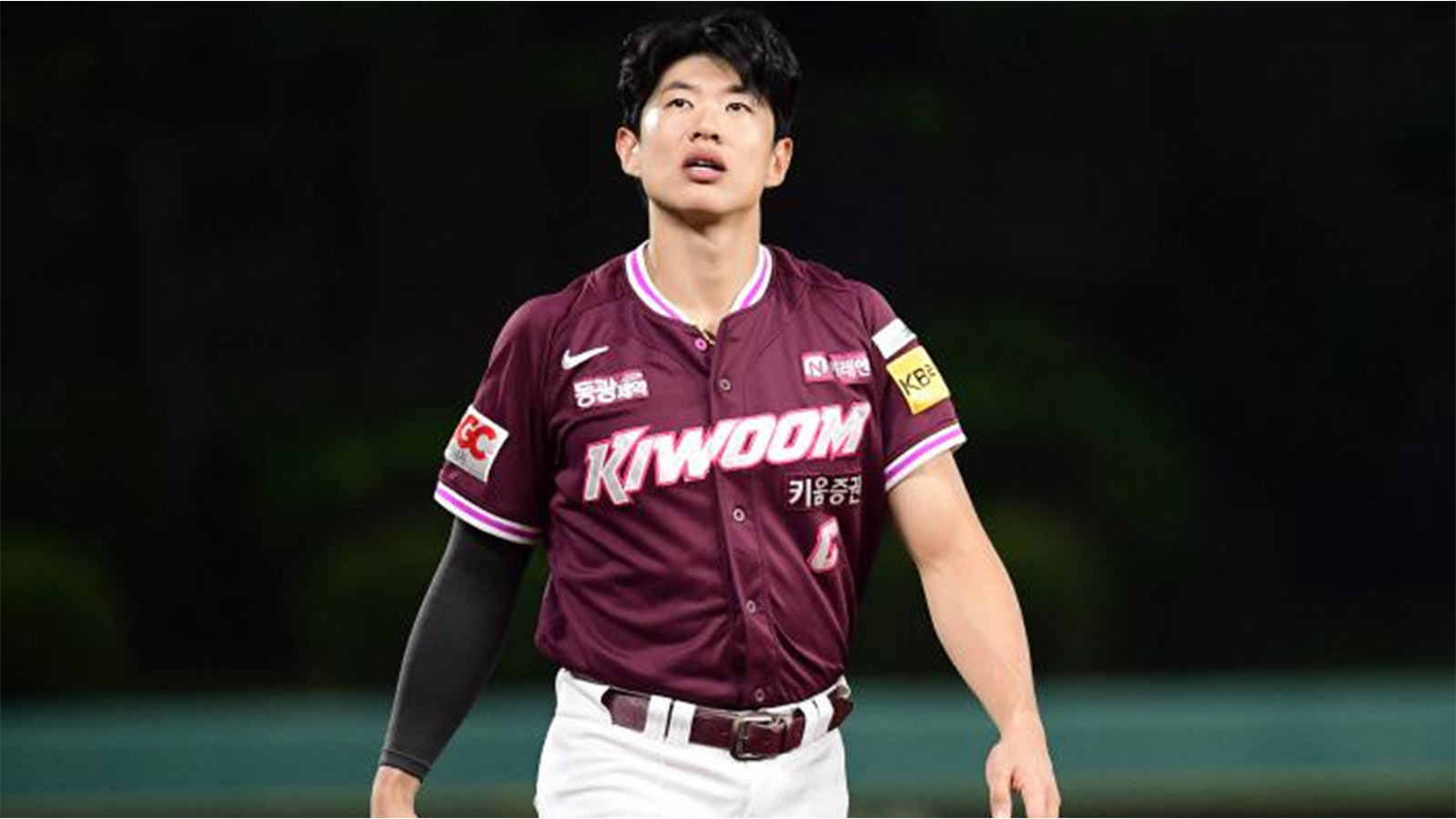
In the high-stakes world of Major League Baseball, the offseason often brings a flurry of moves—but few are watched as closely as the arrival of top international talent. On December 19, 2025, the San Diego Padres made headlines by agreeing to a three-year, $13 million contract with Sung Mun Song, a South Korean infielder whose recent dominance in the Korea Baseball Organization (KBO) has captured scouts’ attention and fans’ imaginations alike (MLB.com, MLB Trade Rumors, The Athletic).
This move is more than just a roster adjustment; it’s a calculated bet on a player whose journey to the majors has been anything but conventional. Song, now 29, had spent most of his KBO career as a solid, if unspectacular, contributor. But over the past two seasons, he transformed into one of the league’s brightest stars—posting numbers that would make any GM take notice. In 2024, Song erupted for a .340 batting average, a .408 on-base percentage, and a .518 slugging percentage, good for a 143 wRC+ across 602 plate appearances. He followed that up in 2025 with an even more impressive .315/.387/.530 slash line, smashing 26 home runs, swiping 25 bases, and clubbing 37 doubles in 646 plate appearances. That performance earned him the KBO Player of the Year award from his peers.
Song’s story is defined by perseverance. After a string of below-average offensive seasons and a hiatus in 2020 and part of 2021 for mandatory military service, he returned with renewed focus, steadily improving his plate discipline and power. Over his nine-year KBO tenure, Song appeared in 824 games, amassing 80 home runs, 51 stolen bases, and an overall .283/.347/.431 slash line. But it’s his recent surge—two consecutive years with an OPS north of .900—that has set him apart from his contemporaries. For context, Ha-Seong Kim, another KBO product and former teammate, posted an OPS above .800 in each of his six full seasons before joining the Padres.
The mechanics of Song’s jump to MLB were shaped by Korea’s posting system, which differs from Japan’s in key ways. After being posted by the Kiwoom Heroes on November 22, Song entered a 30-day negotiation window with MLB teams—shorter than the 45-day window for Japanese players. The Padres moved decisively, agreeing to terms just days before the deadline. As part of the deal, San Diego will owe the Heroes a posting fee equal to 20 percent of Song’s total contract guarantee.
What does Song’s arrival mean for the Padres? The club projects him as a versatile infielder, capable of contributing at third base, first base, and second base. While Manny Machado is entrenched at third, Song’s flexibility allows him to fill in across the diamond, especially with first base unsettled following Luis Arraez’s departure and Jake Cronenworth’s name swirling in trade rumors. Some evaluators believe Song will thrive as a utility player, providing depth and energy off the bench, while others see him as a potential starter if his KBO production translates stateside.
For the Padres, the financial calculus is straightforward. Song’s deal is modest by MLB standards, less than $5 million annually—a manageable risk even if he ends up as a bench piece. It’s a strategic move in a winter where San Diego’s payroll is brushing up against the luxury tax threshold. With the team projected to spend nearly $221 million in 2026 (and $262 million for tax purposes), every dollar counts. Further roster moves, such as trading Cronenworth, Nick Pivetta, or Ramon Laureano, could create additional flexibility.
Song’s signing comes amid a broader trend: the growing impact of Korean stars in MLB. He joins a lineage that includes Ha-Seong Kim, Jung Hoo Lee, and Hyeseong Kim, all of whom have made the leap in recent seasons. As international scouting continues to reshape the league, Song’s journey—from KBO underdog to MLB hopeful—embodies both the unpredictability and the opportunity of the modern game.
While the Padres have not officially announced the signing, league sources confirm the deal is pending a physical. For Song, the next chapter begins in San Diego, where his adaptability and newfound power will be put to the test against the best pitchers in the world. Will his late-career surge continue in a new environment, or will he settle into a supporting role? That question hangs in the air, as fans and analysts alike watch for the answer.
One thing is certain: the Padres are banking on Song’s resilience and upside, hoping that his recent transformation is a sign of things to come—not just for him, but for a club eager to return to postseason contention. His story is a reminder that sometimes, the biggest impact comes from those who refuse to be defined by their past, instead choosing to reinvent themselves when it matters most.
Based on his remarkable late-career surge and versatility, Sung Mun Song represents both a strategic risk and a potential reward for the Padres. If his KBO production carries over to MLB, he could prove to be a valuable asset at multiple positions, adding depth and flexibility to San Diego’s lineup. But as with all international signings, adaptation will be key—the next season will reveal whether Song’s breakout is sustainable or a fleeting peak. (MLB.com, MLB Trade Rumors, The Athletic)