


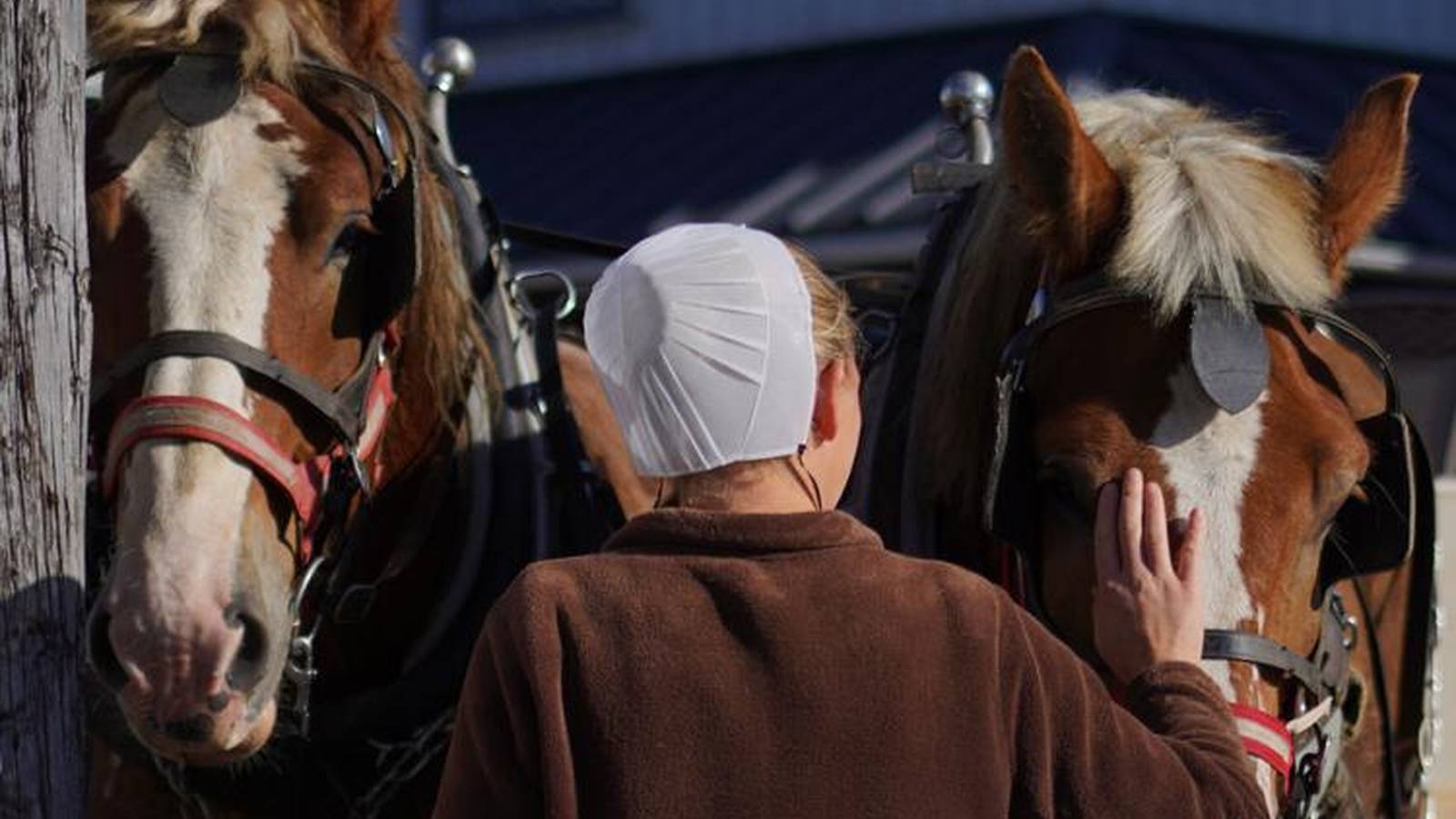
EPHRATA, Pa. (Azat TV) – Pennsylvania is currently confronting the nation’s worst measles outbreak in 35 years, a public health crisis that has surpassed 1,350 recorded cases and five deaths, according to state health figures reported by the Associated Press. The outbreak, which began in late April, has heavily impacted the “Plain communities” of Amish and conservative Mennonites in Lancaster County, though health officials note that declining general population immunity has allowed the highly contagious virus to spread broadly across central Pennsylvania.
While traditional agricultural markets and public spaces in Ephrata see daily interactions between Plain residents and the wider public, historical vaccination rates within the Amish community have remained low. However, facing the severe toll of the ongoing epidemic, healthcare providers and local leaders report a notable, albeit uneven, shift in openness toward receiving the MMR vaccine as targeted pop-up vaccination efforts gain traction.
Context of the Outbreak and Low Immunity
The epidemic in Pennsylvania eclipsed earlier outbreaks, including a South Carolina surge that topped out at 997 cases, according to state data cited by NBC New York. Infectious disease experts warn that the virus, which was officially declared eliminated from the United States in 2000, exploits gaps in population-wide protection. According to Centers for Disease Control and Prevention data, the percentage of U.S. kindergarteners receiving required MMR shots dropped from 95.2% in the 2019–20 academic year to 92.4% in 2025–26.
In Pennsylvania specifically, the overall kindergarten vaccination rate fell to 93.2% by the previous year, resting below the 95% threshold required to prevent community-wide transmission. Berwood Yost, director of the Center for Opinion Research at Franklin & Marshall College, noted in commentary covered by the Associated Press that childhood vaccination rates have declined across every central Pennsylvania county since 2020.
Cultural Factors and Theological Stances
Misconceptions often link vaccine avoidance among the Amish directly to religious doctrine. However, scholars and community administrators clarify that the hesitation stems primarily from culture and habit rather than explicit theological prohibitions.
“There’s nothing in Amish theology or historic documents that you can find that specifically addresses or is opposed to immunization,” said Steve Nolt, director of the Young Center for Anabaptist and Pietist Studies at Elizabethtown College, in findings reported by the Associated Press. Allen Hoover, an Old Order Mennonite and former administrator of the Parochial Medical Center in New Holland, added that the historical absence of vaccination was often a matter of routine: “It was simply, ‘Well, we never did before, and we came through all right.’”
Compounding these traditional habits, the COVID-19 pandemic introduced new layers of skepticism. Dr. Anne-Marie Derrico, chief medical officer at Union Community Care, told the Associated Press that strict public health measures during the pandemic generated widespread distrust and conspiracy theories that continue to affect vaccine uptake.
Shifting Attitudes and Targeted Health Responses
Despite lingering resistance, the severity of the current outbreak has prompted many Plain residents to reconsider the vaccine. Public officials and specialized clinics have adapted their outreach strategies, utilizing discreet, community-tailored approaches to administer shots.
Lancaster County Commissioner Alice Yoder emphasized that transparent messaging regarding vaccine safety mirrors successful public health campaigns from past decades, such as the response during Pennsylvania’s 1991 measles outbreak. Dr. D. Holmes Morton, founder of the Central Pennsylvania Clinic in Mifflin County, confirmed to the Associated Press that recent targeted vaccine days have experienced encouraging turnout among Plain patients.
Health specialists stress that these local containment measures carry broader public health implications. Dr. Diego Hijano of St. Jude Children’s Research Hospital noted that immunization serves as a collective safeguard, protecting not only the individual but the entire interconnected community.