


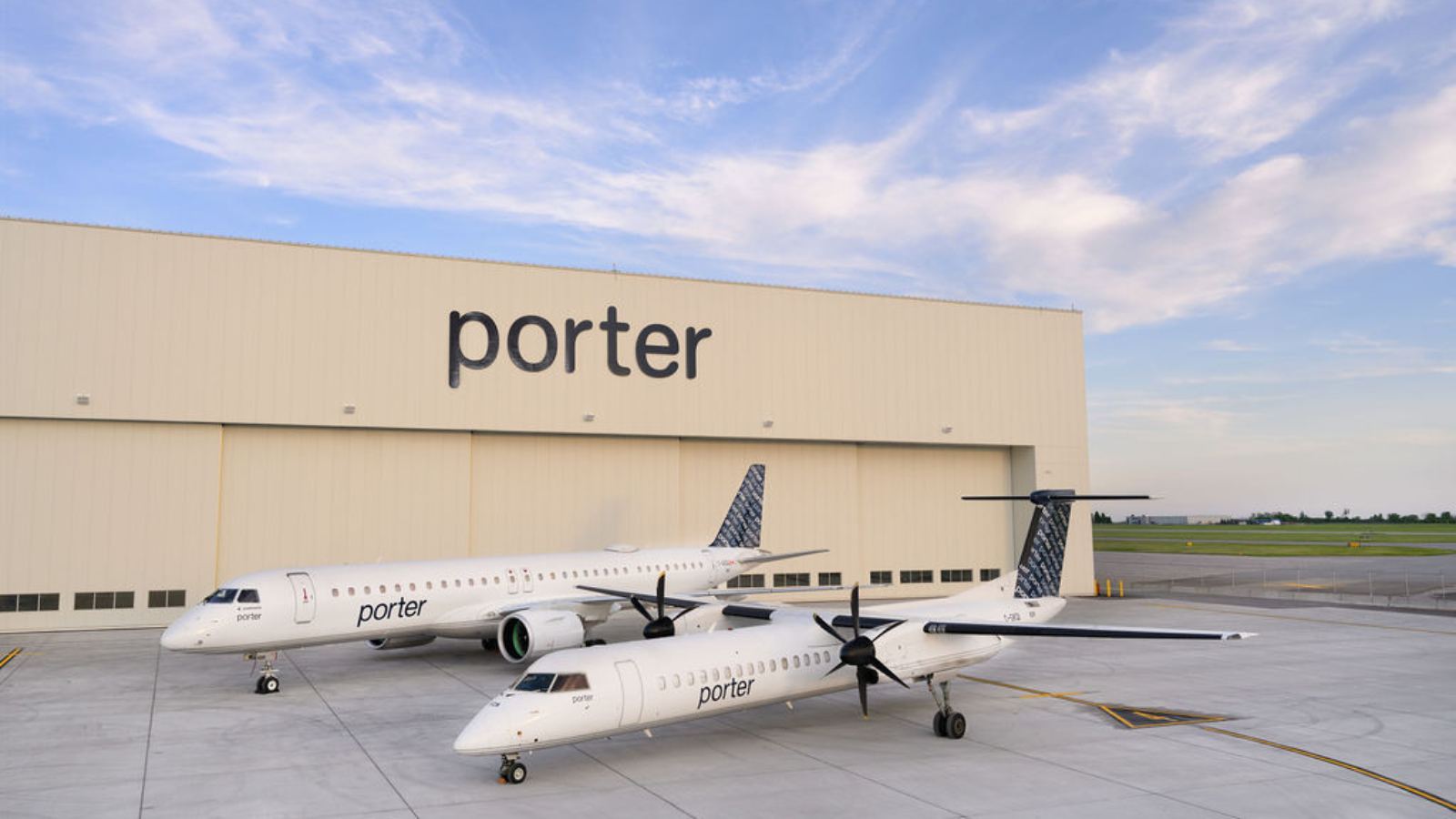
OTTAWA (Azat TV) – Porter Airlines has launched new direct seasonal services from Ottawa International Airport to Miami and Phoenix, beginning in late January and early February 2026. This strategic expansion directly contrasts with the broader trend among Canada’s major carriers, including WestJet and Air Canada, which are significantly scaling back their U.S. flight capacities amidst a reported decline in transborder travel demand.
Porter Airlines is explicitly banking on a rebound in U.S. travel, a bold prediction that sets it apart from competitors who cite sustained softening demand and have made extensive network adjustments. This divergence in strategy highlights differing outlooks on the future of cross-border air travel from Canada to the United States.
Porter Airlines’ Strategic Expansion to the U.S.
Porter Airlines initiated its new nonstop service to Miami International Airport on January 24, with three weekly flights. This was followed by flights to Phoenix Sky Harbor International Airport, which commenced on February 7, also operating three times a week. These additions expand Ottawa International Airport’s connectivity to the U.S. Southwest, complementing existing Florida routes to destinations like Tampa, Orlando, Fort Lauderdale, and Fort Myers.
Brent Card of Porter Airlines stated that the nonstop service from Ottawa aims to entice travelers who previously had to connect through Montreal or Toronto. He emphasized that these direct options have proven successful, catering to Canadians who own property in the U.S. Southwest and are seeking convenient access. Joel Tkach, vice president of business development and marketing at the Ottawa International Airport Authority, supported this move, describing the reduced travel to the U.S. as a “short-term blip” and expressing optimism for a rebound, especially during the colder Canadian winter months.
Despite these new routes, Porter Airlines has seen a modest 5% reduction in its overall U.S. capacity. However, this figure is considerably lower than the cuts implemented by other major Canadian airlines, underscoring Porter’s relatively bullish stance on the U.S. market.
Major Canadian Carriers Scale Back U.S. Capacity
In stark contrast to Porter’s expansion, other prominent Canadian airlines have continued to reduce their U.S. flight offerings. According to data from OAG, a total of 450,000 seats were removed from U.S. routes during the first quarter of 2026 by Canadian carriers. WestJet accounted for 19% of this decrease, while Air Canada reduced its U.S. capacity by 7%, and Flair Airlines implemented the most significant cuts at 58%.
WestJet, in particular, has been actively adjusting its network, citing a “notable decline in transborder travel demand throughout 2025.” The airline confirmed that it saw no indication of this trend changing in the foreseeable future and has been implementing ongoing reductions to its transborder network for 2026. Recent cuts include the pullback of U.S. flights from Edmonton and alterations to six routes serving popular destinations such as Atlanta, Salt Lake City, Seattle, Las Vegas, Los Angeles, and Phoenix.
Shifting Focus and Operational Challenges
While U.S. travel demand has softened, WestJet, Air Canada, and even Porter Airlines have increased their focus and capacity on international destinations, including Mexico and other global markets. Air Canada, in particular, demonstrated strong international growth in 2025 by strategically shifting its focus to long-haul and premium travel, responding to evolving traveler preferences for richer, more distant journeys. This strategy involved investing in premium cabins and enhancing onboard services, which contributed to its overall travel growth despite regional slowdowns elsewhere, as reported by Travel and Tour World.
Separately, Air Canada faced an operational challenge in early February 2026 when it suspended service to Cuba due to aviation fuel availability concerns. This suspension quickly evolved into a passenger repatriation mission, with the airline operating a series of recovery flights to bring approximately 3,000 customers back from Cuba. The airline implemented contingency measures, such as tankering extra fuel and planning technical stops if necessary, to safely complete these missions, as detailed by Airways Magazine.
Differing Market Interpretations
The contrasting strategies among Canadian airlines regarding U.S. travel reflect varying interpretations of current market conditions and future demand. While WestJet and Air Canada are responding to observed declines by reallocating resources, Porter Airlines is taking a calculated risk, betting on the enduring appeal of U.S. sun destinations and the convenience of direct flights to stimulate a rebound. The broader shift towards international and long-haul travel by some carriers suggests a re-evaluation of network priorities in the post-slump travel landscape.
The divergent approaches underscore the complexities of post-pandemic aviation, where carriers must balance immediate demand shifts with long-term strategic positioning. Porter’s contrarian move could either position it advantageously for an anticipated market recovery or expose it to risks if demand for U.S. travel continues to lag.