


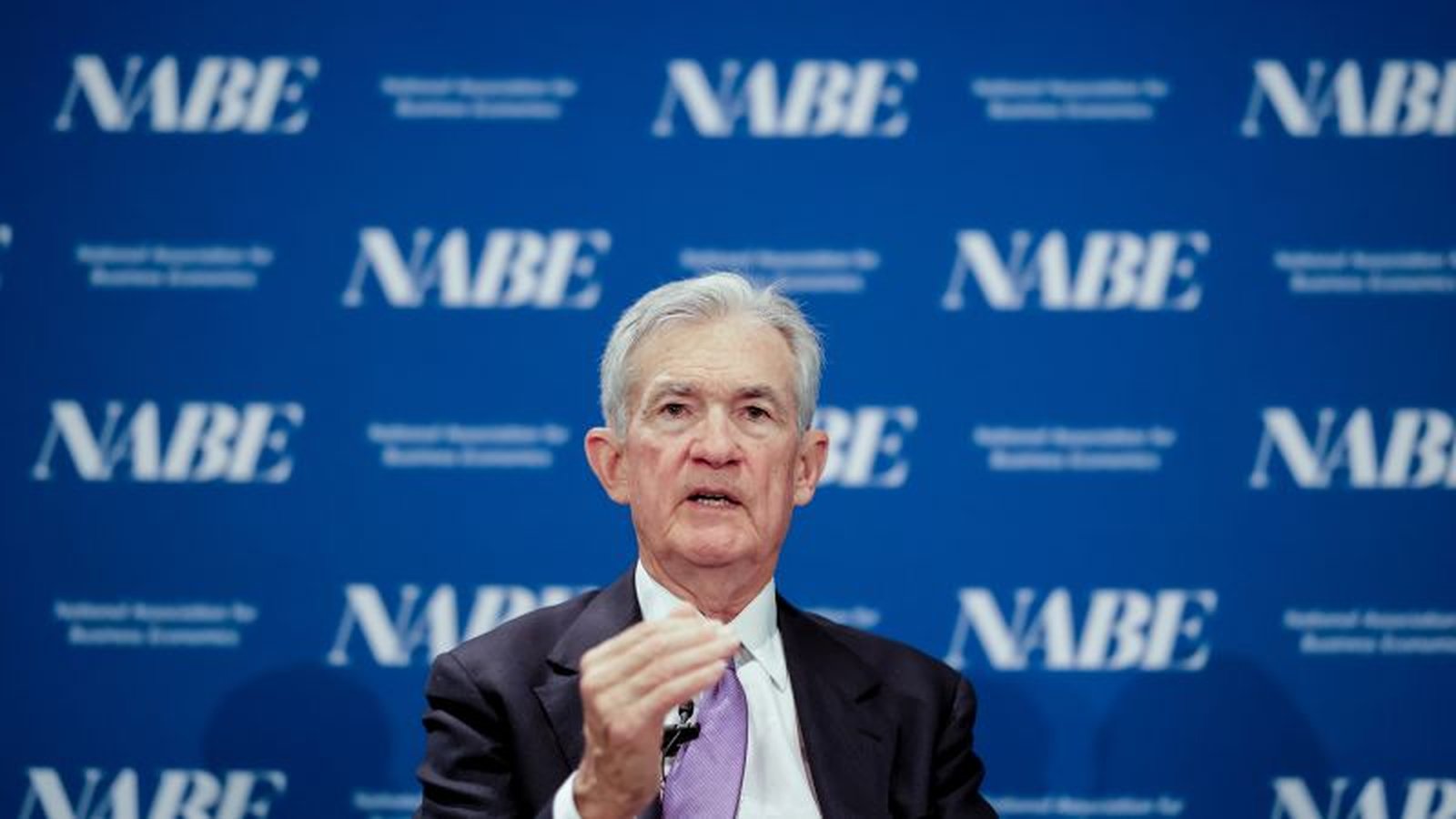
As the Federal Reserve stands at a critical crossroads, its chairman Jerome Powell has become the focal point of an increasingly complex economic balancing act. On one hand, inflation remains persistent, nudged upward by tariffs and trade policies. On the other, the job market has grown fragile, with more Americans searching for work than there are available openings. Powell, speaking at the National Association for Business Economics conference on Tuesday, laid out the dilemma: “There is no risk-free path for policy as we navigate the tension between our employment and inflation goals.”
This tension is not new, but the circumstances are. Sweeping policies under President Donald Trump, particularly tariffs and changes in government spending, have added new layers of uncertainty. Commerce Department data shows that tariffs have already led to higher prices for certain goods, and surveys indicate small businesses are bracing for further hikes. At the same time, the labor market has lost momentum. Job growth has slowed, unemployment spells are lengthening, and, for the first time in years, there are more people looking for work than job openings.
Inflation and Employment: A Delicate Tightrope
Powell’s remarks captured the essence of the Fed’s predicament. Move too aggressively in lowering rates, and inflation could run unchecked, undermining purchasing power and economic stability. Move too slowly, and the economy risks unnecessary job losses and prolonged hardship for workers. The September rate cut—the first of the year—was a cautious step, but it came with warnings from Powell and his colleagues about the risks on both sides of the equation.
“If we move too quickly (with lowering rates), then we may leave the inflation job unfinished and have to come back later and finish it,” Powell cautioned. “If we move too slowly, there may be unnecessary losses, painful losses, in the employment market.” The path forward, he stressed, demands careful calibration, especially as the federal government shutdown has suspended the release of key economic data, leaving the Fed to rely on alternative sources and its own network of contacts.
Debate Inside the Fed: Diverging Views on Rate Policy
The uncertainty has fueled lively debate within the Federal Reserve’s own ranks. In July, governors Michelle Bowman and Christopher Waller—both appointed during the Trump administration—broke with tradition by dissenting on a policy decision, advocating for a rate cut rather than holding steady. It marked the first time since 1993 that more than one governor dissented on a single vote. In September, Stephen Miran, a newly sworn-in Trump ally, argued for a deeper cut than the one ultimately chosen.
Powell, for his part, welcomed the debate. “We have a healthy debate going,” he said Tuesday, signaling that differences of opinion are not only expected but essential as the central bank steers through choppy waters. These discussions reflect broader uncertainties about the economy’s direction—and how best to support both price stability and maximum employment.
Quantitative Tightening Nears an End
One area where Powell offered more concrete hints was the Fed’s so-called quantitative tightening program—the process of reducing the central bank’s $6 trillion balance sheet. Speaking in Philadelphia, he suggested that the end of this program could be near. “Our long-stated plan is to stop balance sheet runoff when reserves are somewhat above the level we judge consistent with ample reserve conditions,” Powell noted. “We may approach that point in coming months, and we are closely monitoring a wide range of indicators to inform this decision.”
For banks, this means the era of shrinking reserves may soon be over, potentially providing greater liquidity and stability. For investors and the broader economy, it signals that the Fed is preparing to shift its toolkit, possibly focusing more on interest rates as its primary lever.
Looking Ahead: Rate Cuts and Economic Signals
Despite speculation, Powell stopped short of providing concrete guidance on future rate cuts. The central bank’s cautious approach is shaped by incomplete data—thanks in part to the government shutdown—and by the need to balance risks. The Fed’s reliance on a mix of public and private sector data, as well as insights from its nationwide network, underscores just how challenging it is to make policy decisions in real time.
Market participants and policymakers alike are left parsing Powell’s words for clues. While the tone suggests openness to further rate reductions, the timing and scale remain uncertain. The Fed’s next moves will depend on how inflation and employment data evolve—and how the underlying tensions between these two objectives resolve themselves.
As Powell noted, “Based on the data that we do have, it is fair to say that the outlook for employment and inflation does not appear to have changed much since our September meeting four weeks ago.” That assessment reflects the inherent difficulty of forecasting in a climate of policy shocks, incomplete information, and economic crosscurrents.
The stakes are high. The central bank’s actions shape everything from mortgage rates to the cost of business investment, and its credibility depends on getting the balance right. For now, Powell and his colleagues remain focused on navigating these tensions, aware that there are no easy answers or risk-free options.
Powell’s leadership is defined by a willingness to confront hard choices head-on, steering the Fed through conflicting pressures with transparency and debate. As the economy faces uncertainty, the central bank’s nuanced approach will be tested by both data and dissent, shaping policy for months to come.