


Rand Paul Challenges Federal Ban Threatening Kentucky’s Hemp Sector
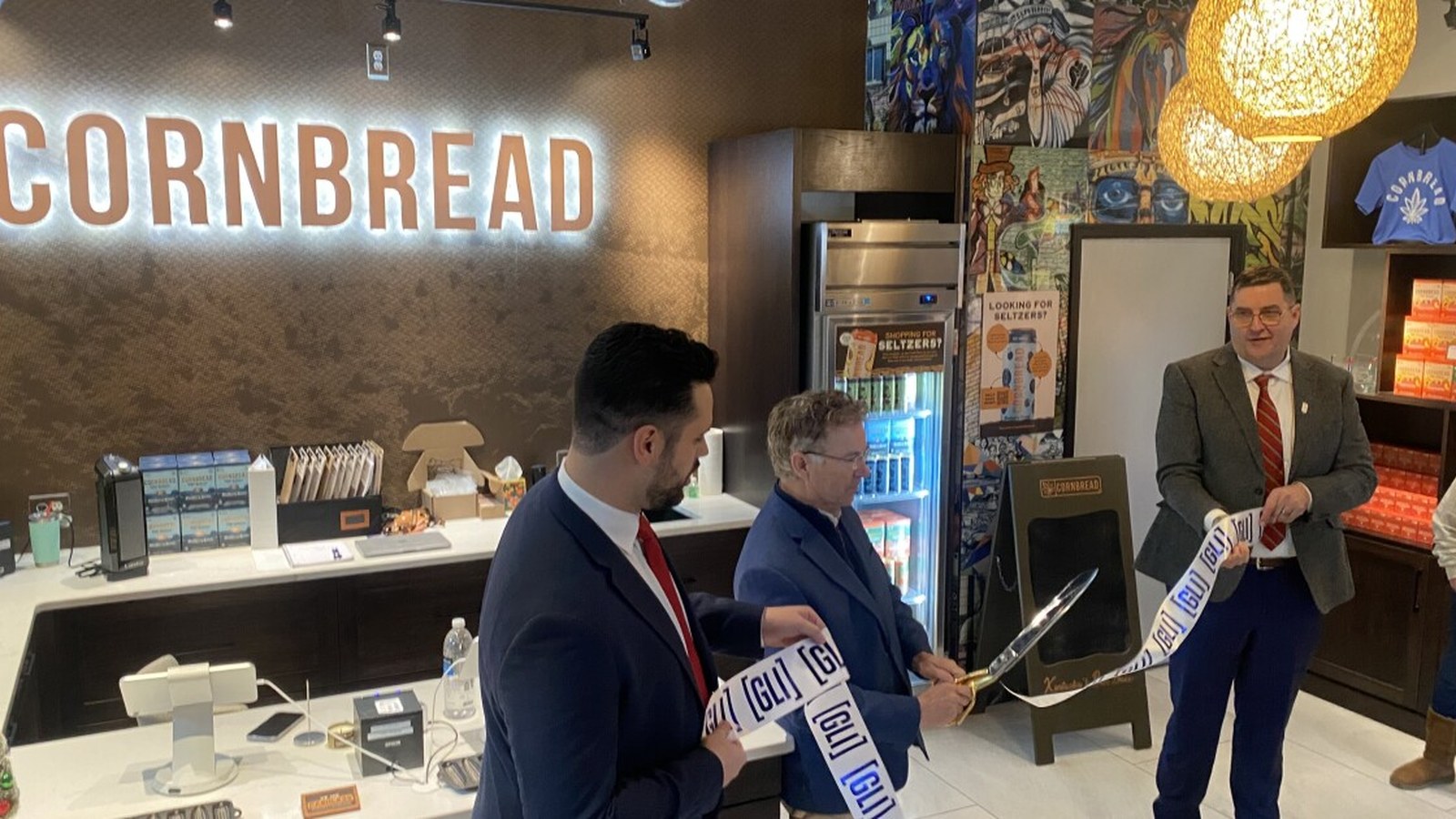
On a chilly Monday in Louisville, Kentucky Senator Rand Paul stood in front of a newly opened hemp facility, scissors in hand, ready to cut the ceremonial ribbon. For the local business owners gathered at Cornbread Hemp, this was more than a celebration—it was a rallying cry. The future of Kentucky’s $300 million hemp industry, once a national leader in innovation and revenue, is now hanging by a thread due to a new federal law that could render most of their products illegal next year.
Federal Law Sparks Outcry Among Kentucky Farmers and Businesses
The conflict stems from a provision championed by Senator Mitch McConnell, Paul’s fellow Kentucky Republican, in last month’s continuing resolution to fund the government. The new rule bans hemp-derived products containing more than 0.4 milligrams of THC per container, aiming to shield children from potentially harmful substances. McConnell, who played a pivotal role in launching the hemp industry through the 2018 Farm Bill, insists his new measure closes a loophole that allowed intoxicating products to proliferate. He claims the law will leave industrial hemp and CBD for medical research untouched.
But Paul, together with hemp farmers and business owners, says McConnell’s approach is dangerously misguided. Nearly all commercially viable CBD and low-THC hemp products contain trace amounts of THC—often well below intoxicating levels. By drawing the federal line so low, the law would sweep up 95% of all hemp products, including those used to manage sleep, pain, and anxiety. For Kentucky, a state that has fought hard to regulate hemp responsibly, the stakes are personal and profound.
Paul’s Push for State Rights and Higher THC Limits
Paul’s critique centers on states’ rights and practical regulation. Kentucky already prohibits children from buying THC products at gas stations, a state law Paul says is being overridden by the federal ban. “McConnell says he’s trying to save the children?” Paul asked during the event. “He’s ignoring the fact that he’s overturning the Kentucky law that does protect children, and there’s no age limit for buying it at the federal [level].”
Paul argues that Congress must act quickly—either to alter the new federal rules or to delay their implementation for another year. He believes the matter should be left to individual states, which better understand local needs. When pressed about what a reasonable federal THC limit would be, Paul suggested five milligrams per serving, a threshold that aligns with Kentucky’s new state law and is seen as a middle ground by industry leaders.
Jim Higdon, co-founder of Cornbread Hemp, explained that their gummies and beverages are formulated to comply with Kentucky’s five-milligram limit, but the federal cap would force them to halt production or reformulate. “The five milligrams per serving seems like something that Congress is prepared to think about,” Higdon said, but he emphasized the urgent need for clarity so farmers can plan next year’s crops. Planting season begins in May—time is running out.
Ripple Effects: Farmers, Communities, and Congressional Dynamics
The impact of the federal ban isn’t just theoretical. Asa Phillips, a hemp farmer from Owen County, joined others outside McConnell’s office to protest the measure. “He don’t have no idea what this does to our rural communities and the farmers,” Phillips said. “It’s not affecting just a few people. It affects bunches of people.”
Kentucky’s federal delegation, aside from McConnell, mostly opposed the restrictive language, though some Republicans voted for the bill to avoid a government shutdown. With the law set to take effect next November, uncertainty looms for thousands of families whose livelihoods depend on hemp. Many are unsure whether to risk planting crops in the face of possible prohibition.
Paul remains hopeful that Congress will revisit the issue next year, when legislative priorities won’t be tied to budget crises. “I had many people come up to me and said they were open to it,” he said. “I think we have the nucleus of a group, and I think we can do better.”
Industry at a Crossroads: Seeking Compromise and Clarity
At the heart of the debate is a classic American dilemma: how to balance innovation, public health, and economic opportunity. McConnell and supporters argue that stricter federal limits are necessary to protect children, citing hospitalizations linked to unregulated products. Paul and his allies counter that responsible state laws already address these concerns and that blanket federal bans risk crushing an entire sector.
The hemp industry, which has grown rapidly in recent years, now faces a crossroads. Without swift legislative action, companies may be forced to shutter facilities, lay off workers, and abandon fields. The uncertainty also discourages investment, stifling potential breakthroughs in medicine, agriculture, and manufacturing. As Jim Higdon noted, “The industry as a whole needs clarity long before that, as hemp farmers plan for next year’s crop.”
While the federal prohibition won’t take effect until November 2026, the time for dialogue and compromise is now. Kentucky’s story is emblematic of broader national tensions over cannabis regulation, federal versus state power, and the role of science and public opinion in shaping policy.
Senator Rand Paul’s fight against the new federal hemp law highlights the fragile balance between protecting public health and supporting local industry. The coming months will reveal whether Congress can find a compromise that preserves Kentucky’s hard-won gains without sacrificing safety or innovation. For farmers and business owners, the outcome will determine not just profits, but the future of rural communities and the promise of a crop once hailed as Kentucky’s next big thing.