


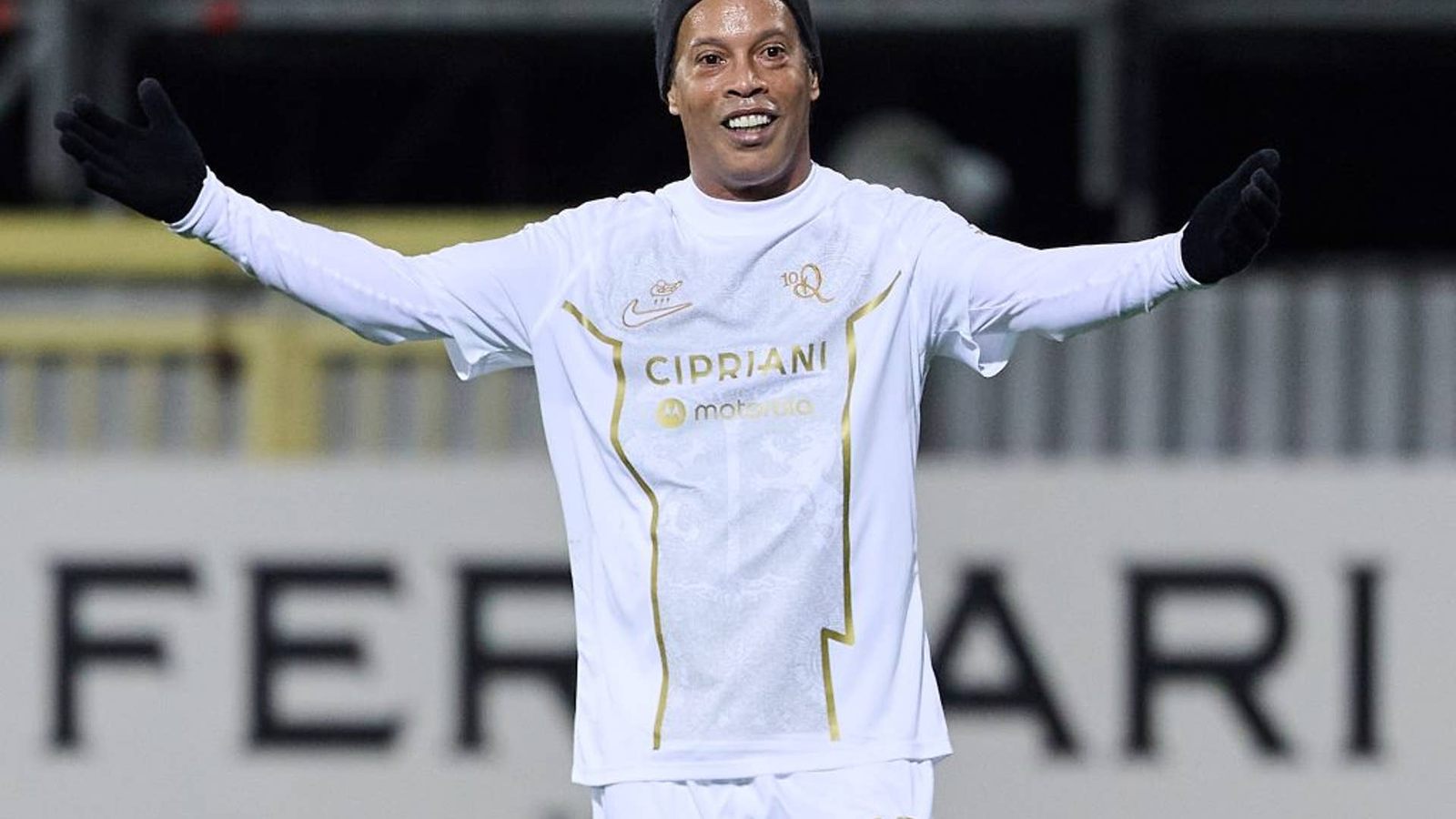
A Milestone Return in Serie C
Brazilian football icon Ronaldinho made his return to competitive professional football on November 15, 2026, stepping onto the pitch for Italian Serie C club Ravenna FC. The 46-year-old, who had not played in a professional match since his final stint with Fluminense in September 2015, participated in the first 45 minutes of a derby match against Forli. The appearance at the Stadio Bruno Benelli marks a unique convergence of roles for the former Ballon d’Or winner, who currently serves as both a player and a shareholder within the club’s ownership group, as reported by The Athletic.
The match, which carried significant local interest, saw Ronaldinho contribute to the build-up of Ravenna’s opening goal in the 36th minute. After receiving the ball outside the penalty area, he turned and linked play with Lorenzo Lonardi, who subsequently assisted Giulio Donati for the strike. Despite these glimpses of his trademark creativity, Ronaldinho was substituted at half-time and remained scoreless, leaving his career tally at 299 professional goals—one short of the 300-goal milestone he is publicly aiming to reach, according to ESPN.
The Intersection of Ownership and Performance
The decision to bring a global icon into Italy’s third tier is tied to a broader strategy led by Ignazio Cipriani, the leader of Ravenna FC’s ownership group. Cipriani has emphasized that this move is intended to elevate the club’s international profile and strengthen its connection with the local community. By integrating a player of Ronaldinho’s stature into the club’s corporate structure, Ravenna is attempting to merge traditional sports management with high-profile brand building. This operational model presents an unusual case study in modern football. While player-owners are not unprecedented in lower-tier leagues, the scale of Ronaldinho’s celebrity creates a distinct dynamic. The club’s leadership has framed the return not as a marketing stunt, but as a genuine effort to provide a unique gift to the city and finalize the legend’s storied career in a competitive environment. This narrative has attracted significant attention to Serie C, a division that typically operates outside the reach of major global media coverage.
Stakes and Future Uncertainty
For Ronaldinho, the primary objective remains the achievement of his 300th goal. Having retired from elite-level football in 2018 after his 2015 departure from Fluminense, his return to the pitch in 2026 requires significant physical adaptation. The 45-minute shift against Forli demonstrated that he retains the tactical vision and technical ability to influence play, yet the physical demands of professional football remain a hurdle for a player of his age. As of now, there is no official confirmation regarding whether Ronaldinho will feature in upcoming fixtures for Ravenna. The club has not provided a timeline for further appearances, leaving fans and observers to speculate if he will continue to pursue the final goal of his career or if the derby served as a singular, symbolic contribution. The outcome of this experiment will likely depend on his physical recovery and the club’s tactical requirements as they navigate the remainder of the season in Group B of Serie C.
Contextualizing a Career Legend
To understand the gravity of this event, one must look at the trajectory of the 46-year-old’s career. Ronaldinho, who won the 2002 World Cup with Brazil and the 2005 Ballon d’Or during his tenure at Barcelona, retired initially with a goal tally that remains a subject of minor statistical debate. While Transfermarkt lists his professional total at 267, other records, including those favored by the player himself, account for 299 goals when combining club and international play. This pursuit of the 300th goal is not merely a statistical exercise; it serves as the romantic narrative arc of his return, sanctioned by the club to bring a sense of closure to one of the sport’s most decorated careers.
The logistical reality of the signing, which occurred in August 2026, initially led to skepticism among pundits who viewed the move as purely ceremonial. Ariedo Braida, vice president of the club, had initially downplayed the prospect of the Brazilian playing in official matches. However, the script shifted as the club unveiled the “Ronaldinho Day” event, signaling a genuine, if limited, return to the pitch. His presence in the squad under head coach Andrea Mandorlini comes as Ravenna fights for position in Group B, where they currently hold a competitive standing. The club’s reliance on his technical flair, even in short bursts, suggests a strategic integration rather than a mere exhibition.
Strategic Implications for Ravenna FC
The broader implications for Ravenna FC involve maintaining the momentum generated by this high-profile signing. Whether the influx of attention translates into long-term commercial growth or sustained interest from supporters remains to be seen. The club’s strategy, heavily influenced by the Cipriani hospitality dynasty, aims to use Ronaldinho as a beacon to elevate the club’s status within Italian football. By transitioning from a retired icon to a shareholder-player, Ronaldinho is effectively testing the viability of a hybrid model that could, in theory, be replicated by other aging stars seeking to maintain ties to the game while influencing the business side of professional clubs. For now, the focus rests on the technical performance of a legend who, despite a decade-long absence, remains a focal point for football followers worldwide, leaving the door open for further appearances as the season progresses.