


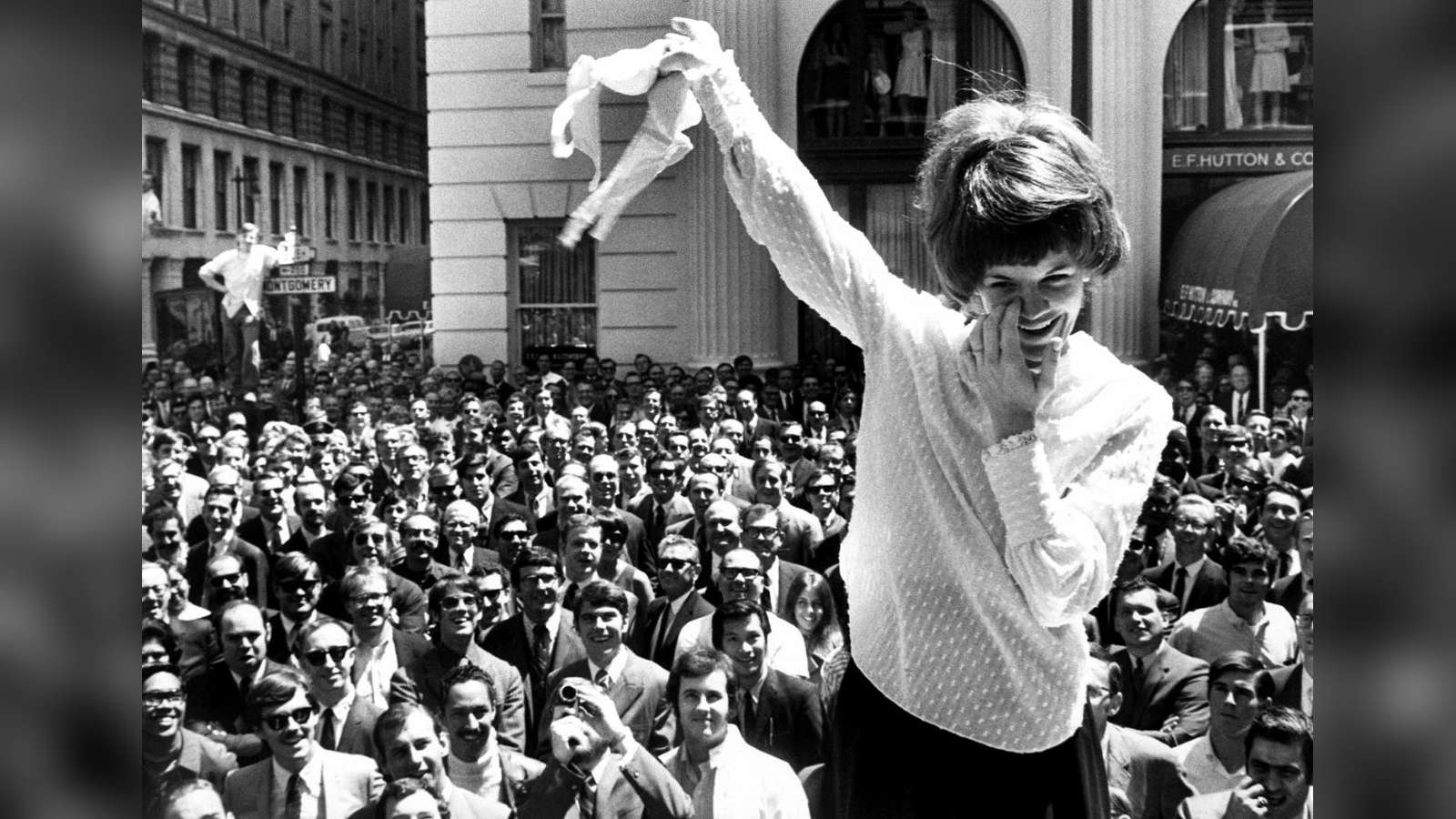
This photograph captures a singular, intense moment during a 1969 protest in San Francisco, where a young woman stands amidst the crowd, embodying the shifting tide of the Women’s Liberation movement. The image serves as a vital window into a year defined by its restlessness, where the traditional structures of American life—from the family unit to the workplace—were being challenged from every corner. The photograph does not merely document a protest; it preserves the physical presence of a generation that refused to remain silent. By observing her stance, we are transported to a time when the very act of standing in public was a political statement.
What the photograph shows
In the frame, the subject displays a defiant, alert posture, standing as the focal point against a backdrop of urban agitation. Her attire and the atmosphere surrounding her reflect the late 1960s aesthetic—a blend of casual street wear, unpolished hair, and the authentic, raw look of grassroots activism. The composition highlights her individual agency, contrasting her stillness with the kinetic energy of the surrounding demonstration. Unlike the staged portraits or glossy magazine spreads that often defined the visual culture of the decade, this image captures the grit of political participation. Her expression is not one of performative anger, but of grounded resolve, suggesting a woman who has moved past the point of asking for permission.
The moment behind the image
The year 1969 was a period of intense polarization in America. While the nation looked toward the moon landing and the escapism of Woodstock, the streets of San Francisco were buzzing with the friction of the counterculture. This specific protest, centered on the rejection of the bra as a symbol of domestic subservience, was part of a larger conversation about the ‘homemaker’ ideal that had dominated the 1950s. The act of discarding or protesting the bra was never truly about the garment itself; it was a visceral, visual rejection of the patriarchal standards that dictated how a woman should look, move, and behave in public spaces.
Photographer and provenance
The provenance of this specific image remains rooted in the documentary style of late-1960s underground photojournalism. Much like the images collected in archives today—often snapped by local newspapers, student journalists, or activists themselves—this photo lacks the signature of a mainstream agency, which contributes to its raw, unvarnished quality. It survived because it successfully captured the ‘mood’ of the era. Whether taken by a local lensman or a participant, the photograph traveled through time because it perfectly encapsulated the transition from the structured, rule-bound world of the post-war era to the chaotic, liberating uncertainty of the 1970s. The lack of a definitive photographer’s credit highlights the democratic, collective nature of the movement itself, where the message often mattered more than the individual behind the lens.
Historical context
To understand this photograph, one must look at the decade that preceded it. In the 1950s, American life was built on routine and pride, where school halls were strictly monitored, and girls were taught to sew and manage households. By 1969, that world had begun to fade. The girl in this photograph is the daughter of that 1950s system, choosing to break the cycle. The protest was not just about fashion; it was about the right to exist without being policed by societal expectations. This was the era where the ‘personal became political,’ and this photograph is the visual evidence of that philosophy in action. The shift from the poodle skirts of the fifties to the uninhibited street style of the late sixties is fully visible in the subject’s posture and presentation.
Why it still matters
This photograph remains a vital historical artifact because it moves beyond the sanitized versions of the era seen in textbooks. It documents the moment when personal expression became a public political statement. By examining the woman in the frame, we see not just a protester, but a participant in a generational break that fundamentally altered the trajectory of American social life. It reminds us that every revolution is built on the shoulders of individuals who were willing to stand in a crowd and say ‘no’ to the status quo. It is an enduring image of autonomy, reminding contemporary viewers that the freedoms enjoyed today were hard-won in the streets by those who refused to conform.