


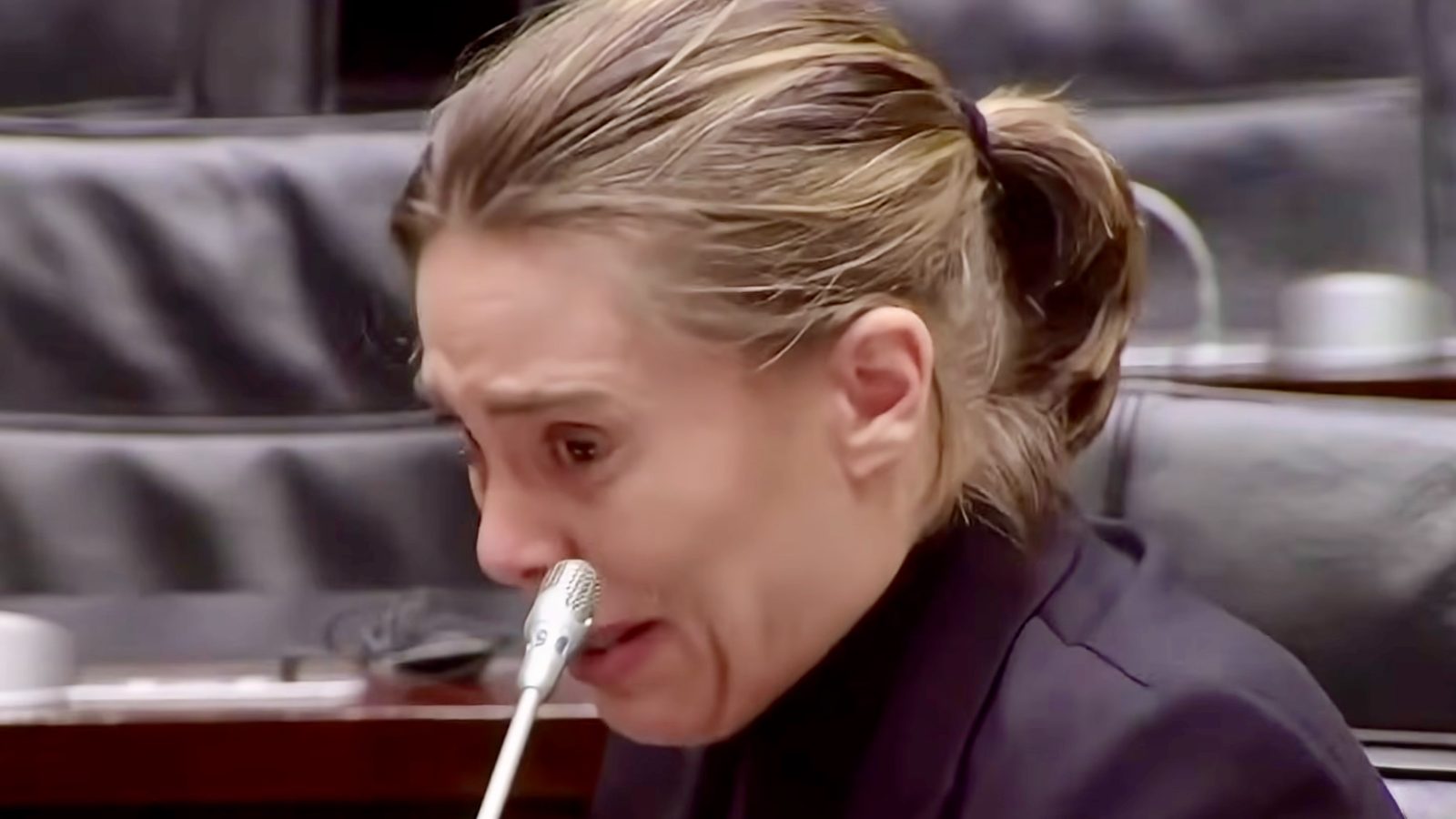
YEREVAN (Azat TV) – Sarah-Jane Trent, a former associate of prominent forensic investigator Paul O’Sullivan, broke down in tears Thursday during her testimony before parliament’s ad hoc committee, which is probing allegations of corruption and political interference within the criminal justice system. Trent’s emotional moment came under intense questioning regarding the legal basis for private organizations to assist the Independent Police Investigative Directorate (Ipid) in its investigations, particularly concerning high-profile cases like that of former acting national police commissioner Khomotso Phahlane.
Trent’s appearance followed that of O’Sullivan, who had concluded his own testimony earlier the same day. Both individuals face accusations of “infiltrating” Ipid, an allegation that has raised significant concerns about the independence and integrity of South Africa’s key police oversight body.
Trent’s Role and Initial Explanations
During her testimony, Sarah-Jane Trent provided a chronological account of her professional relationship with Paul O’Sullivan. She explained that she began working at his investigative firm on a pro bono basis in February 2015, initially out of interest in investigations and a lack of employment at the time. “I thought, ‘What do I have to lose?’ I was interested in investigations and I sent my CV,” Trent told the committee, as reported by TimesLIVE. She elaborated that the firm was not hiring, leading her to volunteer her services, which were initially limited to research without involvement in specific cases or high-level meetings.
Over six years, Trent’s role evolved, and she eventually became a director at Paul O’Sullivan and Associates and Forensics for Justice. Her testimony established her deep involvement with O’Sullivan’s operations, setting the stage for the committee’s scrutiny of their activities concerning Ipid.
Scrutiny Over IPID Involvement
The atmosphere in the parliamentary chamber grew tense when evidence leader advocate Bongiwe Mkhize began questioning the firm’s specific involvement in Ipid’s investigation into former acting national police commissioner Khomotso Phahlane. O’Sullivan had filed a formal complaint against Phahlane in 2016, leading to Ipid’s probe. Trent explained that she performed research to assist Ipid and subsequently met with former Ipid head Robert McBride and senior investigator Mandla Mahlangu, who was leading the Phahlane investigation.
The core of the committee’s concern revolved around the legality of Ipid outsourcing or receiving substantial assistance from private entities like O’Sullivan’s firm. This line of questioning intensified as Members of Parliament pressed Trent to identify the specific regulations or sections of the Ipid Act that permit such arrangements. Trent cited the Ipid Act, asserting that it allowed private entities to assist the directorate with investigations. However, when MPs demanded concrete evidence or specific legal clauses to substantiate this claim, she struggled to provide a definitive answer.
The Breakdown Under Pressure
Under mounting pressure and repeated demands for legal clarity, Trent clarified that their firm was not managing the entire investigation but was merely assisting with “simple tasks.” She stated, “If I needed to run a search on something that came out of an investigation… [Ipid] carried out the investigation. We went through the case with them.”
Despite her explanations, MPs remained unsatisfied, continuing to press for explicit legal justification for the private firm’s involvement. The cumulative stress of the intense scrutiny ultimately caused Trent to break down in tears, prompting the committee to call a five-minute recess to allow her to compose herself. Proceedings resumed shortly thereafter, but the emotional moment underscored the gravity of the allegations and the pressure on witnesses.
Broader Allegations of IPID Manipulation
Trent’s testimony is part of a broader inquiry by the ad hoc committee into alleged criminal infiltration and political interference within the South African Police Service (SAPS) and Ipid. Earlier in the week, former National Prosecuting Authority prosecutor advocate Molatlhwa Mashuga testified about what he termed the “infiltration” of Ipid, specifically highlighting the undue influence of Paul O’Sullivan and Sarah-Jane Trent. Mashuga produced communications he claimed were threats received after investigating O’Sullivan and Trent, telling the committee that “the integrity of our justice system is at stake when private individuals can influence who is investigated and who is protected within the SAPS,” as reported by Parliament.gov.za.
These testimonies collectively paint a picture of a criminal justice system potentially compromised by external influence, raising serious questions about accountability and the rule of law. The committee’s investigation continues to probe these complex allegations, with MPs across the political spectrum expressing deep concerns over national security and police leadership.
Sarah-Jane Trent’s emotional testimony highlights the intense scrutiny placed on private individuals involved in public investigations and the critical need for transparency regarding the legal framework governing collaborations between state institutions and external entities. The parliamentary committee’s focus on the precise legal basis for Ipid’s engagement with private firms underscores a broader concern about potential vulnerabilities in the criminal justice system to undue influence.