


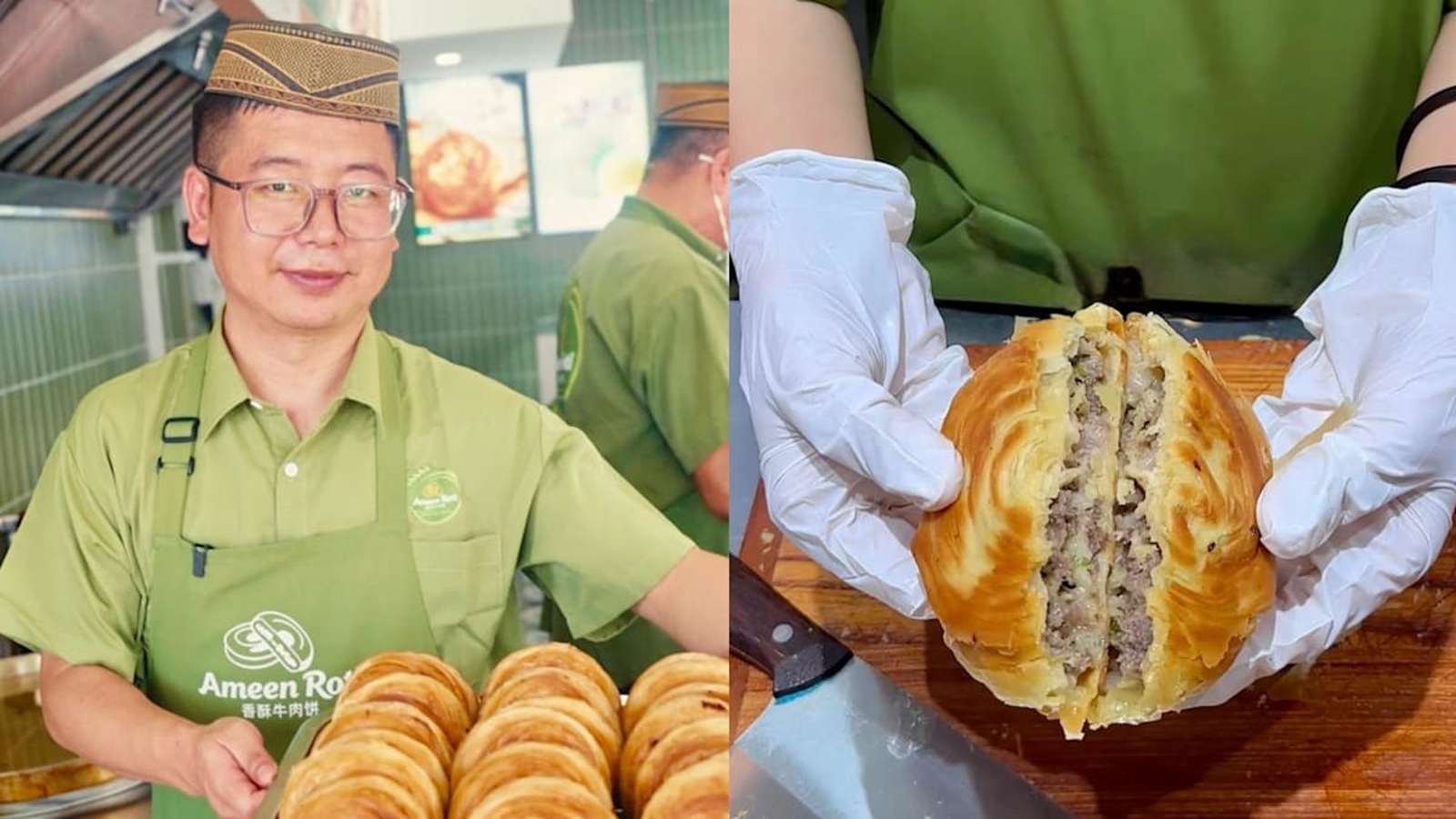
A sharp debate has emerged online in Singapore over the pricing of traditional street food, centered on the newly launched Chinese-Muslim eatery Ameen Roti. Following social media criticism that its signature Beef Roti is overpriced at S$6 (approximately US$4.70), the establishment’s owner, Harun Min, has publicly defended the pricing strategy, highlighting the economic realities of preserving labor-intensive culinary traditions in a high-cost urban economy.
According to reports by 8days.sg and CNA Lifestyle, the 36-year-old former middle school teacher from Linxia, northwest China, launched two Ameen Roti outlets in June 2026—a 15-seater dine-in shop at Haji Lane and a takeaway stall at Century Square. Despite drawing persistent queues of 30 to 60 minutes during peak hours, the brand faced pushback on platforms like TikTok, where users questioned whether S$6 was too expensive for a single beef roti.
The Economics of Artisanal Street Food
In response to the criticism, Min argued that the price accurately reflects the operational costs, premium ingredients, and specialized labor required to produce authentic Chinese-Muslim beef roti (locally known as niu rou bing or guo kui in China). “Our roti uses premium beef and handmade dough, which requires time-consuming manual work,” Min explained. “The cost of labor and quality ingredients make this price reasonable.”
Unlike mass-produced flatbreads, Ameen Roti’s signature dish relies on a traditional Xi’an Muslim recipe. The preparation involves stretching the dough paper-thin, stuffing it with local fresh beef and spices imported directly from China, and frying it in small batches over high heat to achieve distinct, crispy layers. Min emphasizes that maintaining this level of culinary authenticity requires highly skilled cooks rather than automated machinery.
From Classroom to Commercial Kitchen
Min’s journey to Singapore’s competitive food and beverage (F&B) sector represents a major career pivot. Before entering entrepreneurship, he spent six years teaching Chinese and mathematics in his hometown of Linxia, holding a postgraduate degree in Sociology from Northwest Minzu University. After testing the local market through various night markets (pasar malam) in Woodlands, Tampines, and Jalan Sultan, he decided to establish a permanent presence in Singapore.
Min and his partners invested approximately S$300,000 into the business, employing three specialized Chinese-Muslim chefs from Linxia, each possessing over 20 years of experience in making beef roti. Min selected Singapore over alternative regional hubs like Kuala Lumpur, citing the country’s institutional advantages. “Singapore boasts stable policies, transparent business rules, and a multicultural food market that welcomes international snacks,” Min noted, emphasizing the absence of hidden red tape as a key factor in his investment decision.
Balancing Cost and Consumer Expectations
The pricing controversy at Ameen Roti underscores a broader challenge facing Singapore’s food sector: balancing consumer expectations for historically cheap street food with the rising costs of commercial rents, imported ingredients, and skilled labor. While some consumers view S$6 as steep compared to standard local flatbreads like roti prata, proponents of artisanal dining argue that specialized, hand-crafted heritage dishes cannot be priced at mass-market baselines.
Ameen Roti currently operates as a Muslim-owned establishment and is preparing to apply for official halal certification to expand its reach within Singapore’s multicultural community. As the brand navigates both high demand and price sensitivity, its trajectory will serve as a case study for whether traditional, labor-intensive street food concepts can successfully sustain premium pricing models in modern metropolitan markets.