


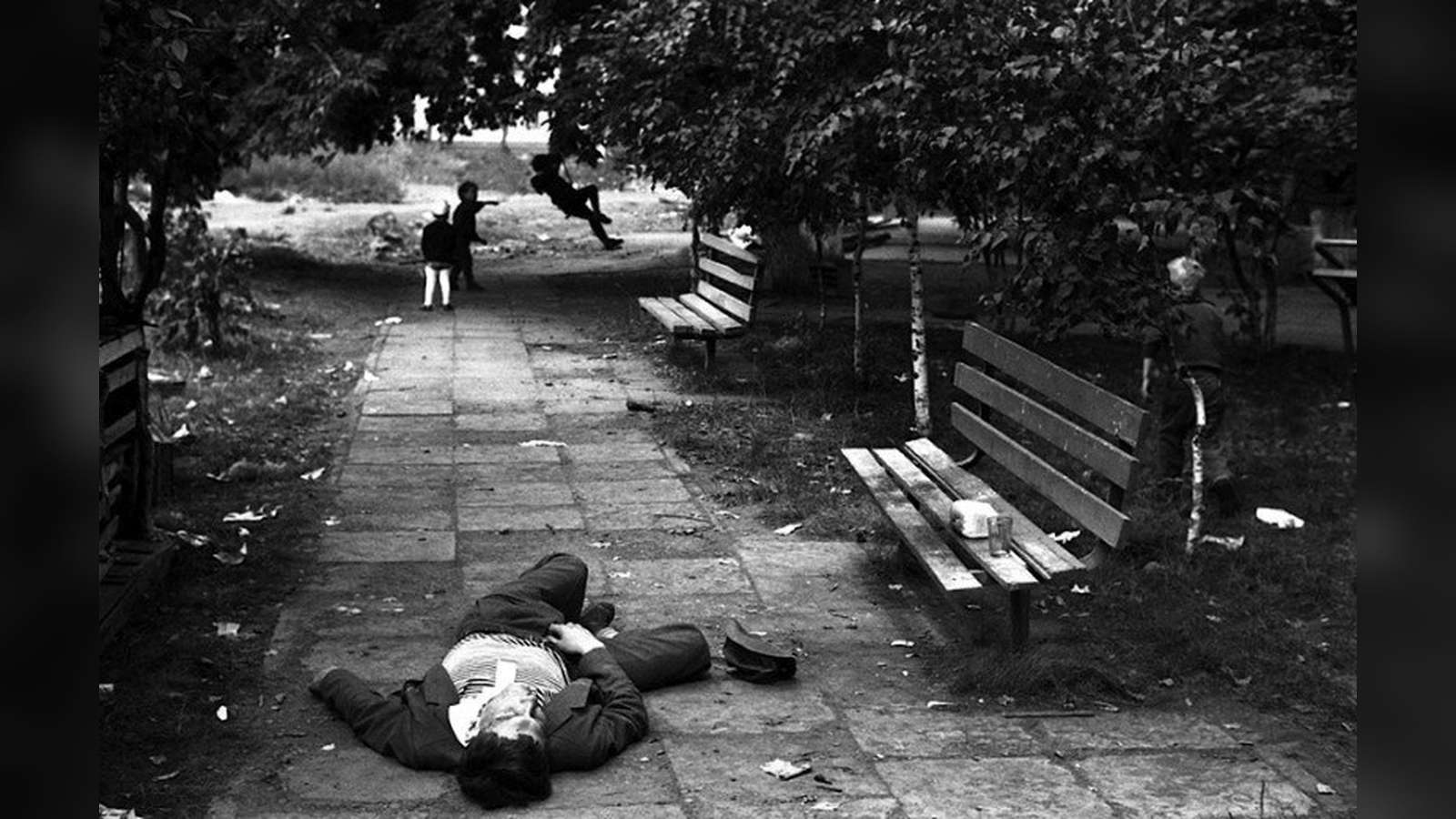
This photograph captures the serene, structured atmosphere of a Soviet ‘Park of Culture and Rest’ during the 1980s. The frame is defined by a sense of open space, characterized by manicured paths, towering mature trees, and a notable lack of the commercial clutter that defines modern public spaces. The people in the frame are captured in mid-stride or quiet conversation, dressed in the functional, often muted fashion of the era, reflecting the everyday reality of Soviet citizens seeking respite from the industrial rhythm of the city. The composition emphasizes the scale of these parks—vast, green lungs designed to serve as both recreational zones and centers for mass cultural education. The light, filtering through the dense foliage, suggests a late-afternoon calm, a fleeting moment of peace in a society defined by high-pressure production quotas and collective goals.
The moment behind the image
The photograph serves as a visual time capsule from the final decade of the Soviet Union. These parks were not merely green spaces; they were ideological projects intended to shape the ‘new Soviet person.’ By the 1980s, the initial revolutionary zeal behind these spaces had mellowed into a familiar, somewhat nostalgic routine. The stillness captured here suggests a moment of pause, perhaps a weekend afternoon where the park offered a reprieve from the rigid schedules of labor. It represents the quiet, domestic side of a superpower in its twilight, where the grandiosity of socialist planning met the simple human need for a walk in the shade. Immediately before the shutter was clicked, one might imagine the distant sound of a brass band or the faint hum of a carousel—sounds synonymous with the Soviet park experience. The photographer’s choice of framing—centering the walkway while allowing the figures to be somewhat anonymous—speaks to the collectivist nature of public leisure in the USSR.
Photographer and provenance
The image is attributed to Vladimir Tatarnikov, a photographer whose work often focused on documenting the urban landscape of Yakutsk and its surrounding regions. His lens provides a rare, grounded view of life in the remote, often harsh environments of the USSR. The provenance of this image, archived through digital repositories like PastVu, highlights the growing digital effort to preserve the visual history of the Soviet era. By digitizing these personal and professional archives, researchers and enthusiasts are reconstructing the daily aesthetics of a vanished state. While the exact date remains pinned to the 1980s, the specific visual cues—the clothing styles, the state of the park’s infrastructure, and the film quality—point to a period of relative stagnation, where the maintenance of these public spaces had become a routine, almost ritualistic, municipal task. The lack of specific identifying markers for the individuals in the photo underscores the anonymity often associated with Soviet archival photography, where the focus was frequently on the ‘typical’ rather than the specific.
Historical context
The ‘Park of Culture and Rest’ was a ubiquitous feature of every Soviet city. Established as a central state policy in the 1930s, these parks were designed to provide accessible leisure to the proletariat. They typically featured concert stages, libraries, reading rooms, and sports facilities. By the 1980s, these spaces had become the backdrop for the daily lives of millions, serving as the primary site for public interaction, dating, and family outings. The simplicity of this photograph highlights the standard design language that made these parks recognizable from Yakutsk to Moscow. They were the physical manifestation of the Soviet social contract: in exchange for labor, the state provided culture and rest. This particular location in Yakutsk, situated in a region defined by extreme climate, illustrates how the Soviet state attempted to impose a uniform model of ‘culture’ even in the furthest reaches of the federation.
Why it still matters
This image remains significant because it strips away the political rhetoric of the USSR to reveal the human experience underneath. It asks us to consider how public spaces define our social identity and how, even under a centralized regime, the act of walking through a park remains a universal expression of freedom. The photograph invites us to look past the historical abstraction of the Soviet Union and see a tangible, lived-in environment that once felt permanent. It serves as a reminder that history is not just made in the Kremlin, but in the quiet, tree-lined paths where citizens once walked, oblivious to the impending collapse of their world. The photograph acts as a bridge to a vanished social reality, reminding us that the ‘Stagnation Era’ was not just a political construct, but a lived experience of millions of people who found joy, quiet, and humanity in the spaces provided to them by a state that would soon cease to exist.