


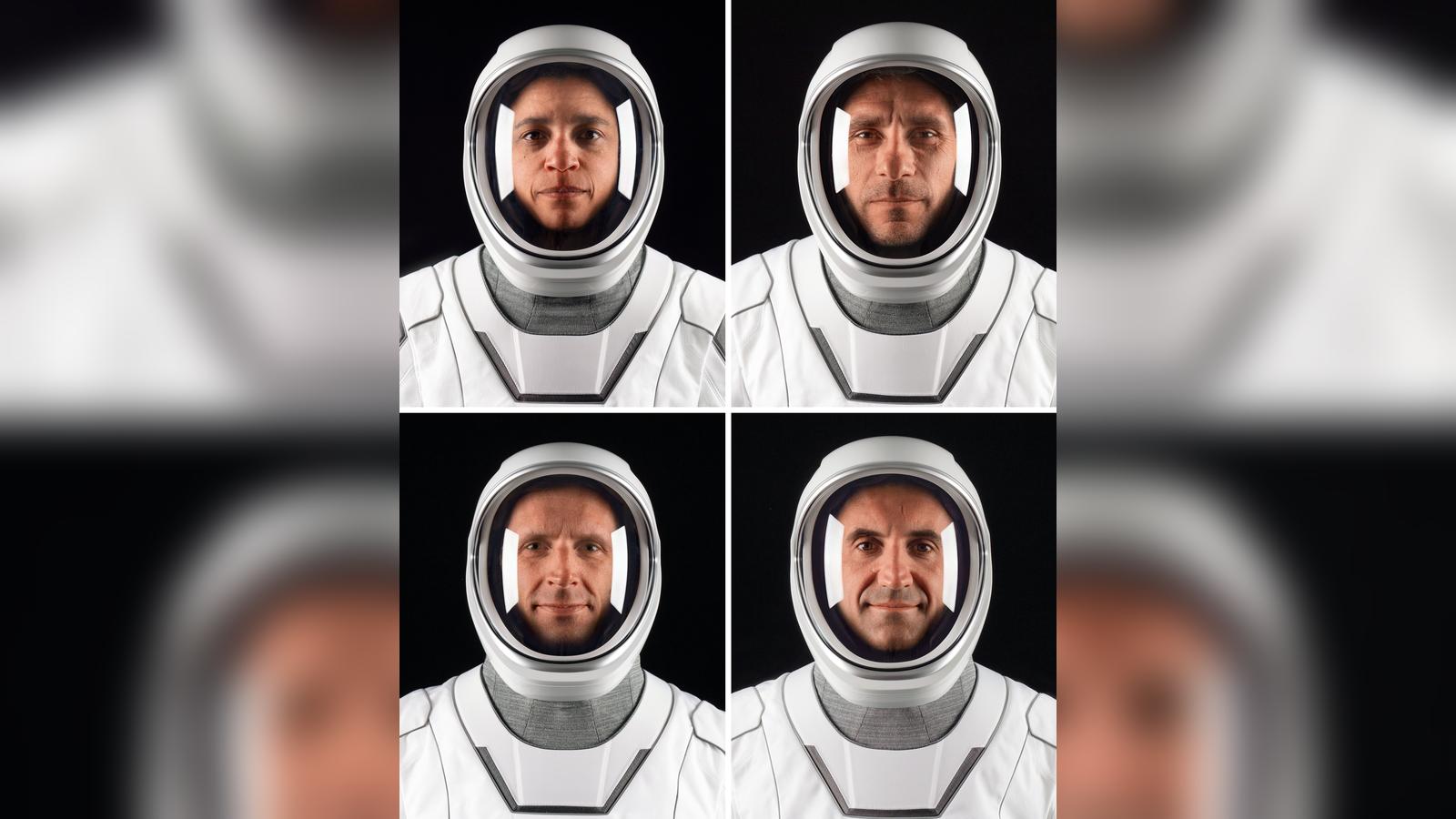
Crew Composition and Flight Timeline
The Crew-13 mission features a diverse, multi-agency team composed of NASA astronauts Jessica Watkins and Luke Delaney, Canadian Space Agency astronaut Joshua Kutryk, and Roscosmos cosmonaut Sergey Teteryatnikov, as detailed by NASA. Watkins makes history on this flight as the first NASA astronaut to launch aboard a SpaceX Dragon spacecraft twice, having previously flown on Crew-4.
Following the successful liftoff, flight controllers confirmed that the spacecraft was placed on an accelerated trajectory. Bill Gerstenmaier, vice president of Build and Flight Reliability at SpaceX, noted during a prelaunch briefing that orbital mechanics and a recent space station orbit adjustment set up an exceptionally fast rendezvous. The journey to the ISS is slated to take 7 hours and 50 minutes, marking the fastest trip to the station for an American spacecraft to date.
Overcoming Prelaunch Technical Hurdles
The path to Thursday’s liftoff involved significant technical resolution. As reported by ABC News, the mission was originally delayed in August following the discovery of an oxidizer leak in the Dragon spacecraft’s propulsion system during environmental checks. Engineers also had to troubleshoot unexpected anomalies involving the vehicle’s GPS and rocket engine motor microcontroller. Following a rigorous Launch Readiness Review, NASA and SpaceX officials declared the vehicle ready for flight.
Amid the high-tech preparations, personal touches accompanied the crew into orbit. Canadian astronaut Joshua Kutryk brought a family pocket watch dating back more than 100 years, noting that the heirloom serves as a personal reflection on a century of technological advancement.
Scientific Objectives and Station Handover
Once docked, the Crew-13 members will embark on a robust research agenda. Dana Weigel, manager of NASA’s Low Earth Orbit Program, explained that researchers will utilize human stem-cell-derived tissues to advance treatments for heart disease and Parkinson’s disease. The crew will also test new medical diagnostic hardware, study blood flow abnormalities in microgravity, and expand crop production experiments vital for long-duration deep space exploration.
The incoming crew will execute a brief handover protocol with the departing Crew-12 team, which has operated aboard the station since February. Crew-12 is scheduled to depart the ISS and return to Earth as early as Monday, Oct. 5, closing out a major operational transition as the orbiting laboratory approaches 26 years of continuous human presence.