


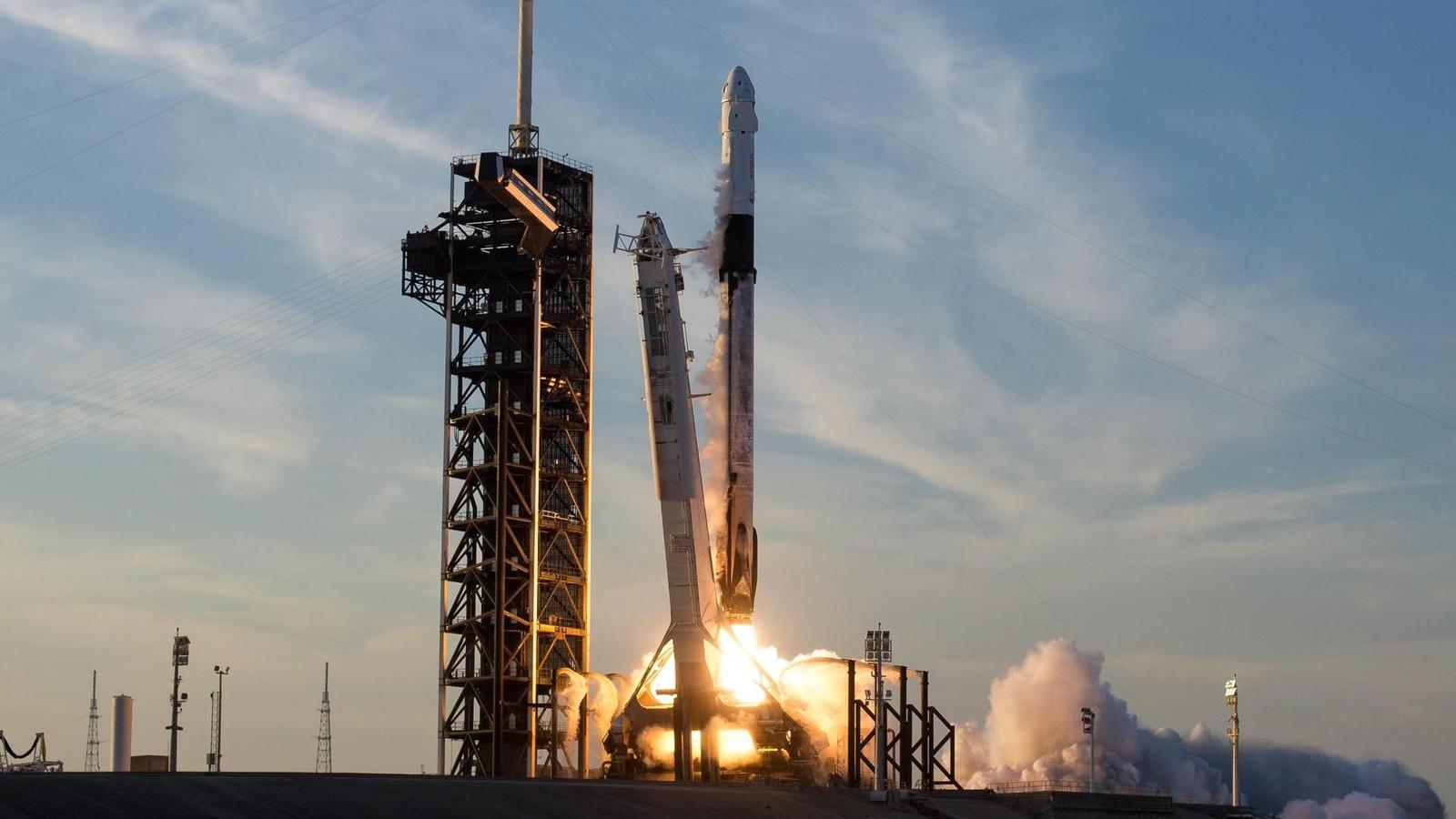
Three Missions in a Tight Window
SpaceX is undertaking a demanding launch schedule on October 1, 2026, aiming to fly three orbital missions in a compressed 13-hour span. As reported by Space.com, the operational tempo matches a high-intensity milestone the company has accomplished only once before in its history.
The sequence begins in Florida with the launch of the Crew-13 astronaut mission for NASA. Liftoff from Cape Canaveral Space Force Station carries a Falcon 9 rocket and Dragon spacecraft toward the International Space Station, transporting NASA astronauts Jessica Watkins and Luke Delaney, Canadian Space Agency astronaut Joshua Kutryk, and Roscosmos cosmonaut Sergey Teteryatnikov, according to NASA. Pre-launch operations saw final fuel loading and liquid oxygen servicing completed ahead of schedule.
Rideshare and National Security Payloads
Following the Florida opening, operations shift to the West Coast. California’s Vandenberg Space Force Base hosts the Transporter-18 rideshare mission on a Falcon 9 rocket. This flight carries 130 separate payloads into orbit, including a prototype satellite for Google’s Project Suncatcher artificial intelligence constellation.
The cadence concludes back on the East Coast at NASA’s Kennedy Space Center. A heavy-lift Falcon Heavy rocket is scheduled to lift off late at night, carrying the classified NROL-97 national security mission for the U.S. National Reconnaissance Office.
Operational Context and Historical Precedent
The rapid-fire schedule tests the limits of ground infrastructure, range coordination, and fleet turnaround. The only prior instance of SpaceX launching three missions within such a narrow timeframe occurred on March 14–15, 2025, when a sequence of three Falcon 9 rockets achieved orbit within 12.5 hours.
This week’s heavy flight rate follows closely on the heels of the 14th test flight of the company’s Starship megarocket, which achieved Earth orbit for the first time. Together, these events place active hardware lines across Falcon 9, Falcon Heavy, and Starship under maximum operational evaluation.