


A Dual-Speed Giant: Inside SpaceX’s Post-IPO Financial Reality
In its first comprehensive financial disclosure since going public on June 12, 2026, Space Exploration Technologies Corp. (SpaceX) has presented public markets with a striking corporate paradox. According to the company’s Q2 2026 earnings release and subsequent SEC filings, SpaceX generated $7.81 billion in quarterly revenue—representing an impressive 92% year-over-year surge—yet still recorded a net loss of $541 million. This net loss, though narrower than the $1.01 billion deficit recorded in the same period last year, highlights a stark internal divide: a highly mature, self-funding satellite connectivity business is currently bankrolling an unprecedented, capital-intensive expansion into artificial intelligence and heavy-lift space flight.
The company’s market valuation, which hovered around $1.89 trillion following a 1.55% share price increase to $143.69, represents an extraordinary multiple of approximately 60 times annualized second-quarter sales (and 75.7 times annualized first-half revenue). This valuation indicates that Wall Street is not merely pricing SpaceX as a commercial launch provider or a satellite broadband utility, but as a dominant foundational player in global AI infrastructure. However, with first-half capital expenditures outstripping operating cash flow by $25.01 billion, the sustainability of this aggressive dual-track strategy remains the central debate among institutional investors.
Starlink and Starshield: The Self-Sustaining Cash Engine
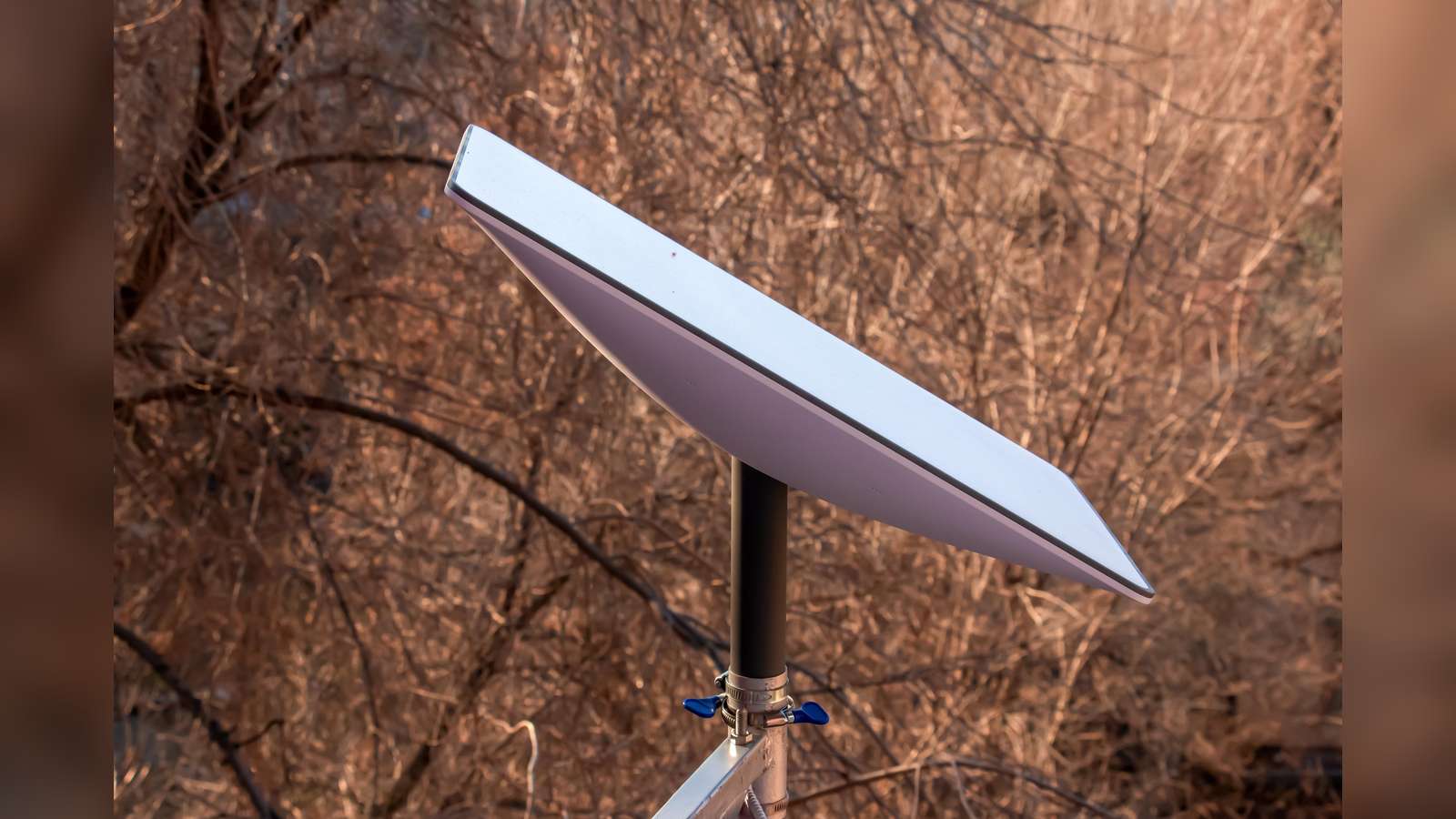
The bright spot in SpaceX’s Q2 financial statement is its connectivity segment, which encompasses the consumer Starlink broadband network, commercial enterprise installations, and the high-security Starshield military satellite program. This segment generated $4.3 billion in revenue during the quarter, marking a 66% year-over-year increase, and delivered a robust operating profit of $1.66 billion. With an operating margin of 38.6%, connectivity represents the only profitable segment within the SpaceX corporate umbrella.
Key operational metrics explain this profitability. Starlink concluded the month of June with 12 million active global subscribers, doubling its user base from the previous year. However, this aggressive expansion has come at the cost of unit pricing power; average revenue per user (ARPU) held steady at $66 per month for the second consecutive quarter, down from $85 a year earlier. This decline indicates that while Starlink is successfully penetrating lower-income international markets and bulk consumer segments, its domestic premium growth may be reaching saturation.
Crucially, the enterprise and government sub-segments are stepping in to offset consumer ARPU dilution. Enterprise and government connectivity revenues surged 108% year-over-year to $1.8 billion. This growth was heavily supported by a series of new maritime and aviation agreements, alongside more than $6 billion in multi-year U.S. government contracts dedicated to Starshield. From a capital perspective, the connectivity segment remains highly efficient: it required just $1.4 billion in capital expenditures during the quarter, meaning the division is fully self-funding and generating significant free cash flow to support the parent company’s broader ambitions.
The $15.8 Billion AI Capital Surge and Colossus II
While Starlink acts as the financial anchor, the artificial intelligence unit operates as an insatiable capital sink. During the second quarter of 2026, the AI segment absorbed $15.83 billion in capital expenditures, accounting for an astonishing 86% of SpaceX’s total $18.4 billion quarterly capital spend. To put this in perspective, the AI unit’s capital expenditure stood at $7.7 billion in the first quarter of 2026 and just $749 million in the second quarter of 2025—representing a twenty-fold increase in capital intensity over a twelve-month period.
This massive allocation of capital has been directed toward the rapid build-out of the Colossus II data center complex. This infrastructure push has successfully expanded SpaceX’s operational compute capacity to 1.4 gigawatts, up from 0.4 gigawatts a year ago. The aggressive build-out is yielding top-line results; AI segment revenue jumped 247% year-over-year to $2.56 billion, driven by $14.1 billion in newly contracted cloud computing agreements signed during the quarter. Furthermore, the segment’s GAAP operating loss narrowed to $1.26 billion from the $2.5 billion loss recorded in Q1 2026. On a non-GAAP adjusted EBITDA basis, the AI unit actually posted a positive $1.1 billion for the quarter. Nonetheless, the segment’s capital requirements continue to dwarf its organic cash generation by a ratio of nearly ten to one.
Funding the Deficit: Balance Sheet Dynamics and the Cursor Acquisition
The fundamental question facing SpaceX is how it intends to bridge the massive gap between its operating cash flow and its capital spending program. In the first half of 2026, capital spending exceeded operating cash flow by $25.01 billion, resulting in a substantial free-cash-flow deficit. SpaceX’s traditional commercial launch business, the original space segment, offered no relief, posting a $542 million operating loss on $962 million in revenue due to heavy research and development spending on the Starship platform and a newly announced $100 billion launch complex in Louisiana.
For the moment, SpaceX’s balance sheet remains highly insulated. The company concluded the second quarter with $100.01 billion in cash, cash equivalents, and marketable securities. This massive cash cushion was primarily built through the net proceeds of $85.7 billion from its June 12 initial public offering. Additionally, SpaceX executed a $25 billion bond sale during the quarter to refinance its outstanding bridge loans at a weighted average interest rate of approximately 5.9%. Total debt and finance leases stood at $39.51 billion as of June 30.
SpaceX’s aggressive capital allocation strategy was further emphasized on August 14, 2026, when it finalized the acquisition of Cursor, an AI-focused software enterprise. The transaction, valued at an implied equity worth of $60 billion, was settled entirely through the issuance of 389.3 million new Class A shares. While this stock-based acquisition preserved SpaceX’s cash reserves, it represents a notable dilution for public shareholders who recently bought into the IPO, underscoring management’s willingness to dilute equity to secure dominant AI capabilities.
The Valuation Dilemma: Pricing the Future on a 60x Multiple
With shares trading near $143.69, SpaceX’s market capitalization of $1.89 trillion represents one of the most demanding valuation profiles in the global technology sector. At roughly 60 times annualized second-quarter revenue, the stock cannot be justified by the economics of Starlink alone. While Starlink’s $1.66 billion quarterly operating profit ($6.6 billion annualized) represents an incredibly successful satellite business, it supports only a small fraction of a near-two-trillion-dollar valuation.
Instead, investors are paying a steep premium for the conversion of SpaceX’s massive AI infrastructure investments into a dominant high-margin cloud and computing business. If the $14.1 billion in signed cloud contracts successfully transition into recurring, high-margin revenue streams, and if the Colossus II data center capitalizes on global AI compute demand, SpaceX may eventually justify its valuation. However, should AI customer concentration shift, or if regulatory hurdles and spectrum limitations constrain Starlink’s global scaling, the company’s massive capital spending deficit could quickly strain its newly built balance sheet cushion. For now, SpaceX remains a high-stakes experiment in corporate transformation, using the heavens to fund the next frontier of terrestrial computing.