


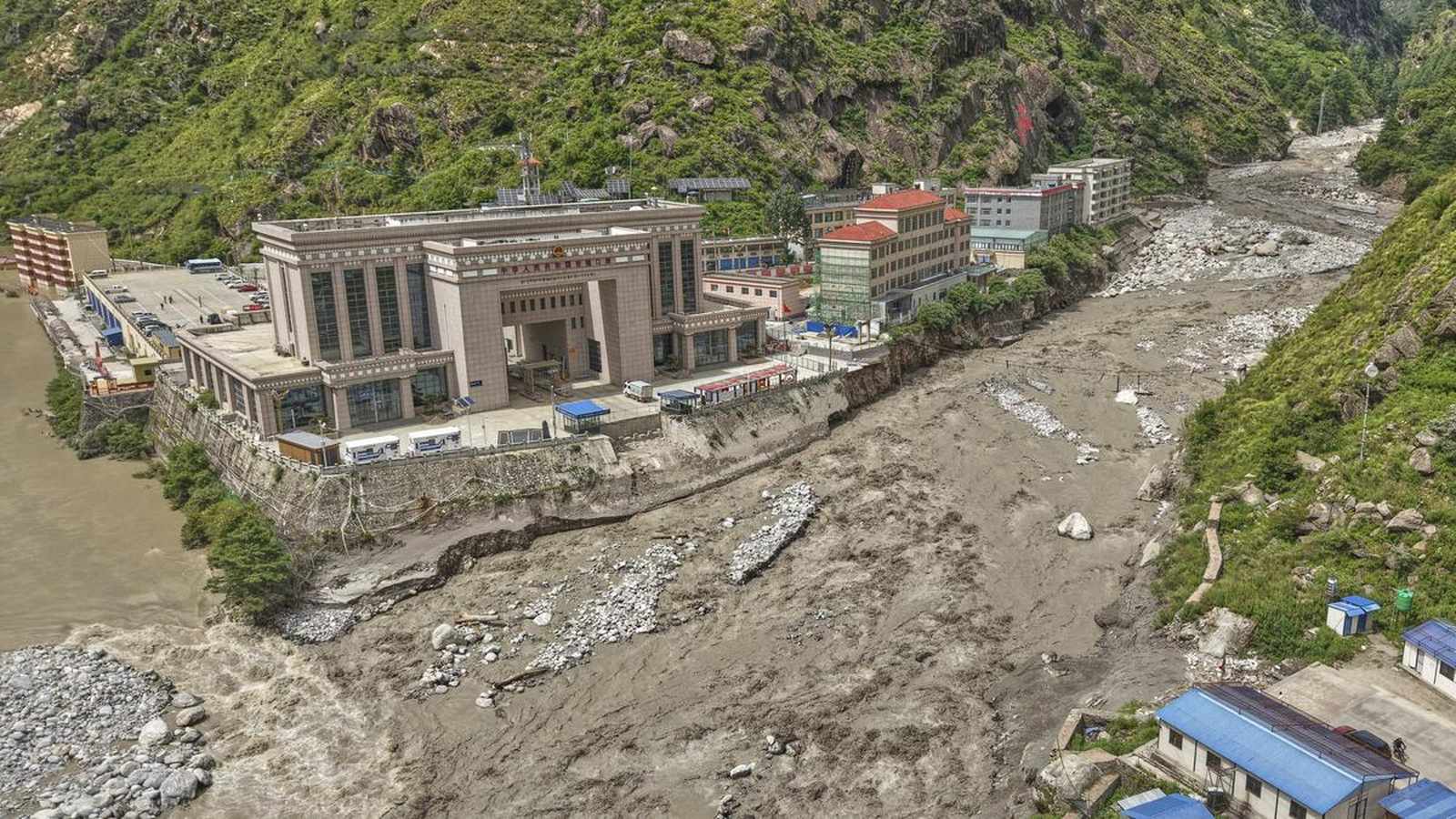
Emergency Suspension in Rasuwa
Rescue operations at the Nepal-China border were abruptly suspended on Friday after a barrier lake, formed by debris from this week’s catastrophic floods, began overflowing. Authorities in Nepal’s Rasuwa district ordered personnel to withdraw to higher ground as river levels surged, posing an immediate threat to recovery teams.
Narendra Pariyar, the senior bureaucrat for the Rasuwa district, confirmed the breach to DW, noting that officials observed a rapid rise in river levels. The suspension, which initially halted operations for 90 minutes, reflects the volatile environment facing responders as they search for hundreds of people still missing following the glacial collapse on Wednesday.
This report draws on information published by dw.com.
The Barrier Lake Crisis
The disaster was triggered by a massive glacial collapse that sent rock and meltwater into the valleys below. According to China’s Ministry of Water Resources, the resulting barrier lake currently holds approximately 2 million cubic meters of water. Projections suggest the volume could increase by another 3 million cubic meters over the coming three days, with peak flow expected around September 1.
A Chinese engineering team, utilizing aerial surveys and 3D modeling, is working to mitigate the risk. Engineer Chen Hanxiao described the site as extremely unstable, noting that the glacier collapse created dangerous, isolated cliffs. The current strategy involves digging a drainage channel at a lower point of the dam, though the feasibility and dimensions of this intervention depend on real-time flow calculations and the rate at which the lake continues to fill.
Mounting Toll and Diplomatic Stance
The humanitarian impact remains severe. Nepal police reported the death toll has risen to over 480, while China has confirmed five deaths in the Tibet region. More than 1,000 people remain missing, including 540 foreign nationals from over 30 countries.
Despite international offers of assistance from the United States, India, Britain, Japan, South Korea, and others, the Nepali government has declined foreign search-and-rescue support. Foreign Ministry spokesperson Lok Bahadur Chhetri stated that Nepal’s own security agencies are managing the response and that external help is not currently required. South Korea, which has nine nationals missing, confirmed it is in ongoing negotiations with Kathmandu to provide aid, having already pledged $1 million in humanitarian support.