


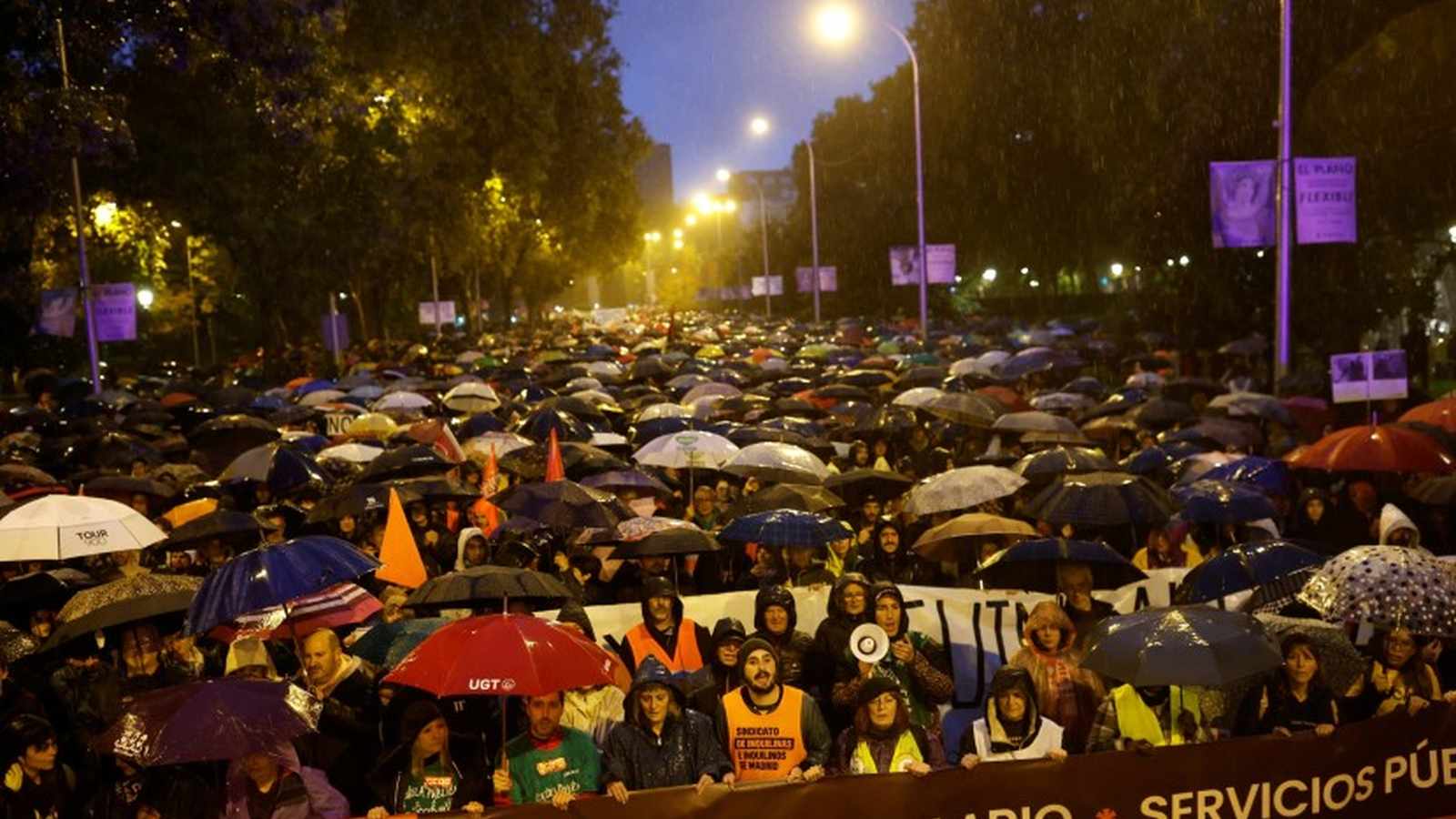
A Nation at a Standstill
On November 11, 2026, Spain experienced its first general strike in 14 years, as millions of workers walked off the job to protest a deepening housing crisis. The 24-hour stoppage, which targeted the government’s failure to control soaring rents and property costs, brought major sectors of Europe’s fourth-largest economy to a near-standstill. Reporting by DW indicates that the strike, organized by the General Union of Workers (UGT) and the Workers’ Commissions (CCOO), was marked by picket lines, transportation delays, and significant disruptions in industrial manufacturing and public services. Under the rallying cry of “Salaries, Housing, Prices,” the industrial action served as a visceral manifestation of public frustration that has been building for years.
The intensity of the strike was felt across the country, with grid operator Red Electrica reporting a 15.5% drop in electricity demand between 10 a.m. and 11 a.m., a key metric for industrial activity. According to HNGN, while business groups characterized the impact as limited due to the structure of the modern economy, unions claimed participation reached approximately 90% in sectors like dockwork and automotive production, estimating that up to 4 million people participated in the action. The strike also impacted national travel, with the airport operator AENA reporting that 5% of all flights nationwide were canceled, while public transport in major hubs like Barcelona saw significant service reductions.
The Catalyst: A Tragic Symbol
The movement, which has shifted from isolated neighborhood protests to a national labor mobilization, found a powerful, tragic symbol in the death of 87-year-old Maricarmen Abascal earlier this year. Her eviction in Madrid served as the rallying point for tenants’ associations, which successfully pressured the two major trade unions to back the strike. For many, her death represented the human cost of a real estate market where average rents have nearly doubled in the last decade, far outpacing wage growth. Activists are demanding a fundamental overhaul of the housing market, including the regulation of tourist apartments, the implementation of automatic lease renewals, and stricter limits on real estate speculation.
Political Stakes and the November 29 Election
The general strike occurs less than three weeks before a high-stakes snap election on November 29, 2026. Prime Minister Pedro Sánchez, who leads a minority left-wing coalition, called the early vote after failing to secure parliamentary approval for his government’s housing decrees. These measures, designed to curb evictions and limit rent hikes, were blocked by the opposition, leaving the administration without a legislative path forward. Sánchez has sought to make housing the defining issue of the upcoming campaign, hoping to consolidate support against the conservative Popular Party (PP) and the far-right Vox, both of which have advocated for supply-side policies focused on new construction rather than market regulation.
The political maneuvering surrounding the strike has been intense. While the government views the movement as an expression of legitimate social grievances, the opposition has accused the unions of acting as a political arm of the current administration. Miguel Tellado, a spokesperson for the Popular Party, dismissed the action as an “election strike” rather than a genuine labor protest. Conversely, analysts like Oriol Bartomeus, a professor at the Autonomous University of Barcelona, suggest that the strike presents a high-risk, high-reward scenario for Sánchez. The government requires the event to remain largely peaceful to keep the focus on housing policy; if the protests descend into widespread chaos, the right-wing parties are positioned to capitalize on a narrative of instability and the need for a return to order.
Protests and Public Order
As evening fell on November 11, the protests moved from picket lines to mass demonstrations. In Madrid, roughly 120,000 people braved heavy rain to march, while in Barcelona, official city counts placed attendance at 55,000, though local activists claimed numbers as high as 400,000. While the vast majority of these events remained peaceful, authorities reported at least 73 arrests nationwide by late evening, citing instances of property damage, the burning of trash containers, and clashes between demonstrators and riot police in several urban centers. In Barcelona, the tension was palpable as storefronts on the main shopping boulevard, Paseo de Gracia, were boarded up in anticipation of potential unrest.
Looking Ahead
The outcome of the November 29 election remains uncertain, with polls currently showing the conservative opposition in the lead. For the housing movement, the challenge lies in translating the massive turnout from the streets into political influence. Alicia del Rio, spokesperson for the Madrid Tenants’ Union, stated that the movement would not cease until the country’s housing model is fully transformed, emphasizing that homes must be prioritized for living rather than treated as commodities for a landlord minority. As Spain heads toward the ballot box, the tension between labor-backed housing reform and market-driven development remains the central fault line in the national discourse. The failure of successive governments to resolve the housing shortage has left a vacuum that is now being filled by organized labor, setting the stage for a final, decisive weeks of campaigning that will determine the future direction of the Spanish state.