


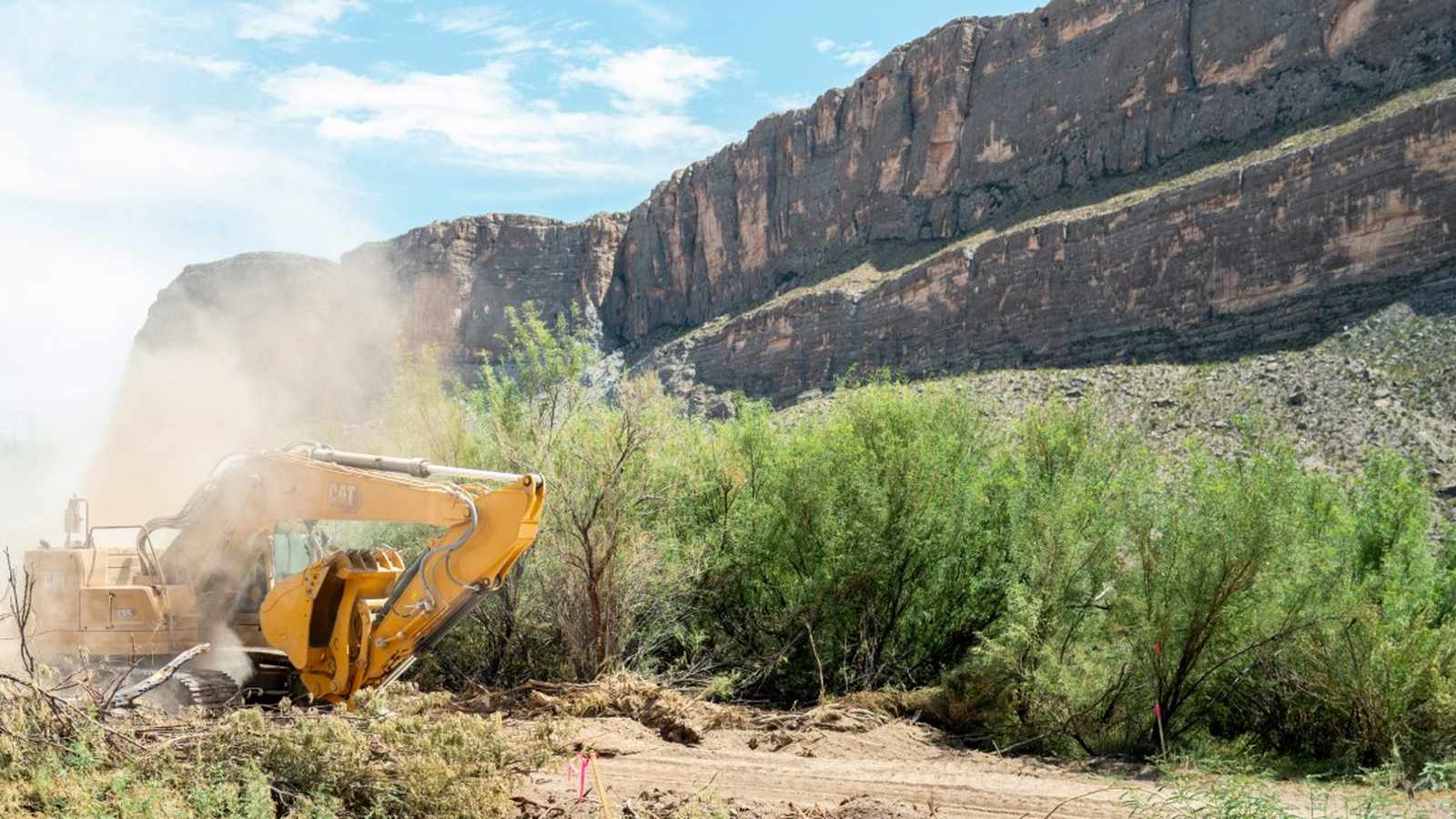
WASHINGTON (Azat TV) – The U.S. Supreme Court on Monday, Nov. 9, 2026, cleared the way for the Trump administration to resume border wall construction across the remote Big Bend region of southwest Texas, setting aside a lower-court injunction that had temporarily halted the project. In an unsigned 8-1 decision, the high court found that the federal judge who originally blocked the work lacked the authority to issue the injunction, noting that the administration was extremely likely to prevail on the merits of the case.
The legal battle centers on planned barrier construction spanning portions of Big Bend National Park and surrounding terrain. Environmental organizations, local preservation groups, and private landowners filed the initial challenge, arguing that the project would permanently alter an irreplaceable landscape and threaten rare cultural and historic sites. According to NBC News, the Supreme Court majority concluded that the government holds compelling interests when implementing border security policies, overriding the local objections while litigation proceeds in lower courts.
Legal Basis and Waivers
The dispute hinges on a series of regulatory waivers issued by former and current Department of Homeland Security leadership under statutory authority established by Congress in 1996. These waivers permitted the administration to bypass standard environmental and conservation reviews to accelerate infrastructure deployment. Government attorneys argued that broad congressional authorization allows for rapid border wall installation without getting bogged down in administrative delays.
Opponents countered that the 1996 statute was intended for areas experiencing pervasive illegal crossings, whereas government data indicates that the Big Bend corridor records some of the lowest apprehension rates along the entire southern border. U.S. District Judge Kathleen Cardone previously sided with the plaintiffs, ruling on Oct. 2 that DHS officials had overstepped their statutory powers by issuing such sweeping waivers.
Stakes and Arguments on Both Sides
Following the Supreme Court’s emergency intervention, Department of Homeland Security general counsel James Percival welcomed the outcome in a public statement, highlighting the lopsided 8-1 vote count. Customs and Border Protection officials maintain that leaving any section of the border unsealed creates a vulnerable gap that can be exploited by smugglers and unauthorized migrants, even in sparsely populated sectors.
Conversely, plaintiffs expressed deep alarm over the ruling. Laiken Jordahl, a public lands advocate with the Center for Biological Diversity, warned that contractors are now cleared to bulldoze pristine desert terrain and dynamite canyon walls before courts can fully review the legality of the construction. With funding backed by Congress, the administration continues pressing toward its broader goal of completing a comprehensive 2,000-mile system of steel barriers, vehicle deterrents, and advanced surveillance technology.