


A Watershed Moment in Mathematics
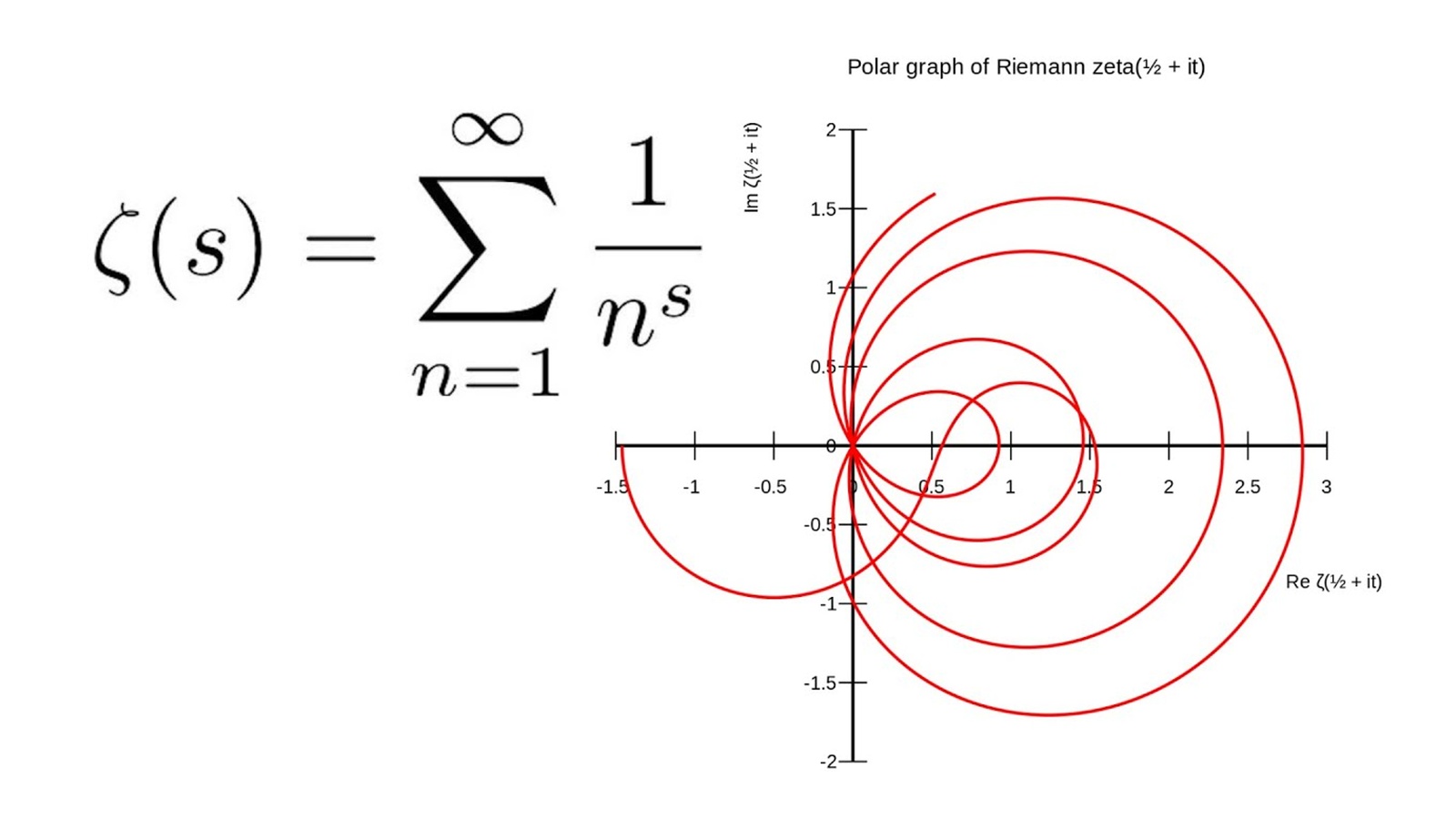
On November 20, 2026, the global mathematics community was confronted with a development that many deemed impossible: the resolution of the Riemann hypothesis, one of the field’s most stubborn and famous open problems. Levent Alpöge, a mathematician at the AI firm Anthropic in San Francisco, utilized an advanced version of the company’s Claude model to generate a proof. The results were presented not as a traditional paper, but as 17 million lines of code in Lean, an open-source programming language that allows mathematical arguments to be formally verified by computer systems.
The significance of the event was immediate, causing a rapid response within the scientific community. Within hours of the release, a separate team of researchers successfully produced a human-written proof to corroborate the findings. On November 21, the non-profit organization behind Lean and the Mathlib Initiative issued a statement confirming their independent verification of the proof. “We have full confidence that Alpöge’s proof of the Riemann Hypothesis is correct, and we congratulate him,” the organization stated, marking an official seal of approval for a method that relies heavily on machine learning.
The AI-Human Divide
The proof of the Riemann hypothesis, which concerns the distribution of prime numbers within the branch of number theory, has triggered a spectrum of reactions ranging from intellectual exhilaration to profound professional anxiety. While the validity of the proof appears settled, the implications for the future of mathematical practice remain highly contentious. For many, the fact that an AI model successfully navigated a problem that has baffled humanity for over a century serves as a signal that the landscape of scientific discovery is undergoing a permanent transformation.
Marcus Du Sautoy, a mathematician and professor for the public understanding of science at the University of Oxford, characterized the event as a “real mix of emotions.” While acknowledging the thrill of witnessing such a historic solution, he admitted that the method of discovery was entirely unexpected. “If you’d asked me three months ago, I would never have predicted it,” Du Sautoy remarked. The absence of the traditional human struggle associated with such a monumental discovery introduces a sense of melancholy for some, as a primary source of mathematical motivation and mystery is suddenly resolved by a machine.
Institutional Stakes and Future Research
The reliance on millions of lines of machine-verified code has created a new barrier to entry for mathematicians who wish to truly understand the logic behind the solution. Harini Desiraju, a postdoc at the University of Warwick, highlighted the distinction between a confirmed proof and the actual acquisition of knowledge. “It is an impressive feat to solve such a problem,” she noted, while emphasizing that the community will need significant time to digest the Lean-based code and extract the underlying mathematical ideas. This creates an urgent, albeit difficult, challenge for the current generation of researchers.
Conversely, the development has emboldened those who advocate for a pause in AI integration. Tasmin Chu, a PhD student at the California Institute of Technology, voiced grave concerns regarding the influence of frontier laboratories over academic research. She argued that the rapid encroachment of AI is disruptive for early-career researchers and warned that reliance on these tools could lead to the disempowerment of human mathematical practice. Chu and others within the Association for Human Mathematics are now calling for greater democratic oversight, fearing that the trajectory of the field is increasingly dictated by private corporate interests rather than the collective needs of the scientific community.
Ultimately, the success of the Claude-assisted proof forces a reckoning within universities and research institutions. As AI models become capable of tackling the most profound mysteries in mathematics, the question of whether humans will remain the primary drivers of scientific inquiry is no longer theoretical. The community is now tasked with navigating a future where AI acts as both a powerful engine of discovery and a catalyst for systemic institutional change.