


A New Benchmark for Cosmic Time
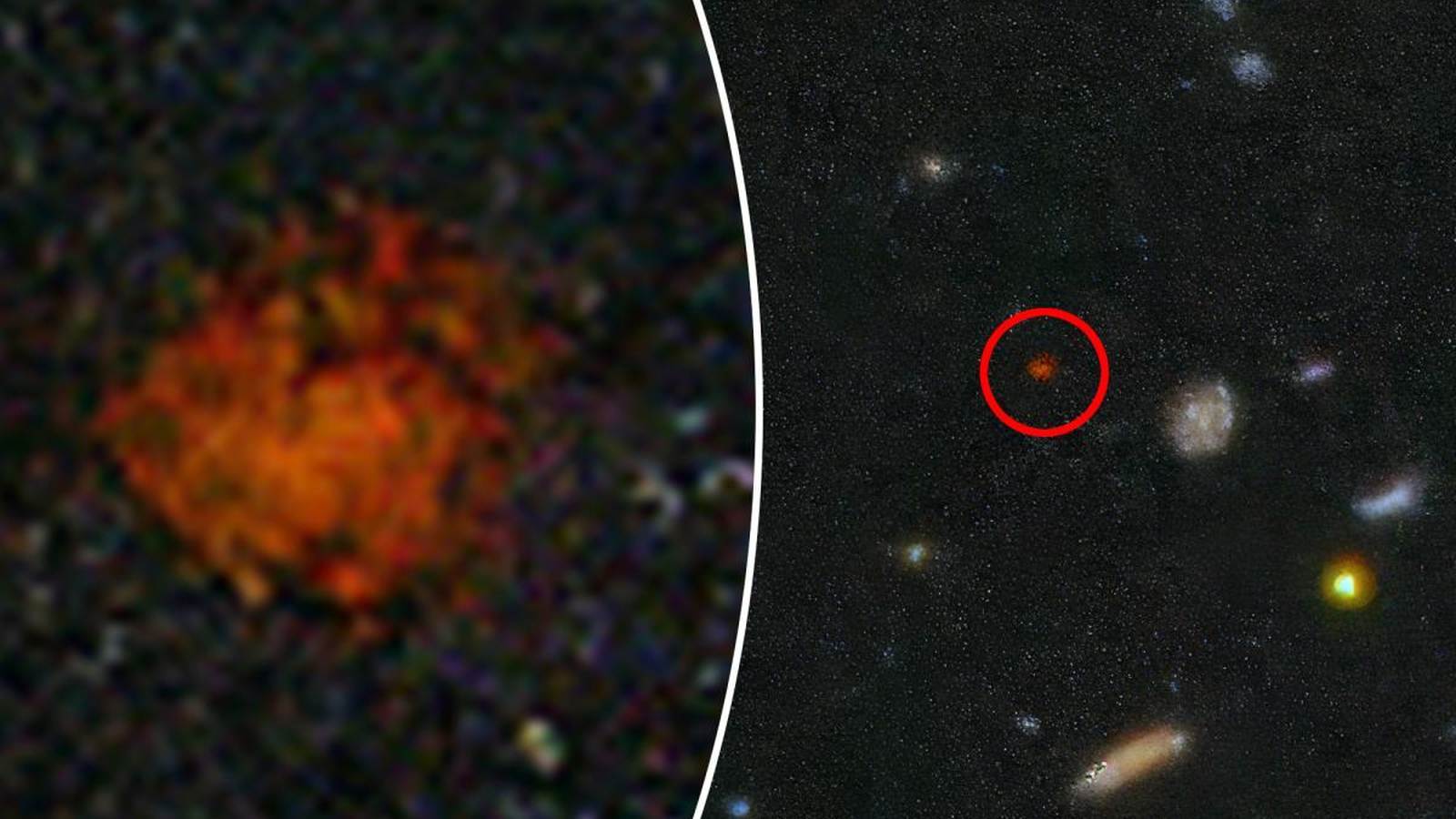
On November 24, 2026, an international research team led by scientists from Germany announced the discovery of J1504+6252, the most distant and oldest quasar observed to date. The findings, published in the journal Astronomy and Astrophysics, place the object at just 630 million years after the Big Bang. This timeframe represents less than 5% of the current age of the universe, pushing the known limits of early cosmic development back by nearly 40 million years compared to previous records.
The quasar, nicknamed “Dún Aonghas” by the researchers, was identified using data from the European Space Agency’s (ESA) Euclid telescope. The discovery was subsequently corroborated through observations from the Hubble and James Webb space telescopes, as well as various ground-based observatories. This combination of space and ground-based data allowed astronomers to confirm that the light observed from the quasar corresponds to a period when the universe was in its infancy.
The Paradox of Rapid Growth
The core of this galaxy is powered by a supermassive black hole with a mass equivalent to approximately 360 million suns. The existence of such a massive structure at such an early stage in cosmic history presents a significant challenge to standard astrophysical models. Conventional theory typically assumes that black holes grow gradually through the accretion of surrounding matter. However, the timeframe provided by Dún Aonghas suggests that such rapid growth within the first 630 million years would require alternative mechanisms.
According to Julien Wolf of the European Southern Observatory, lead author of the study, the discovery supports the hypothesis that supermassive black holes may form through the “direct collapse” of massive gas clouds. This process would allow for a much faster accumulation of mass compared to traditional accretion models. The paradox is deepened by the observation that the black hole is a “slow-chomping” entity, despite its enormous size, indicating that it reached its current scale without the sustained, high-rate feeding observed in many later-stage quasars.
Implications for Early Universe Cosmology
Quasars are defined as the extremely bright nuclei of active galaxies, where gas and dust falling toward a central black hole create an accretion disk that radiates immense energy. Because they are so luminous, they are visible across billions of light-years, serving as essential probes for understanding the evolution of the early cosmos. Silvia Belladitta, a study co-author from the Max Planck Institute for Astronomy and the INAF Bologna Observatory, noted that studying such objects is crucial for mapping how the first galaxies were assembled.
The ESA’s Euclid mission, which facilitated this discovery, was primarily designed to survey galaxies to investigate dark matter and dark energy. Finding an object as significant as J1504+6252 during these surveys highlights the telescope’s capability to identify rare phenomena in the deep field. As the scientific community continues to analyze the early universe, Dún Aonghas now serves as the new benchmark for cosmic development. Researchers expect that as survey data continues to accumulate, the record could potentially be broken again, though for now, this quasar provides the clearest window yet into the conditions of the early universe.