


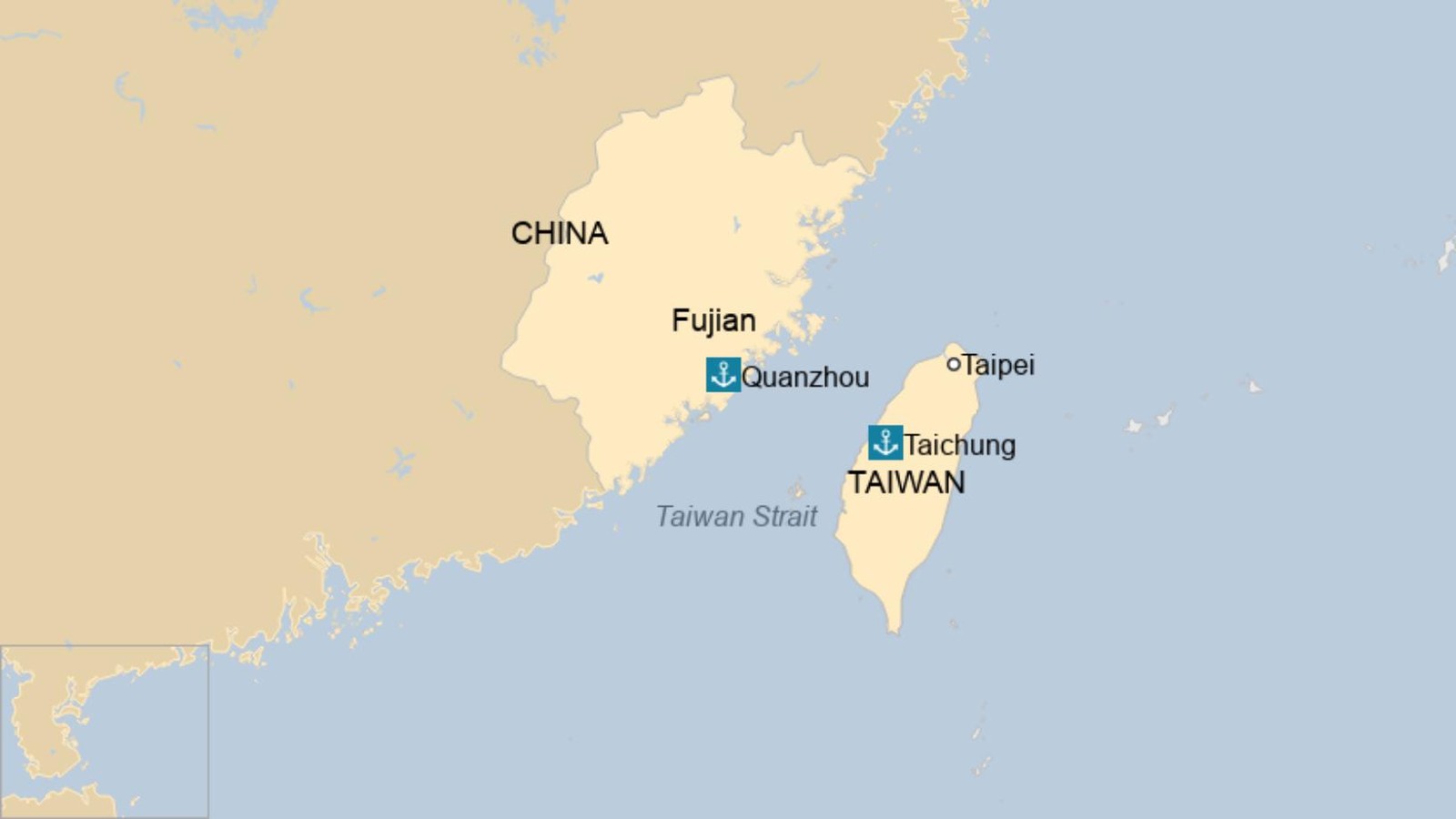
Prosecutors in Taiwan have formally indicted two Chinese nationals on charges of illegal entry after they successfully crossed the Taiwan Strait in a rubber dinghy, a case that has sparked significant public scrutiny regarding the island’s coastal security. The Shilin District Prosecutors’ Office is recommending a two-year prison sentence for each man, citing the “substantive harm” their arrival caused to border integrity and the “severe public anxiety” that followed the discovery of the breach.
Timeline of the Crossing
The suspects, identified by their surnames Luan and Yu, reportedly set out from Qingdao, Shandong Province, in mid-July 2026. According to Taipei Times, the men purchased an outboard motor in Zhejiang Province before launching their raft from the shoreline near Fuzhou on July 22. They arrived at a northern jetty of the Port of Taipei on the morning of July 23, completing a journey of approximately 21 hours across the strait.
The men remained undetected for over a week, traveling through multiple locations including New Taipei City, Taipei, Hsinchu, Taichung, and Taoyuan. Their presence was only brought to light on August 10, when a local fisher posted on Threads about finding a rubber dinghy abandoned on a beach near the Port of Taipei. The discovery of life vests, fuel containers, and supplies with simplified Chinese writing led the fisher to alert law enforcement.
Security and Public Fallout
The Coast Guard Administration (CGA) launched an investigation on July 24 and eventually apprehended the two men at Chaoyang Forest Park in Taoyuan on July 30. The indictment, filed by the Shilin District Prosecutors’ Office, relies on surveillance footage, DNA analysis, and cellphone data to substantiate the illegal entry charges under the Immigration Act and the Act Governing Relations Between the People of the Taiwan Area and the Mainland Area.
The severity of the prosecutors’ sentencing recommendation reflects the intense political pressure on the CGA. The agency faced widespread public criticism for its failure to detect the craft at the border, a lapse that forced the CGA director to issue a formal apology on August 11. The incident has since become a focal point in broader discussions regarding Taiwan’s coastal defense capabilities and the vulnerability of its maritime boundaries to unconventional transit methods.