


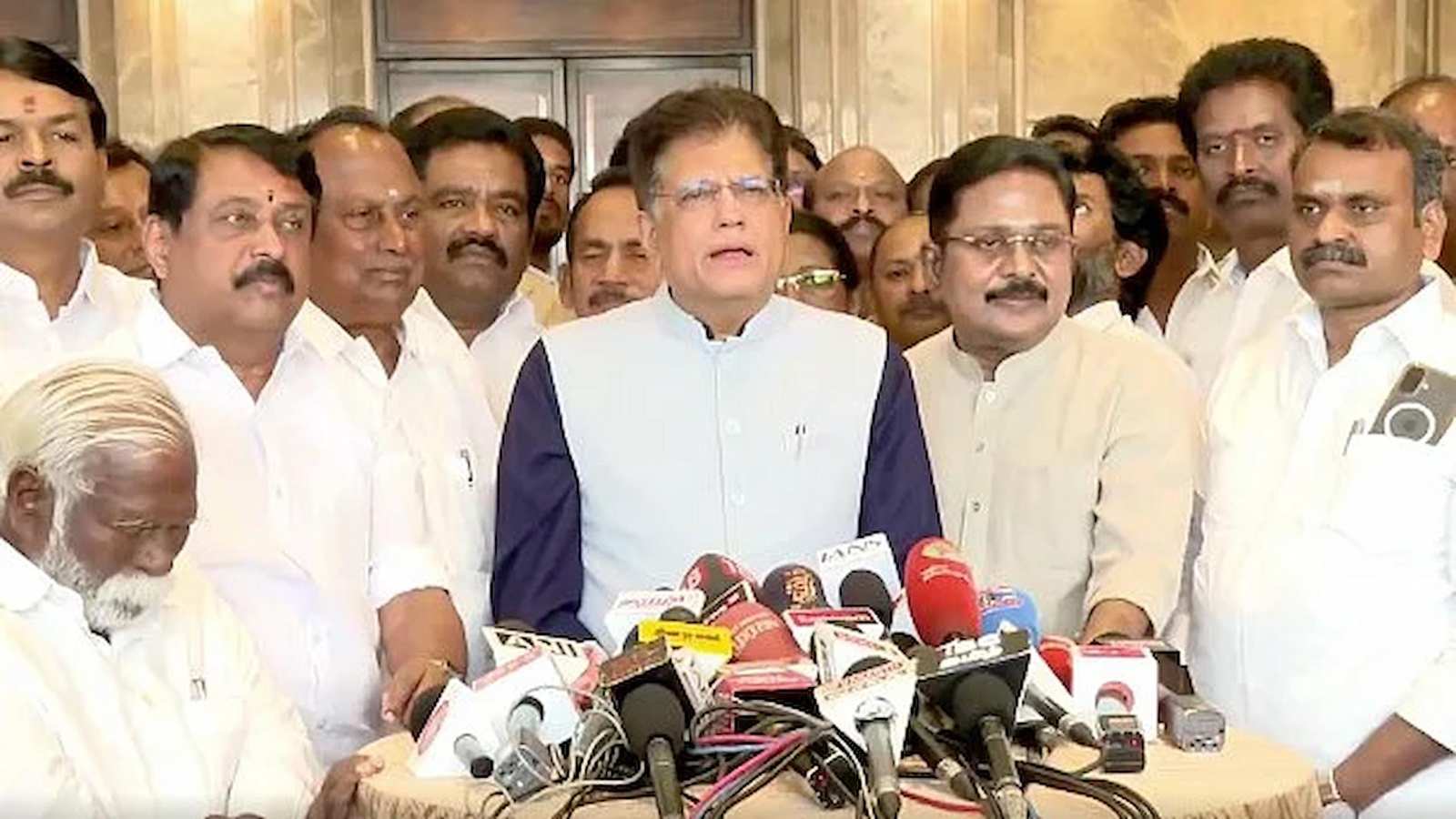
CHENNAI (Azat TV) – Tamil Nadu remains in the grip of a deepening political deadlock as the 2026 legislative assembly results leave no party with a clear mandate to form a government. With the Tamilaga Vettri Kazhagam (TVK) securing 108 seats—falling ten short of the 118-seat majority threshold—the formation of the next administration has turned into a high-stakes scramble for support from smaller regional parties, including TTV Dhinakaran’s Amma Makkal Munnetra Kazhagam (AMMK).
Strategic Leverage of the AMMK in a Hung Assembly
The current legislative impasse has elevated the status of minor political entities that previously held limited influence. As reported by NDTV, the TVK is actively exploring multiple coalition pathways to bridge the gap to a majority. Because the AMMK holds a seat in the assembly, its support is being viewed by political analysts as a potential component of a broader multi-party coalition. Observers note that leaders like Dhinakaran now possess significant leverage, as any arrangement to form a stable government requires the consent of virtually every non-aligned legislator.
The TVK Coalition Challenge
For the TVK, the path to power is fraught with operational complexities. Attempting to build a stable government requires managing the competing demands of multiple regional satraps. If the TVK proceeds with a coalition involving various smaller parties, it faces the risk of a fragile administration where the withdrawal of a single MLA could trigger a collapse. According to NDTV Profit, the ongoing discussions are complicated by the fact that some potential partners have already begun issuing specific demands, including requests for cabinet positions such as Deputy Chief Minister, further narrowing the window for a resolution before the Governor considers alternative constitutional measures.
Stakes of the Power Tussle
The window for a negotiated settlement is closing as the Governor evaluates whether to invite a coalition to form a government or, failing that, impose President’s Rule. Should a stable majority remain elusive, the state could face a period of central administration followed by fresh assembly elections before the end of the year. This prospect has intensified the pressure on all stakeholders, including the DMK and AIADMK, who are monitoring the situation closely while the TVK attempts to consolidate a path to the Chief Minister’s office.
The reliance on minor parties to bridge a double-digit seat gap suggests that any government formed under these conditions will be structurally volatile, likely prioritizing short-term survival over long-term policy implementation as it navigates the conflicting interests of a diverse nine-party alliance.