


What the photograph shows
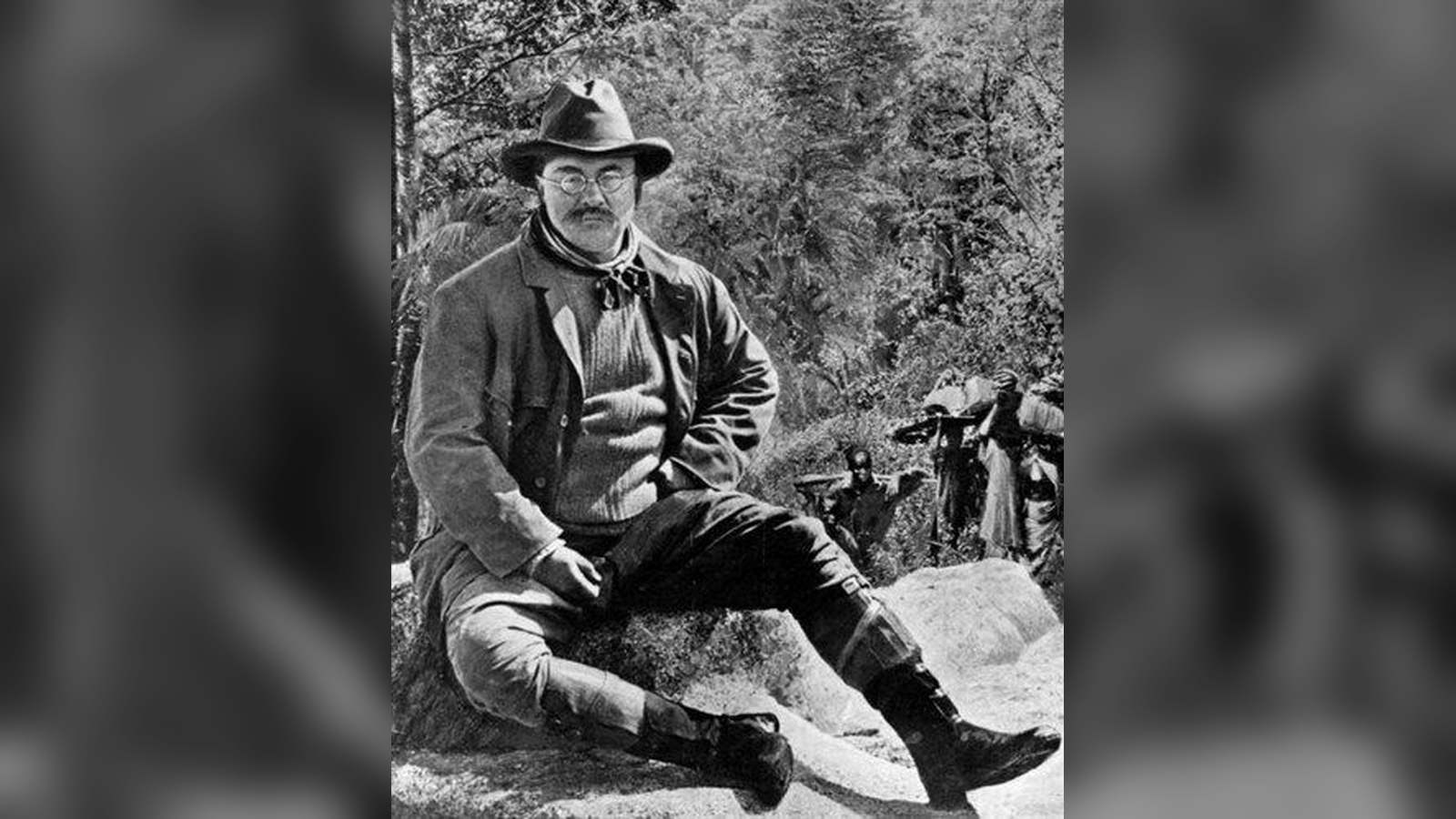
In this iconic photograph, a young Theodore Roosevelt sits with an air of quiet intensity, dressed in the fringed buckskin attire of a Western frontiersman. He wears a wide-brimmed hat, a heavy leather belt with a holstered revolver, and sturdy boots, all of which signify his immersion into the life of the Dakota plains. His gaze is steady, not looking directly into the lens but slightly past it, suggesting a man who has traded the rigid expectations of New York high society for the unpredictable reality of the open range. The studio lighting highlights the textures of his clothing, contrasting the refined nature of a portrait session with the rugged, worn appearance of his gear. This image is not merely a costume piece; it captures the deliberate physical and psychological transformation of a man who sought to replace his delicate, sickly childhood with the grit of the American West.
The moment behind the image
This photograph was taken in the mid-1880s, a period of profound upheaval for the future president. In 1884, Roosevelt suffered the devastating, near-simultaneous loss of his mother and his young wife, Alice, on Valentine’s Day. Seeking to escape the suffocating grief and the political pressures of the New York State Assembly, he retreated to the Badlands of the Dakota Territory. He had first traveled there in 1883 to hunt bison, but his return was an act of survival. By operating the Elkhorn Ranch, he sought to prove to himself that he could thrive in the most challenging conditions. This period was the crucible of his character. Before the shutter clicked for this portrait, he had spent days in the saddle, learning to rope, ride, and manage cattle alongside seasoned cowboys who initially viewed the ‘four-eyed’ Easterner with deep skepticism. After the session, he would return to the Little Missouri River, where he would eventually serve as a deputy sheriff and help organize the Little Missouri Stockmen’s Association.
Photographer and provenance
The provenance of this specific image is typical of the late 19th-century portrait industry. Often associated with the studio of George Grantham Bain or preserved within the collections of the Theodore Roosevelt Center at Dickinson State University, the image was likely commissioned or captured as a way for Roosevelt to document his frontier life for his family and his growing public profile. Roosevelt was remarkably self-aware regarding his image; he understood that by circulating such photographs, he was crafting a narrative of ‘the strenuous life.’ There is no single definitive record of the exact date or the specific photographer who captured this frame, which is common for professional portraits from that era that were later widely reprinted for historical archives. However, its survival is a testament to Roosevelt’s success in cementing his identity as a rugged American archetype, a status that would eventually propel him to the governorship of New York and the White House.
Historical context
Roosevelt’s time in Dakota was far more than a romantic escape; it was a formative political laboratory. In the 1880s, the American West was undergoing rapid changes, and the cattle industry was at its peak. Roosevelt’s experiences with overgrazing, the brutal winter of 1886–1887—which wiped out his herd and his financial investment—and the harsh realities of frontier law enforcement provided him with a unique perspective on the environment and the limits of human control. When he returned to New York, he carried with him a deep commitment to conservation. This commitment was not born in a classroom, but on the banks of the Little Missouri River. His later establishment of the United States Forest Service and the creation of national monuments were the direct, mature expressions of the lessons he learned while living as a cowboy.
Why it still matters
This image remains a powerful symbol of American myth-making. It captures the exact moment when a man who would become the 26th President of the United States bridged the gap between the Gilded Age elite and the untamed frontier. It serves as a reminder that Roosevelt’s political identity—his ‘Square Deal’ and his commitment to national parks—was forged not in the halls of Congress, but on the open range. The photograph continues to resonate because it represents the universal human desire to reinvent oneself in the face of tragedy. Roosevelt’s ability to turn his personal despair into a national mission of vitality and preservation remains one of the most compelling stories in American history, and this portrait is the visual anchor of that legacy.