


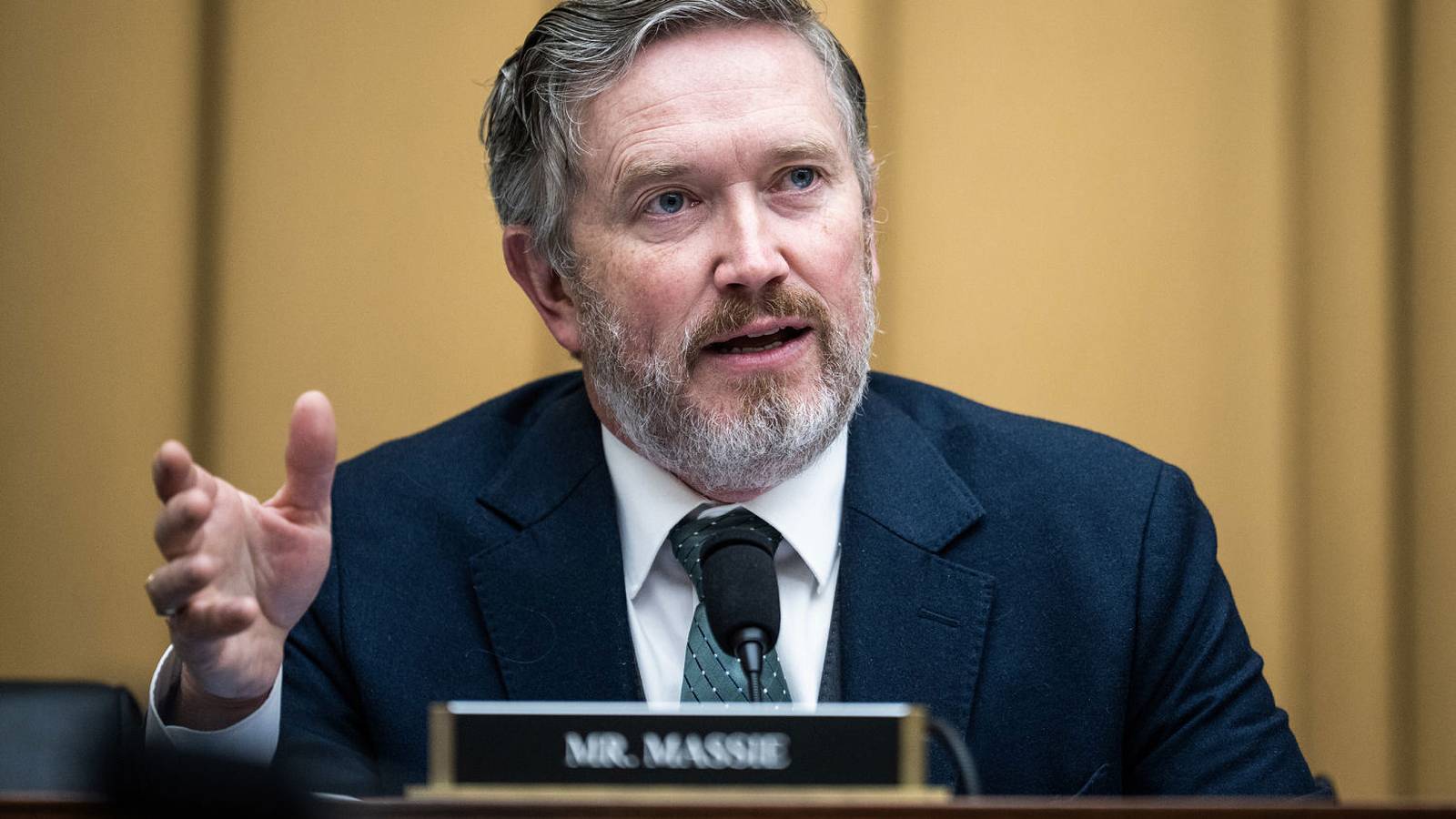
Legislative Friction on Capitol Hill
Representative Thomas Massie (R-Ky.) has emerged as a central figure in the escalating debate over the trajectory of American foreign policy. In recent congressional sessions, Massie has introduced an amendment to the National Security-State spending bill that would block $3.3 billion in military aid to Israel. According to reporting from Punchbowl News, this move has forced a deep divide within the Democratic Caucus, pitting progressive members against traditional institutionalists who warn of the amendment’s impact on broader humanitarian and military commitments.
The internal Democratic conflict reflects a broader shift in political sentiment. As noted in caucus discussions, including those led by House Appropriations Committee Ranking Member Rosa DeLauro, the debate highlights the increasing difficulty of maintaining bipartisan support for traditional foreign aid packages in an era of heightened ideological polarization.
Critiquing the Executive Approach
Beyond his legislative actions on Israel, Massie has been vocal in his critique of the Trump administration’s broader foreign policy strategy. In comments provided to MS NOW, Massie characterized the administration’s handling of Iran negotiations as a “political liability,” cautioning that any association with the current foreign policy could prove detrimental to the future political prospects of Vice President JD Vance.
Massie’s skepticism aligns with his long-standing posture as a critic of overseas military engagements. His assessment suggests that the administration’s transactional approach to diplomacy—often seen as shifting blame to subordinates like Vance—undermines the credibility of U.S. international commitments.
The Cost of Unpredictability
The broader implications of this approach are evident in the deteriorating U.S.-Canada relationship. According to analysis by Justin Massie and Srdjan Vucetic in War on the Rocks, Washington’s unilateral suspension of the Canadian Permanent Joint Board on Defense has signaled a shift toward coercive diplomacy that is driving allies to pursue strategic autonomy. The authors argue that by weaponizing interdependence, the U.S. risks weakening the very alliance networks essential to Western security.
As Congress attempts to introduce statutory requirements into the Fiscal Year 2027 National Defense Authorization Act to constrain executive discretion, the tension between legislative oversight and executive action continues to grow. Whether these efforts can restore the predictability necessary for long-term industrial and defense cooperation remains a central question for U.S. foreign policy.