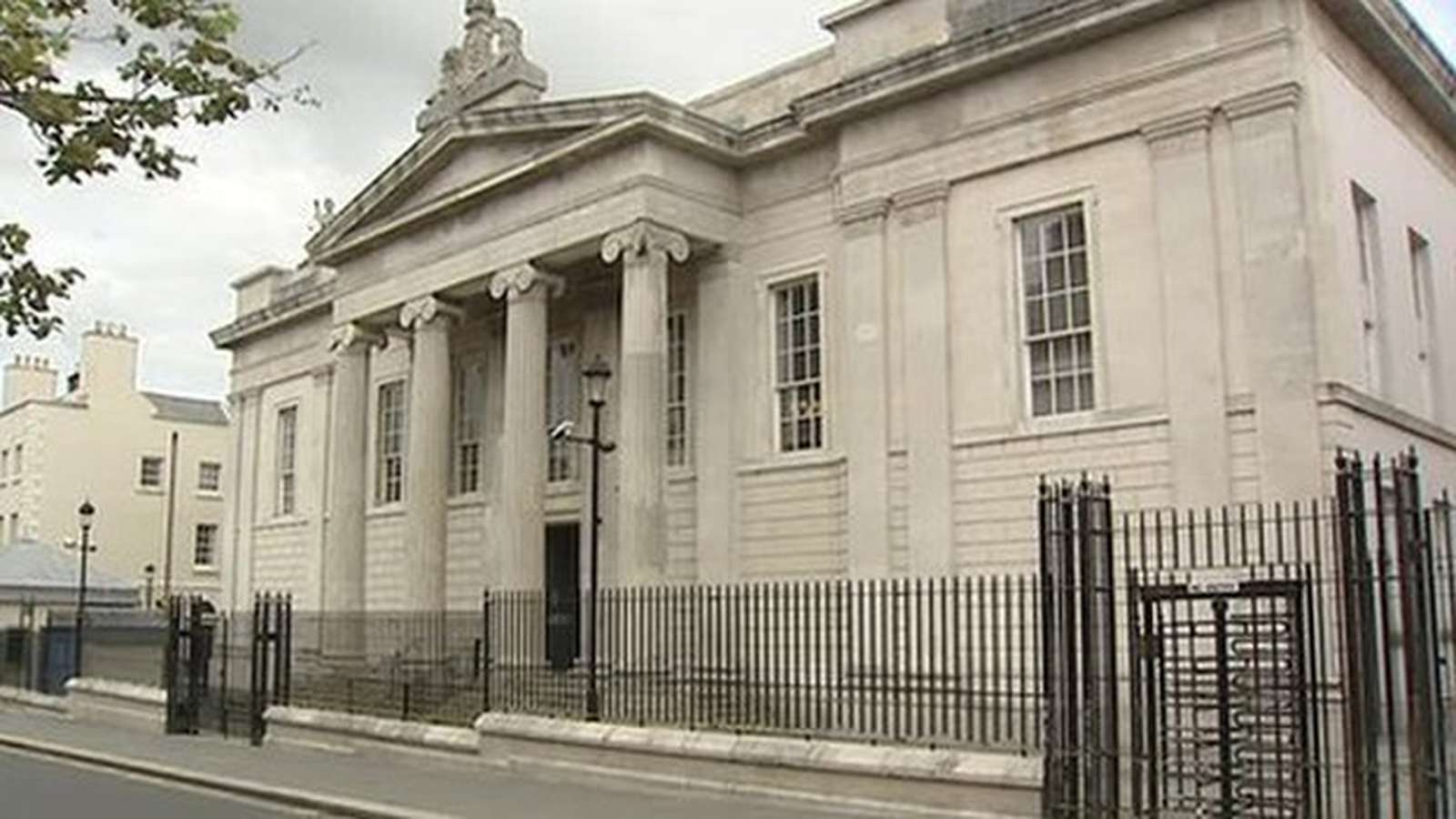
Four individuals were convicted at Derry Magistrate’s Court on September 16, 2026, for their participation in an illegal procession held in support of Palestine on February 14, 2024. According to Highland Radio, the court process concluded with fines for the four defendants, while other political figures previously charged in connection with the same event saw different legal outcomes.
District Judge Conor Heaney described the demonstration as a “peaceful and brief” event that saw participants move from a meeting at the Diamond down Shipquay Street toward the Guildhall. While the judge acknowledged that the defendants were expressing “legitimate political views,” he ruled that the procession itself violated legal requirements for public gatherings.
The defendants convicted were 70-year-old Goretti Horgan, 36-year-old Davina Pulis, 60-year-old Robert Paul Maxwell, and 27-year-old Jude Coffey. Horgan, Pulis, and Maxwell were each issued a £75 fine. Coffey received a £150 fine, which the court attributed to previous convictions for similar offenses. The prosecution characterized the incident as a minor act of civil disobedience.
The legal proceedings also addressed other public figures who were initially charged. Former SDLP leader Colum Eastwood accepted an alternative disposal to resolve his case, while People Before Profit councillor Shaun Harkin was found to have no case to answer by the court.
Follow-up Questions
What is confirmed in this story?
Four Convicted in Derry Following Illegal Palestine Procession A Derry court has fined four individuals for participating in an unauthorized 2024 procession, while clearing other high-profile figures of related charges.
What should readers watch next?
District Judge Conor Heaney described the demonstration as a “peaceful and brief” event that saw participants move from a meeting at the Diamond down Shipquay Street toward the Guildhall.
What remains unclear: The available reporting does not yet fully settle the next step in the story.
Perspectives
Judicial View vs Political Stakeholders
Story lens
Judicial View
The court balanced the acknowledgment of ‘legitimate political expression’ with the strict enforcement of public order regulations. By classifying the event as a ‘peaceful and brief’ act of civil disobedience, the judge signaled that while the political intent was not criminal, the failure to comply with legal procession protocols warranted a formal, albeit minor, penalty
Political Stakeholders
The varying outcomes for political figures like Colum Eastwood and Shaun Harkin reflect the complexity of legal accountability in public demonstrations. The resolution of these cases suggests that institutional responses to civil disobedience are nuanced, often depending on individual legal history and specific procedural outcomes
Aston Villa remains winless at home this season as North Stand construction reduces capacity to 37,000 ahead of a crucial Champions League test against Fenerbahce.
President Trump’s pursuit of a diesel deal with Russia has pressured Ukraine to drop refinery strikes, yet Moscow continues to escalate its military campaign.
Directed by Los Javis and backed by Netflix, the $15 million Spanish queer epic ‘La Bola Negra’ emerges as a major international awards and Oscar contender.