


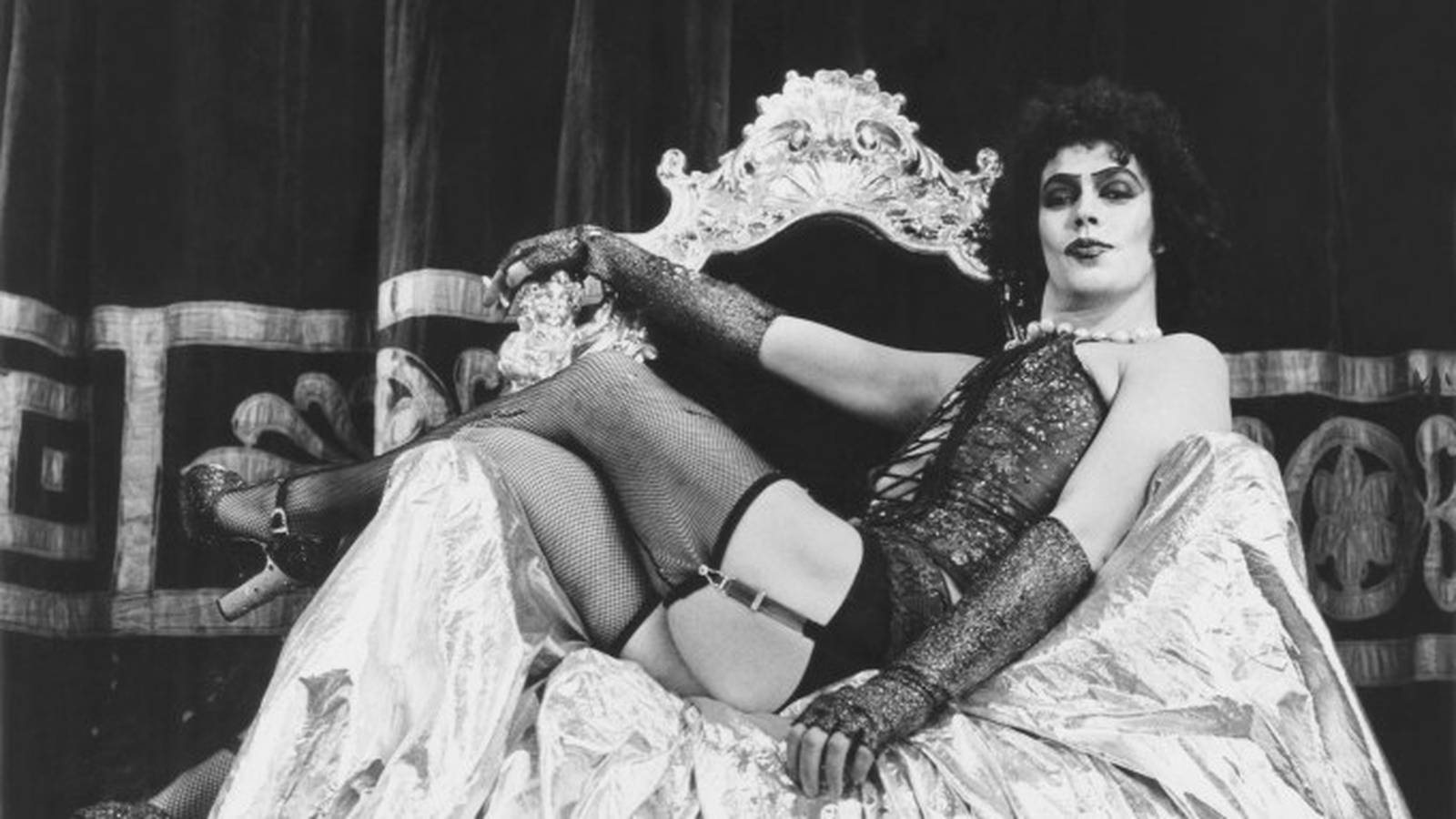
The Passing of a Cult Icon
The entertainment world is mourning the loss of British actor and singer Tim Curry, who passed away at his Los Angeles home on Tuesday, August 25, 2026, at the age of 80. His longtime manager confirmed the news on Friday, August 28, 2026, sparking an immediate and deeply emotional wave of tributes from former co-stars, theatrical institutions, and generations of fans. Curry, who suffered a stroke more than a decade ago that severely limited his physical mobility, remained a beloved fixture of the creative community, frequently appearing at fan conventions in his wheelchair and refusing to let his physical limitations dim his generous spirit.
The response to Curry’s passing has highlighted a unique career that defied traditional Hollywood categorization. Rather than belonging solely to the mainstream industry, Curry belonged to the audiences who inhabited midnight screenings, memorized his theatrical cadences, and found personal liberation in his performances. His co-stars have pointedly focused on his immense warmth. Susan Sarandon, who starred alongside him in the legendary The Rocky Horror Picture Show, paid tribute to his unique character, writing: “What a funny, sexy, original he was. But what I loved about him most was his heart. Even wheelchair-bound he continued to be so sweet and generous with his fans.” Legendary performer Carol Burnett, who shared the screen with Curry in the 1982 adaptation of Annie, offered a craftsman’s ultimate praise: “Nobody could play lovable villains better than he could.”
This report draws on information published by Deadline.
From Broadway Failure to Cultural Juggernaut
To understand Curry’s monumental impact, one must examine the institutional trajectory of his most famous vehicle, The Rocky Horror Show. Written by his close friend Richard O’Brien, who cast Curry in the central role of the cross-dressing mad scientist Dr. Frank-N-Furter in London in the early 1970s, the show initially struggled to find its footing when it crossed the Atlantic. When Curry led the original 1975 Broadway production, it was a historic commercial flop. Panned by contemporary theater critics, the production shuttered after a mere 45 performances at the Belasco Theatre.
Yet, Curry’s performance possessed a viral quality long before the digital age. Transferred to the silver screen, the film adaptation slowly evolved from a ignored theatrical release into the longest-running theatrical release in film history, powered entirely by audience participation. The theatrical community that once rejected the show eventually embraced it as an institutional goldmine. A successful 2002 revival at Circle in the Square starring Tom Hewitt, Lea DeLaria, Jarrod Emick, and Joan Jett proved the property’s enduring commercial viability.
By March 2026, a massive hit revival directed by Sam Pinkleton at Broadway’s Studio 54 venue solidified Rocky Horror as a high-grossing mainstream triumph. Starring Luke Evans in the Frank-N-Furter role alongside Rachel Dratch, Andrew Durand, Amber Gray, Stephanie Hsu, and Juliette Lewis, the production grossed a staggering $949,446 in the final week of August 2026 alone, marking the departure of its original revival cast. The production continues to draw immense crowds, with Jake Shears scheduled to take over the lead role on September 11, 2026, and Lorna Courtney and Kevin McHale joining the cast on August 25, 2026. Richard O’Brien, reflecting on Curry’s passing, joined the current Broadway production in paying tribute: “Tim Curry was a wonderful man by nature who was also a wonderful performer and understood the difference between such delightful achievements. It was both a privilege and delight to have known him and worked with him.”
The Duality of the “Instrument”
What separated Curry from his peers was a singular vocal and physical theatrical intelligence. He did not merely disappear into his roles; he signed them with an unmistakable, rich baritone that could pivot from seductive playfulness to terrifying menace within a single syllable. In The Rocky Horror Picture Show, Curry used camp not as simple parody, but as a revolutionary argument for self-reinvention. Conversely, in the 1990 television adaptation of Stephen King’s It, he portrayed Pennywise the Dancing Clown, locating the horror not in the heavy prosthetic makeup, but in the curdling warmth of his vocal delivery.
This vocal versatility allowed Curry to transition seamlessly into a prolific career in voice acting and music. He won a Daytime Emmy Award for his voice work as Captain Hook, brought an oily, environmental terror to the villain Hexxus in FernGully: The Last Rainforest, and voiced the eccentric Nigel Thornberry in Nickelodeon’s The Wild Thornberrys. Through these roles, Curry achieved a rare cultural feat: he became a defining figure of childhood wonder for a generation of children who had no idea that the very same voice belonged to the fishnet-clad icon their parents snuck out to see at midnight screenings.
A Diverse Musical Legacy
Beyond the stage and screen, Curry’s musical career extended far deeper than the theatrical showstoppers of his youth. He possessed a genuine passion for rock and pop music, releasing several solo studio albums. His 1979 album, Fearless, showcased his powerful baritone in a traditional rock setting, earning critical respect for its authentic, non-theatrical musicality. He also brought this musical personality to family-oriented cinematic projects, most notably in his charismatic, singing turn as Long John Silver in Muppet Treasure Island (1996), a performance that demonstrated his innate ability to balance theatrical villainy with genuine playfulness.
Ultimately, Curry’s legacy lies in what he termed “permission.” Reflecting on his most famous character, Curry once noted that the role “gave a lot of teenagers permission to be different, and I’m very happy that he did have that power.” In refusing to be confined by the rigid genres of Hollywood—moving effortlessly between horror, children’s animation, avant-garde theater, and rock music—Curry modeled that very permission for five decades. As theatres around the world dim their lights in his honor, the unbroken ritual of audiences shouting his lines back at the screen serves as a permanent monument to an artist who never needed the approval of the traditional film industry because he had already won the permanent devotion of his audience.