


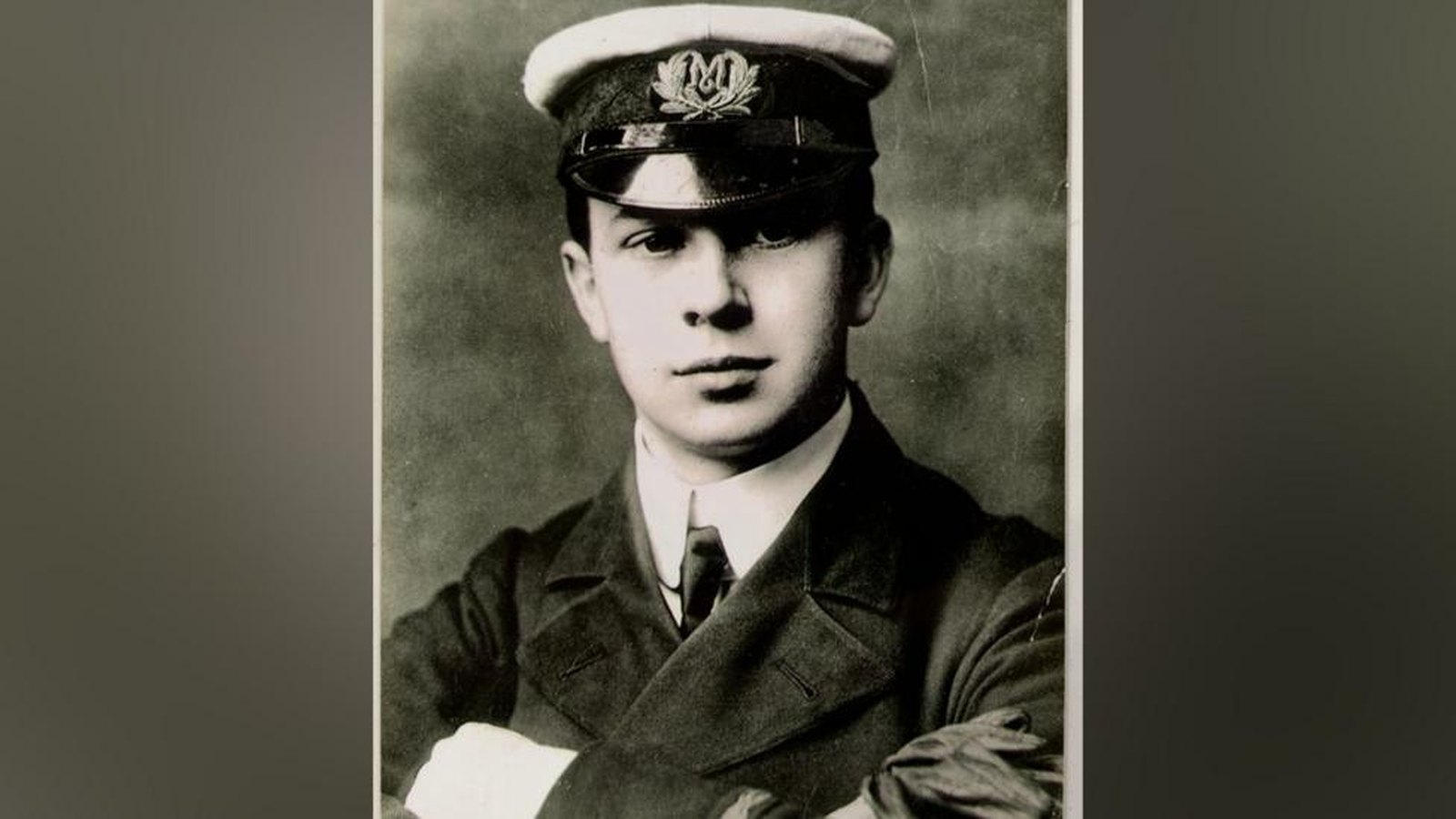
On November 21, 2026, a rare postcard penned by the RMS Titanic’s senior wireless operator, Jack Phillips, was sold at auction in Wiltshire for £32,000. The final price significantly exceeded the pre-auction estimate of £20,000, reflecting the intense and enduring interest in personal artifacts belonging to crew members whose actions directly impacted the survival rate of the 1912 maritime disaster. The item was auctioned by the firm Henry Aldridge and Son Ltd, an auction house specializing in Titanic memorabilia.
The Significance of a Final Message
Jack Phillips, who was 25 years old at the time of the sinking, wrote the card to his sister, Elsie, while the Titanic was docked in Southampton on April 6, 1912. The message, which offers a glimpse into the mundane final days before the tragedy, reads: “Thanks very much for your letter. Having glorious weather, went to Cowes yesterday. Will write later before we sail.” The postcard serves as a poignant personal record, predating the collision with the iceberg by less than a week.
Phillips is widely credited with saving the lives of 705 passengers and crew members by persistently transmitting wireless distress signals until the ship was nearly submerged. According to the BBC, auctioneer Andrew Aldridge described Phillips as “one of the true heroes of the disaster,” noting that he remained at his post even as water began to flood the wireless room. After the ship foundered, Phillips managed to reach an overturned collapsible lifeboat, where he ultimately succumbed to exposure in the freezing Atlantic waters.
Market Trends in Titanic Memorabilia
The sale of the Phillips postcard at £32,000 is indicative of a broader trend in the collectibles market, where items with a direct link to the Titanic’s survival efforts command significant premiums. Auction results from recent years suggest that collectors are increasingly prioritizing items that hold historical weight regarding the ship’s final hours. Unlike generic memorabilia, artifacts associated with the wireless operators—whose Morse code transmissions directly led to the arrival of the RMS Carpathia—are viewed as critical components of the historical narrative.
This valuation reflects an institutional and private investment in the human elements of the Titanic story. The market is not merely trading in paper and ink; it is trading in documented heroism. When a piece of ephemera like a postcard can be linked to the specific individual who, through his technical skill and persistence, enabled the rescue of hundreds, the provenance elevates the item beyond its basic material worth. The auction firm Henry Aldridge and Son Ltd has noted that the demand for such items remains resilient, with prices for authenticated Phillips-related materials often outperforming conservative estimates.
Technical Legacy and Historical Context
Phillips’ role in the disaster was fundamentally technical. Having learned Morse code during his initial employment at a local Post Office in his home region of Surrey, he possessed the requisite skills to operate the Marconi wireless equipment under extreme duress. His ability to maintain communication allowed the Titanic to reach the RMS Carpathia, which remains the only reason 705 individuals survived the night of April 14–15, 1912. This technical proficiency, now documented in historical records and reflected in the high value of his personal effects, highlights the role of the wireless operator as a central figure in maritime safety history. The auction outcome serves as a modern confirmation of how the public and private sectors continue to value the tangible remnants of these critical historical events, ensuring that the legacy of those who acted to minimize the loss of life remains preserved in both public archives and private collections.