


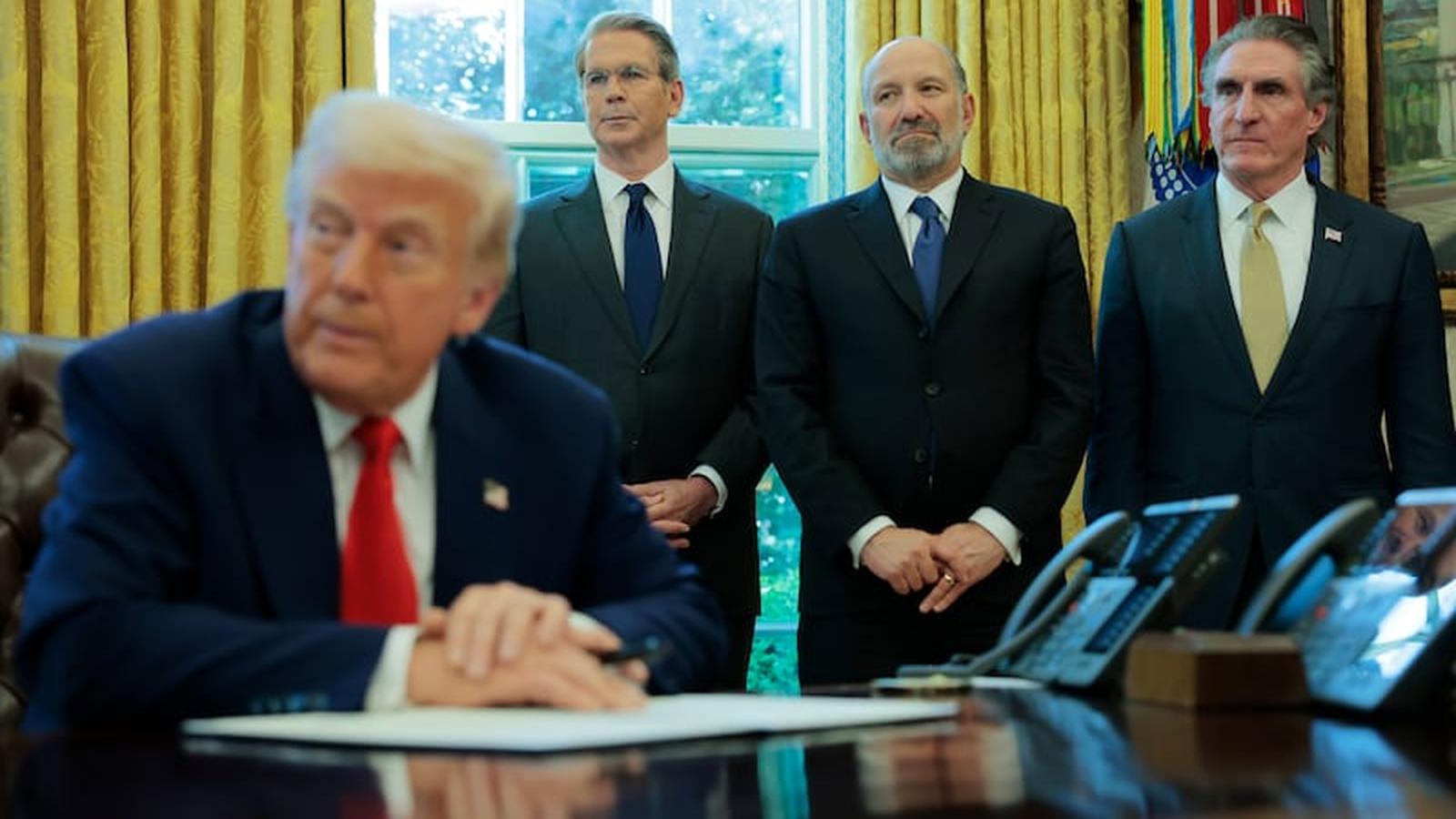
A Culture of Conflict
President Donald Trump has reportedly fostered a volatile working environment within his cabinet, actively encouraging personal and professional friction between Commerce Secretary Howard Lutnick and Treasury Secretary Scott Bessent. According to the new book Regime Change: Inside the Imperial Presidency of Donald Trump by Maggie Haberman and Jonathan Swan, the President has described the infighting between his top officials as a form of “sport.”
The accounts suggest that the antagonism is not merely a byproduct of policy disagreements but a management style employed by the President. In one reported instance involving a minerals deal with Ukraine, the two officials engaged in a heated verbal confrontation in the presence of the President, who reportedly joined in the ridicule rather than mediating the dispute.
Policy Stakes and Personal Attacks
The rivalry comes at a critical juncture for the administration’s economic agenda. Lutnick, who has been tasked with steering trade policy, faces pressure from the President regarding his perceived toughness. Reports indicate that Trump has questioned Lutnick’s resolve, contrasting his current tenure with his earlier career, while Bessent has cultivated a reputation for aggression, even facing public questioning from Sen. Thom Tillis regarding reports of physical threats against other administration officials.
This cabinet-level instability coincides with a massive federal push to secure energy infrastructure. On Tuesday, the Trump administration announced $17.5 billion in loan guarantees to support the construction of 10 large nuclear reactors. Energy Secretary Chris Wright stated that the initiative aims to meet the surging power demands of data centers, which are projected to drive a 20% increase in national electricity consumption over the next decade.
Energy Strategy Amidst Political Noise
While the administration attempts to project a unified front on infrastructure—aiming to have all 10 reactors under construction by 2030—the internal discord at the highest levels of the Treasury and Commerce departments threatens to complicate the execution of long-term economic strategy. Critics, including the Cato Institute, have questioned the federal government’s heavy-handed role in the electricity sector, arguing that such intervention distorts market outcomes.
As the administration navigates these complex energy and trade challenges, the “management by conflict” approach remains a defining, if controversial, feature of the current executive branch, raising questions about the long-term sustainability of the cabinet’s current power dynamics.