


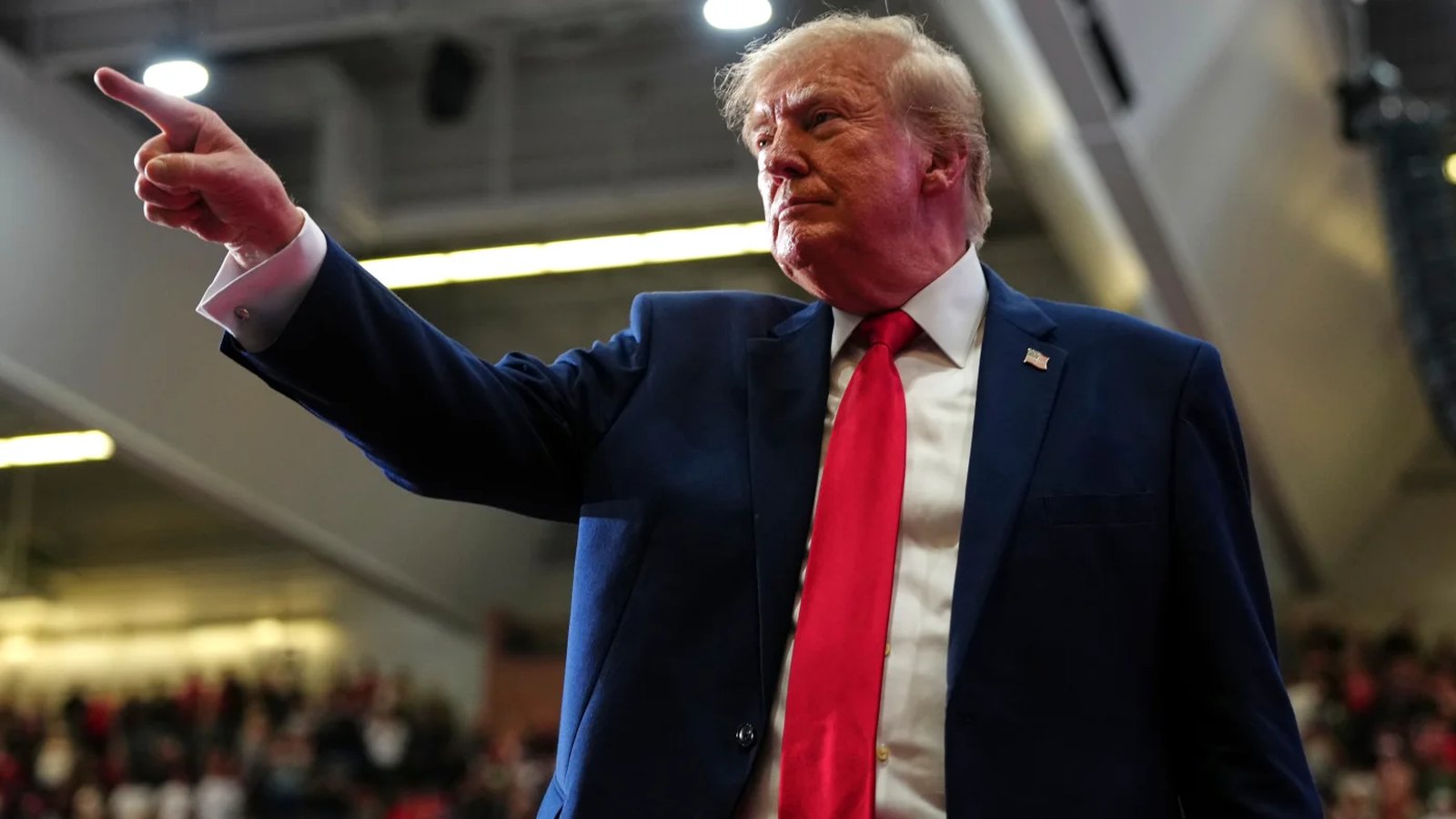
PORT HURON, Mich. (Azat TV) – President Donald Trump intensified his attacks against Michigan Senate Democratic candidate Abdul El-Sayed during a Sunday campaign rally in Port Huron, Mich., portraying the candidate as a national security threat and invoking the September 11, 2001, terrorist attacks. The remarks, reported by NPR on October 26, 2026, mark a significant escalation in the state’s fiercely contested Senate race, which could determine control of the United States Senate ahead of upcoming midterm elections.
During the rally in the Canadian border city north of Detroit, Trump labeled El-Sayed a “jihadist” and claimed he was “on the side of the terrorists,” suggesting the candidate would require a metal detector to enter the Senate chamber. The former president repeatedly invoked United Flight 93, drawing a direct comparison between stopping El-Sayed from taking office and passengers fighting back against hijackers. El-Sayed, a former Detroit health official who could become the nation’s first Muslim senator if elected, has strongly denied ties to extremist groups and called attacks on his loyalty shameful.
Political Stakes and Arab American Coalition Repercussions
The rhetoric immediately fractured key political alliances that helped secure Republican gains in Michigan during the 2024 presidential cycle. Bishara Bahbah, a founder of Arab Americans for Trump—the group that led outreach to Arab American voters—condemned the remarks in a phone interview, calling them “out of line” and “racist.” Trump won Dearborn in 2024 as the first Republican presidential candidate since 2000 to carry the city, but the aggressive language in Port Huron threatens to alienate these vital communities.
Political analysts note that the escalation unfolds as Republicans face intense public pressure over economic issues, including inflation, fuel prices, and the ongoing war in Iran. By focusing on cultural and security attacks against El-Sayed and Democratic Rep. Ilhan Omar of Minnesota, the campaign aims to galvanize base turnout. El-Sayed responded to the attacks during a campaign stop in Grand Rapids later Sunday, telling supporters he is unbothered by the pronunciation of his name and predicting electoral victory.
Scrutiny Over Associations and Campaign Flashpoints
Central to the Republican strategy in the final weeks before Election Day has been an effort to link El-Sayed to the Muslim Brotherhood, an Islamic movement designated as a terrorist organization by the U.S. government. While federal authorities have established no direct organizational affiliation between El-Sayed and the group, opponents have pointed to social media posts from 2001 and earlier regarding family history, alongside El-Sayed’s connections to popular online streamer Hasan Piker, who has faced heavy criticism for past remarks regarding 9/11 and foreign conflicts.
At the same time, El-Sayed’s own past statements have drawn scrutiny. Earlier this year, he remarked that “hurt people hurt people” following an attack on a Detroit-area synagogue by an individual who had lost family members in an Israeli airstrike in Lebanon. El-Sayed subsequently issued an apology, clarifying that his comments were not intended to justify the violence. As the contest between El-Sayed and Republican opponent Mike Rogers enters its final stretch, both campaigns are fighting to mobilize voters in a race where control of the Senate hangs in the balance.
Broader Electoral Context and Campaign Dynamics
The intensifying rhetoric reflects a broader strategic pivot by the Republican campaign as the midterms approach. Rather than focusing primarily on traditional legislative priorities or local economic conditions, rallies have increasingly leaned into national security narratives and cultural debates. In Michigan, where the automotive industry forms the backbone of the economy, Trump’s Port Huron address notably omitted any new economic handouts or specific manufacturing investments, choosing instead to focus on border security, trade tensions with Canada, and vocal opposition to Democratic challengers.
Meanwhile, the opposition has sought to reframe the debate around economic justice and civic inclusion. During the Grand Rapids event, Senator Bernie Sanders joined El-Sayed on stage to push back against the inflammatory language, arguing that voters are ultimately concerned with healthcare, housing, and income inequality rather than divisive rhetoric. Sanders asserted that Islamophobia is deployed by political opponents precisely because they lack substantive solutions for working-class challenges.
The race to replace retiring Democratic Senator Gary Peters remains razor-thin, with both camps pouring substantial resources into voter outreach across key demographic sectors. Republican candidate Mike Rogers has consistently echoed national talking points, using platform appearances to question El-Sayed’s alignment with American values and democratic institutions. During their final debate, Rogers pressed El-Sayed directly on his foreign policy stances and associations, prompting staunch defenses from the Democratic nominee regarding constitutional protections and religious freedom.
As early voting progresses and the final countdown to Election Day ticks down, the fallout from the Port Huron rally continues to reverberate across the political landscape. The willingness of prominent Arab American figures like Bahbah to publicly break with the administration highlights potential vulnerabilities in coalitions that were meticulously built over the past several electoral cycles. Whether these fractures will alter voter turnout in crucial municipalities like Dearborn and Hamtramck remains one of the defining questions of the 2026 midterm cycle.