


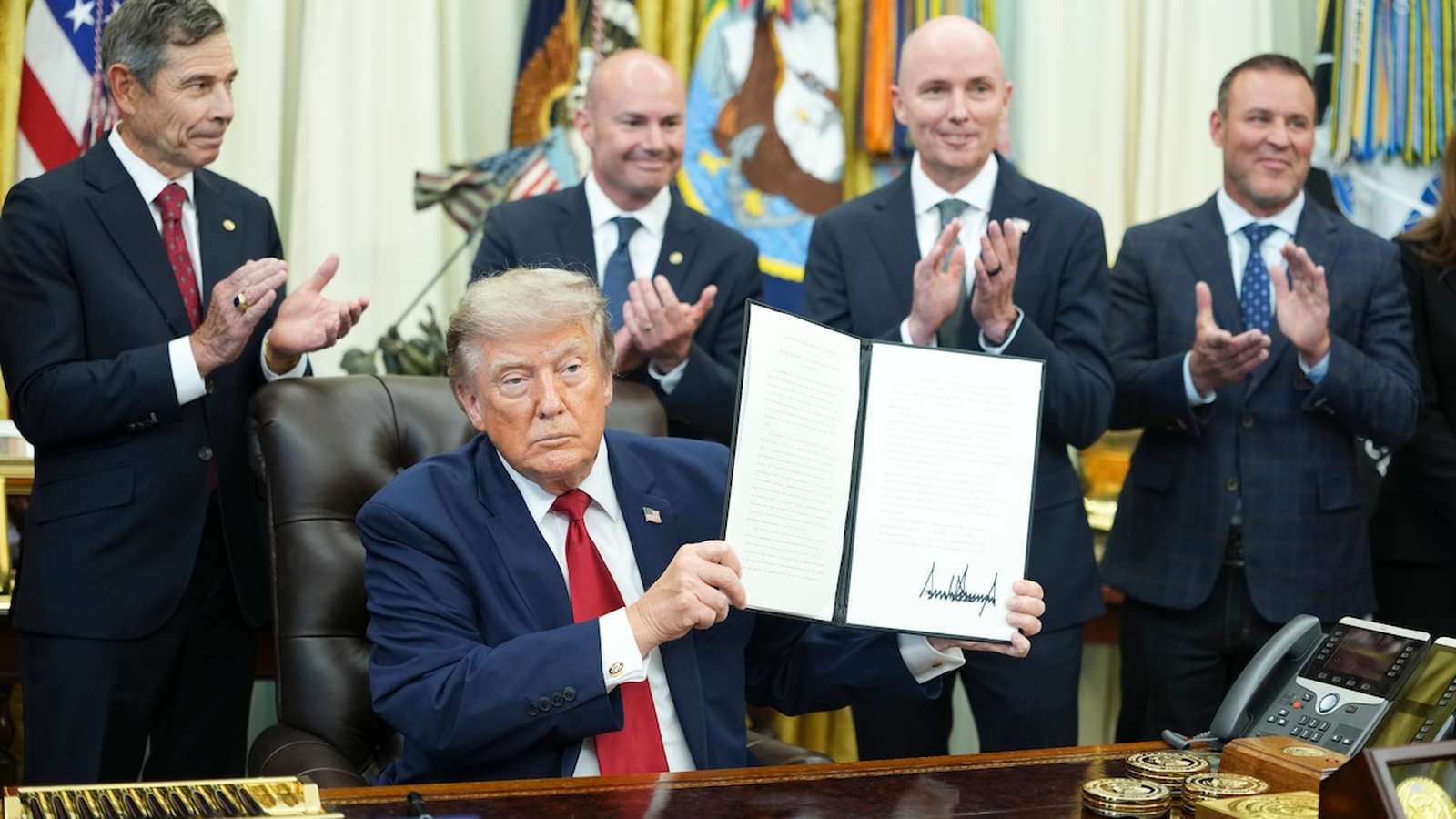
President Donald Trump signed executive orders on Monday to dramatically reduce the size of the Bears Ears and Grand Staircase-Escalante national monuments in Utah. The move, which slashes the protected areas by approximately 90%, marks the second time in his presidency that Trump has significantly altered the boundaries of these federal lands.
The Scope of the Reductions
According to a release from Utah Governor Spencer Cox’s office, the new orders shrink Bears Ears to roughly 121,000 acres and Grand Staircase-Escalante to approximately 182,000 acres. Collectively, this removes nearly 3 million acres from the federal protections established under the Antiquities Act by previous administrations.
During a closed-door signing ceremony at the White House, attended by Utah’s Republican congressional delegation and Governor Cox, President Trump stated, “This is very nice. I’m very happy about this.” Supporters, including Senator Mike Lee, argued that the original designations were an abuse of the Antiquities Act and that the reduction returns land management to a more appropriate, localized scale.
Institutional and Tribal Opposition
The decision has triggered immediate backlash from conservation groups, Tribal Nations, and Democratic lawmakers. The Grand Staircase-Escalante Inter-Tribal Coalition condemned the move, stating they were not consulted, which they argue violates the federal government’s trust and treaty obligations. Davina Smith-Idjesa, co-chair of the Coalition, emphasized that for the Navajo and other tribes, these areas are not merely public lands but “living cultural sites” containing ancestral history and spiritual significance.
Legal challenges are already underway. The Southern Utah Wilderness Alliance has vowed to sue, maintaining that the Antiquities Act does not grant the president the authority to dismantle or significantly shrink established monuments. Legal experts note that the 1906 law is widely interpreted by environmental advocates as a “one-way statute” intended for protection, not withdrawal.
Economic and Policy Implications
The administration’s stated goal is to “maximize public access” and facilitate multiple uses of the land, including potential mining and energy development. While Utah Republican leaders contend this will improve land management and economic opportunity, environmental advocates warn it will open protected ecosystems to irreversible exploitation. As the legal battle begins, the future of these millions of acres remains in a state of high uncertainty, echoing the cycle of litigation and executive reversal that has defined the status of these monuments for the past decade.