


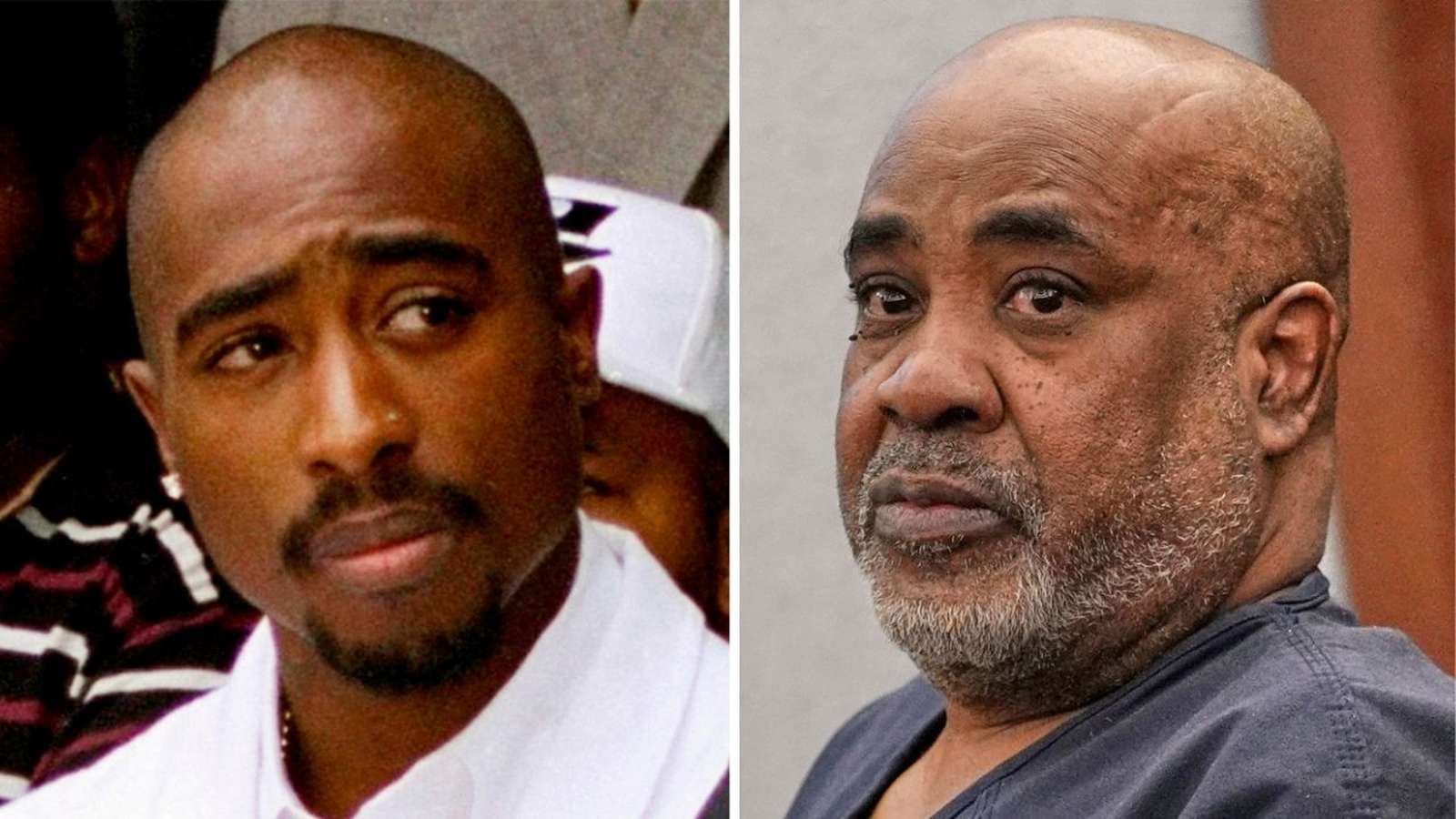
A Decades-Old Case Enters the Courtroom
Thirty years after the shooting that claimed the life of hip-hop icon Tupac Shakur, the legal system has officially opened proceedings in the case against Duane “Keffe D” Davis. Opening statements began on Monday at the Clark County courthouse in Las Vegas, marking a rare moment of judicial movement in a case that many long believed would never reach a courtroom.
Davis, a 63-year-old former Los Angeles gang leader, faces charges of murder with the use of a deadly weapon with the intent to further a criminal gang. While prosecutors acknowledge that Davis did not personally pull the trigger on the night of September 7, 1996, they contend he acted as the “shot caller” who orchestrated the retaliation that led to Shakur’s death.
The Prosecution’s Theory and Davis’s Public Record
The prosecution’s case relies heavily on a series of public statements made by Davis himself over the years. Prosecutor Marc DiGiacomo told the jury that Davis “kept talking until they put handcuffs on him.” The state plans to introduce evidence from Davis’s 2019 memoir, Compton Street Legend, as well as multiple police interviews and documentary appearances where Davis described his role in the events leading up to the shooting.
The incident, which occurred at the intersection of East Flamingo Road and Koval Lane, followed a confrontation earlier that evening at the MGM Grand, where Shakur and his entourage were filmed attacking Davis’s nephew, Orlando “Baby Lane” Anderson. Prosecutors argue this brawl provided the motive for the subsequent retaliatory shooting.
Defense Strategy and Conflicting Accounts
Davis, who has pleaded not guilty, maintains that his previous admissions were fabrications. In a 2025 interview with ABC News, he claimed, “I’m innocent. I ain’t kill nobody.” His defense team has indicated they plan to call an expert witness on false confessions to challenge the reliability of the statements he made to law enforcement and media outlets. The defense argues that the prosecution’s narrative is “fiction” and intends to highlight the lack of physical evidence linking Davis to the scene as a direct shooter.
The Shadow of the East-West Rap Feud
The trial brings renewed focus to the volatile environment of the mid-1990s music industry, characterized by the intense rivalry between Death Row Records, led by Marion “Suge” Knight, and Bad Boy Records. Knight, who was driving the car in which Shakur was killed, remains a central, albeit non-cooperative, figure. Currently incarcerated on unrelated charges, Knight has publicly stated his refusal to testify, noting the dangerous social stigma associated with “snitching” in his community.
The proceedings are expected to last approximately one month, with the possibility that a verdict could be reached near the 30th anniversary of Shakur’s death on September 13.