


WASHINGTON – U.S. Attorney General Todd Blanche on Sunday defended the Department of Justice’s federal lawsuit seeking to halt the automatic certification of Alaska’s high-stakes U.S. Senate election if Republican incumbent Sen. Dan Sullivan loses the contest. The legal challenge, filed late Thursday in federal court in Alaska, centers on potential voter confusion stemming from a second candidate on the ballot sharing a remarkably similar name, retired Petersburg schoolteacher Daniel J. Sullivan.
Appearing on NPR, Blanche strongly rejected claims that the litigation is laying the groundwork for President Donald Trump to challenge the outcome of the upcoming midterm elections or improperly interfere with state-run electoral administration. The high-profile battle is vital for Republicans seeking to maintain control of the U.S. Senate during the second half of President Trump’s term.
Controversy Over Ballot Names and State Court Rulings
The core of the Department of Justice’s legal argument relies on the premise that having two candidates with nearly identical names creates unacceptable voter confusion. Republican election officials in Alaska had previously sought to remove Daniel J. Sullivan from the ballot, alleging his candidacy was intended to mislead voters. However, both a state court and the Alaska Supreme Court rejected that effort and kept him on the ballot.
Blanche argued that the state court decision “explicitly didn’t consider federal law,” framing the federal lawsuit as a necessary test of whether Alaska violated federal statutes and the Constitution by permitting the potentially confusing ballot process to proceed. The lawsuit cites the National Voter Registration Act and asks the court to block certification after the November 3 election until the government can investigate whether votes cast for Daniel J. Sullivan were actually intended for the incumbent.
Daniel J. Sullivan has consistently denied that his candidacy was intended to siphon votes or confuse the electorate, maintaining that his decision to run was entirely his own. Meanwhile, state officials have taken steps to distinguish the two men on the ballot, listing the incumbent as “Dan S. Sullivan” with a registered Republican designation, while “Daniel J. Sullivan Jr.” carries no party label.
Tense Exchange and Presidential Confirmation
During a television appearance on Sunday, the interview grew tense when anchor Dana Bash pressed Blanche about his earlier “doomsday” remarks regarding vote certification and whether the Alaska case risked mirroring post-2020 election disputes. Blanche sharply rejected the comparison, calling the suggestion “crazy” and stating that the administration was not attempting to take over a state election.
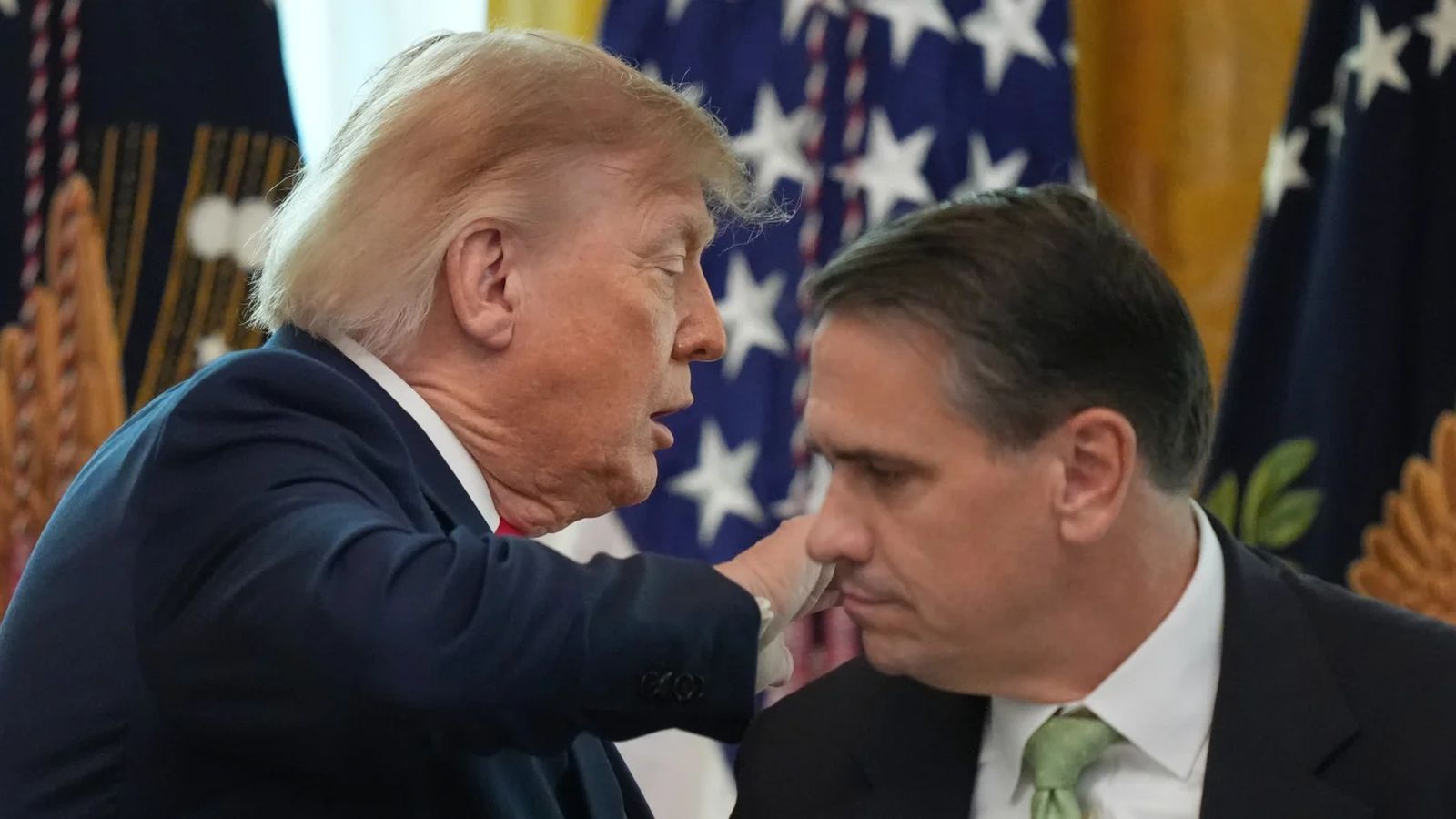
President Donald Trump publicly confirmed on Friday that he personally ordered the legal action, telling reporters in Florida, “I’m the one that said do it.” Despite this confirmation, Blanche insisted that the Justice Department’s objective is strictly to ensure that “the law is not broken” and maintained that any final determination remains a question for Alaska and its judicial system to resolve. The lawsuit itself was signed by Associate Attorney General Stanley Woodward, adding further legal weight to the administration’s intervention in the closely watched contest between incumbent Dan Sullivan and Democratic challenger Mary Peltola.
Legal Scrutiny and Political Reactions
The Department of Justice’s intervention has drawn swift criticism from legal scholars and political figures alike, highlighting deep divisions over the appropriate scope of federal authority in local elections. Prominent election law experts have described the federal lawsuit as exceptionally weak, noting that the matter was fully litigated within the Alaska state court system. David Becker, executive director of the Center for Election Innovation & Research, characterized the move as an unprecedented federal intervention undertaken just days before polls close. Similarly, New York University law professor Richard H. Pildes remarked that the filing ranks among the weakest election-related lawsuits ever brought forward.
Political fallout has extended across party lines within Alaska. Republican U.S. Senator Lisa Murkowski publicly rebuked the administration’s legal action, stating on social media that the Department of Justice should never have filed the lawsuit and emphasizing that Alaska had already adequately distinguished the candidates on the ballot. Meanwhile, Democratic challenger Mary Peltola’s campaign condemned the move as a despicable political threat intended to undermine the democratic process, asserting that Alaskans want candidates and officials to focus on key issues such as affordability rather than federal litigation.
Supporters of the administration’s actions, including North Carolina Republican Senator Thom Tillis, argued that reviewing potential voting irregularities is prudent, though Tillis acknowledged reservations regarding the timing of a lawsuit filed before the actual election results are known. As federal courts prepare to review the Justice Department’s complaint, the outcome remains closely tied to the broader national debate over electoral administration, voter intent, and the future balance of power in Washington.