

Quick Read
- U.S. milk production is at record levels, but replacement heifer inventories are the lowest since 1978.
- Strong beef prices encourage beef-on-dairy breeding and keeping older cows, dampening milk prices.
- Virtual fencing technology, using GPS collars, helps manage cattle efficiently, reducing labor and optimizing pasture use.
- Farmers are diversifying income through agritourism, such as ‘cow cuddling,’ farm stays, and on-site processing/retail stores.
- Record U.S. dairy exports in 2025 are driven by lower domestic prices, masking underlying herd management challenges.
WASHINGTON (Azat TV) – The U.S. dairy industry is grappling with a significant paradox in early 2026: record milk production is masking a troubling long-term trend of declining replacement heifers, creating market instability for farmers. In response, dairy producers are increasingly turning to innovative technologies like virtual fencing for herd management and diversifying their income streams through agritourism and direct-to-consumer sales to navigate volatile milk prices and ensure the sector’s future viability.
The Paradox of Plenty: Record Output, Shrinking Future
Despite currently enjoying its highest milk cow inventories since 1993, the U.S. dairy sector is simultaneously experiencing a dramatic contraction in its replacement pipeline. According to the American Farm Bureau Federation (AFBF), milk replacement heifer inventories fell to 3.91 million head in 2025, the lowest level since 1978. This divergence is largely attributed to short-term herd management decisions driven by economic pressures.
Strong beef prices and elevated beef-on-dairy premiums have incentivized farmers to keep older cows in production longer and to shift breeding toward beef genetics. While this strategy offers an important income offset through calf sales, it has inadvertently inflated milk supply and depressed farm-level milk prices, worsening returns on the milk side of the business. Cumulative dairy cow slaughter through the first 50 weeks of 2025 totaled 2.53 million head, the lowest in over a decade, indicating fewer cows are exiting the herd than in previous years.
This surge in U.S. milk production, coupled with expanding global output from regions like the EU-27 plus the United Kingdom, New Zealand, Argentina, and Uruguay, has kept farm-level prices under significant pressure. The U.S. all-milk price averaged $19.70 per cwt in November 2025, a notable decline from January. This price slump has, however, made U.S. dairy products highly competitive internationally, supporting record cheese and butter exports in 2025, according to the AFBF. Yet, this export-driven relief masks a growing domestic imbalance, with current production gains relying on older cows and a shrinking pool of new dairy-bred heifers.
Technological Horizons: Virtual Fencing Gains Traction
Amidst these economic pressures, technological innovations are emerging as vital tools for modern dairy farming. At the Dakota Lakes Research Farm in Pierre, South Dakota, electronic collars are proving highly effective in managing cattle without traditional physical fences. Consulting scientist Cody Zilverberg reported that around 75 cows on the farm use these collars, which download GPS locations of virtual paddocks drawn on a computer.
The system uses audio cues to warn cows approaching a virtual boundary. If they do not turn around, they receive a mild electric shock, similar to a traditional electric fence. Zilverberg stated that cows quickly learn the system, with 95% avoiding shocks after just a few months, typically responding to the audio signal alone. This technology minimizes labor for building and moving temporary fences, a significant benefit for intensive grazing operations. It also provides valuable data on cow locations and interactions with boundaries, helping farmers optimize pasture utilization and quickly locate lost animals.
While the Gallagher eShepherd collars used at Dakota Lakes Research Farm cost around $250 each, plus a $2 per cow per month cellular service fee, Zilverberg noted that this can be more cost-effective than building miles of traditional fencing, which can run upwards of $15,000 per mile. Despite some initial issues, such as one collar-related fatality and a few cases of sores due to improper fit, virtual fencing is expected to see increased adoption among ranchers, with rapid advancements anticipated in the technology’s effectiveness and design.
Diversifying for Resilience: Agritourism and Direct Sales
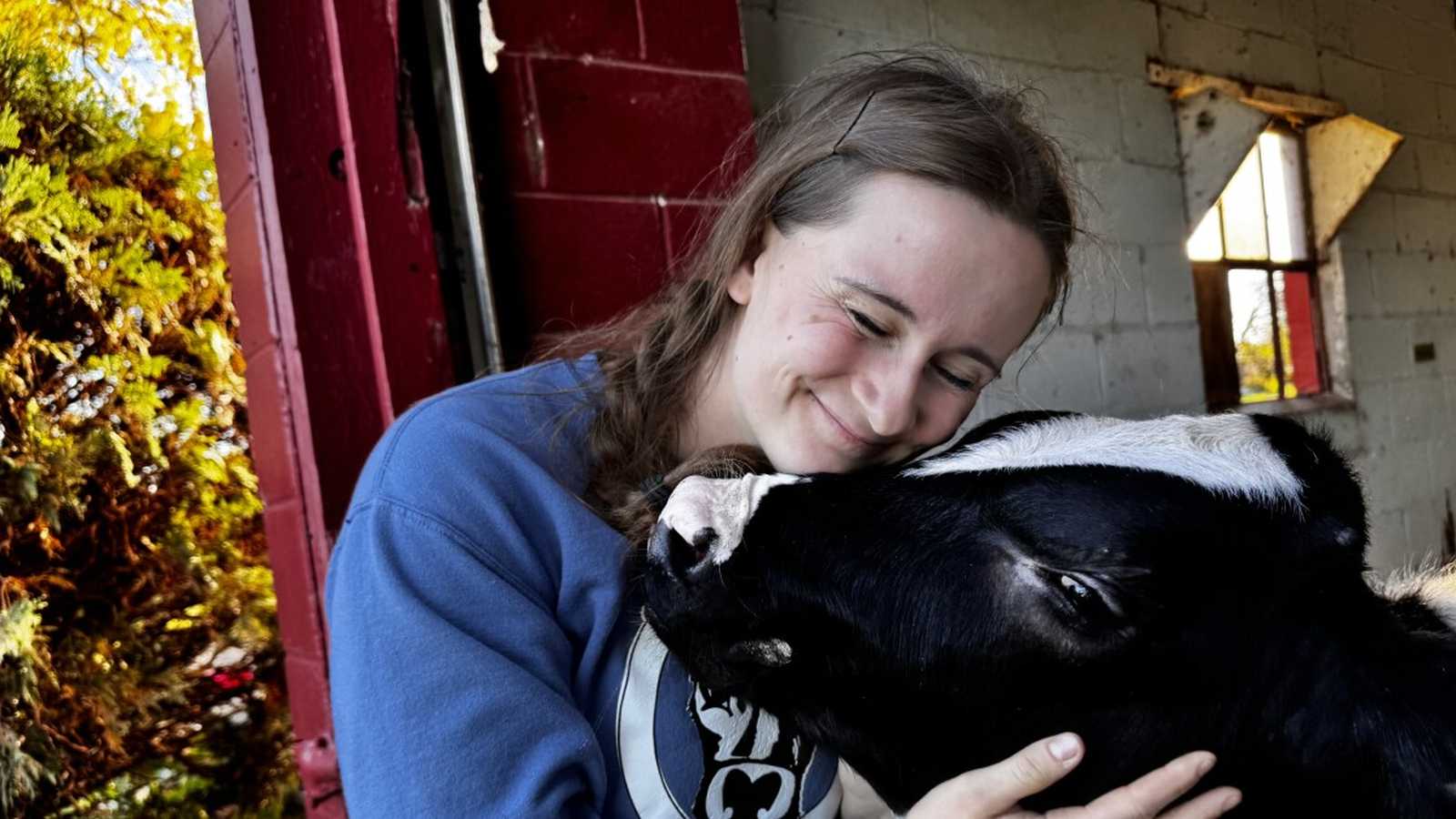
With milk prices remaining low and inconsistent, many dairy farmers are actively seeking diversified income streams to supplement their core business. Quinci Schmidt, co-owner of Curious Cows and Company in Corcoran, Minnesota, transformed her calf nursery into a ‘cow cuddling’ business. For $25, visitors can spend thirty minutes brushing and feeding calves, an idea inspired by a New York State farmer. Schmidt’s brother, Caleb Scherber, highlighted the soothing effect of the calves’ slow heartbeats on visitors, emphasizing the joy derived from this unique experience.
Other farmers are also embracing agritourism and direct sales to connect with consumers and boost revenue. Lynn Bolin, an Iowa dairy farmer, opened a guestroom vacation rental at her New Day Dairy in 2020, aiming to help people experience farm life firsthand. Country Dairy in New Era, Michigan, which built its own bottling plant in 1983 and a retail store in 2004, now offers farm tours and a cafe, becoming a tourist attraction that leverages its location in a vacation area. Similarly, Sassy Cow in Columbus, Wisconsin, operates its own creamery and store, churning ice cream and bottling milk, attracting customers from nearby urban areas like Madison. James Baerwolf, a family owner of Sassy Cow, noted that ice cream sales are crucial for customer attraction, especially during the summer months.
These diversification efforts extend to educational initiatives, such as Country Dairy’s ‘Moo University’ program, which aims to teach visitors about the entire process of food production, from land to store. These strategies not only provide crucial additional revenue but also serve to educate the public and foster a deeper appreciation for agriculture.
The current landscape of the U.S. dairy industry illustrates a critical juncture where short-term economic strategies have created underlying vulnerabilities, forcing a proactive embrace of both advanced technology and consumer-facing diversification. While record exports demonstrate competitiveness, the shrinking replacement herd signals a potential future supply crisis, making innovations in herd management and alternative revenue generation not just advantageous, but increasingly essential for the sector’s long-term stability and adaptation.