


Archive Release Stirs Speculation
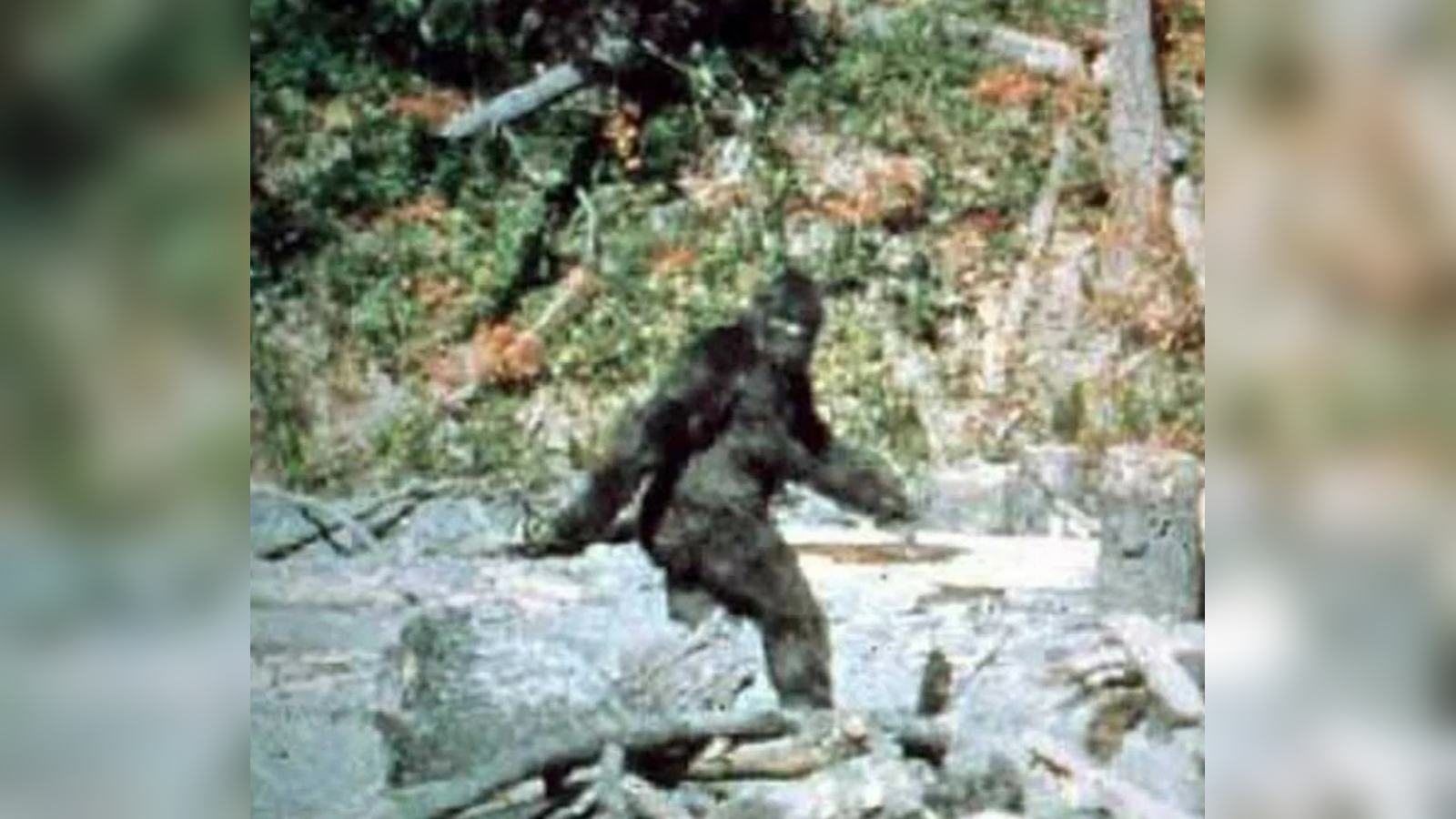
In a move that has reignited decades-old debates, the U.S. Department of Agriculture’s Forest Service (USFS) recently published a collection of archival documents via its online FOIA reading room. The records, which were quietly added to the agency’s public archive on October 15, 2026, detail three distinct accounts and investigations concerning reports of “Bigfoot”—a legendary cryptid rumored to inhabit wooded areas of North America—spanning from 1980 to 2003. This administrative disclosure, while lacking in scientific breakthrough, has served to catalyze a fresh wave of public discourse regarding the intersection of folklore and federal record-keeping.
The release, reported by WESH, includes a 2003 newspaper clipping from the Clark Fork Valley Press in Montana describing large, human-like footprints found near a local sawmill. These prints, which reportedly measured 16.5 inches long and 8.5 inches wide, prompted significant local attention, with witnesses expressing a mixture of skepticism and disbelief at the physical evidence before them. Other files recount a 1982 investigation in the Umatilla National Forest and a personal letter from 1980 documenting a 1940s encounter. While these documents provide a window into the administrative handling of such claims, they offer no scientific evidence for the creature’s existence, functioning instead as a historical repository of American intrigue.
Investigative Patterns and Official Findings
The files illustrate a consistent, historical pattern of how the USFS approaches anecdotal reports of anomalous activity. The 1982 investigation in Oregon’s Mill Creek Watershed serves as a primary example. As documented in Newsweek, wildlife biologist Rodney Johnson conducted a formal site assessment, photographing the tracks and creating plaster casts. However, the agency ultimately concluded that the prints were a “very clever attempt to perpetrate a hoax,” citing the uniform stride lengths and shallow depth as inconsistent with a biological entity of significant weight. Johnson’s detailed report highlighted several concerns, including the lack of evidence that the maker of the tracks had slipped on the steep or wet terrain, leading to the conclusion that the display was artificial.
This categorization of reports as potential hoaxes remains consistent across the provided archive. Another file involves a 1980 letter from Leo T. Kinney, who detailed an experience from the 1940s. Kinney recounted a hunting trip near Petty Creek, Montana, where his party discovered that a six-point bull elk carcass had been moved and was accompanied by large, bipedal tracks, a strong odor, and grunting noises. Kinney noted that his group had not even heard of Bigfoot at the time, yet the experience left them feeling profoundly uneasy. Despite the lack of new scientific breakthroughs, the disclosure of these specific files has prompted a robust response from the enthusiast community. Jeremiah Byron, host of the Bigfoot Society podcast, told Newsweek that the act of releasing these records is an “incredible event” in its own right, suggesting it highlights a potential, if subtle, trend toward greater institutional transparency regarding fringe topics.
Contrasting Perspectives on Public Disclosure
The release has amplified a long-standing disconnect between administrative records and public interest. On one hand, academics remain critical of the archival value of these files. David Daegling, a University of Florida anthropology professor who authored a 2004 book on the subject, characterized the files as “standard Bigfoot fare” in remarks to the New York Times, noting that the content is “not groundbreaking in the least.” From an academic perspective, the files do not alter the current understanding of the cryptid as a product of American folklore rather than a biological reality, reinforcing the view that the agency is simply fulfilling its duty to provide access to existing records without endorsing the validity of the claims.
Conversely, advocates such as Charles Stuart, a self-proclaimed tracker known as “Snake the Bigfoot Hunter,” argue that the accumulation of documentation reflects a growing momentum. In comments made on “Jesse Weber Live,” as reported by NewsNation, Stuart suggested that the mounting volume of eyewitness accounts makes the creature’s existence “becoming undeniable.” He drew parallels to the historical skepticism surrounding UFO sightings before more recent government disclosures, suggesting that the public appetite for such information is forcing a change in how federal entities treat these topics. This perspective positions the USFS files not as isolated historical curiosities, but as part of a larger, evolving narrative concerning what the government is willing to acknowledge.
Contextualizing the Federal Response
The timing of the document release has also sparked curiosity. Following the Pentagon’s recent declassification of UFO-related materials, some enthusiasts view the USFS file drop as part of a wider effort to increase transparency. While there is no evidence that the agencies are coordinating these efforts, the perception among some is that the “pump is being primed” for more information. For the Forest Service, however, the files represent the routine management of Freedom of Information Act requests. The documents capture a snapshot of a different era—before the internet allowed for the instant sharing of anecdotal reports—and show how local agents were forced to respond to, and often debunk, claims that reached their offices.
As federal agencies continue to process Freedom of Information Act requests, such documents provide a timeline of the intersection between public cultural fascination and government bureaucracy. They serve to remind the public that even as science maintains a skeptical distance, the government remains a destination for those who believe they have encountered the unknown. Whether the release leads to further disclosures or simply fades back into the archives remains to be seen, but for now, the documents provide a clear view into the historical skepticism that has characterized the official response to North America’s most enduring, and elusive, cryptid legend.
Ultimately, the USFS files function more as a repository of historical American intrigue than as a source of forensic evidence. While experts dismiss the documents as standard, the public’s continued fascination, combined with the government’s periodic transparency, ensures that these files will remain part of the broader, ongoing debate. As the cycle continues, these archival records serve as a witness to the enduring human search for anomalies in the natural world, regardless of whether those anomalies have any foundation in biological reality.