


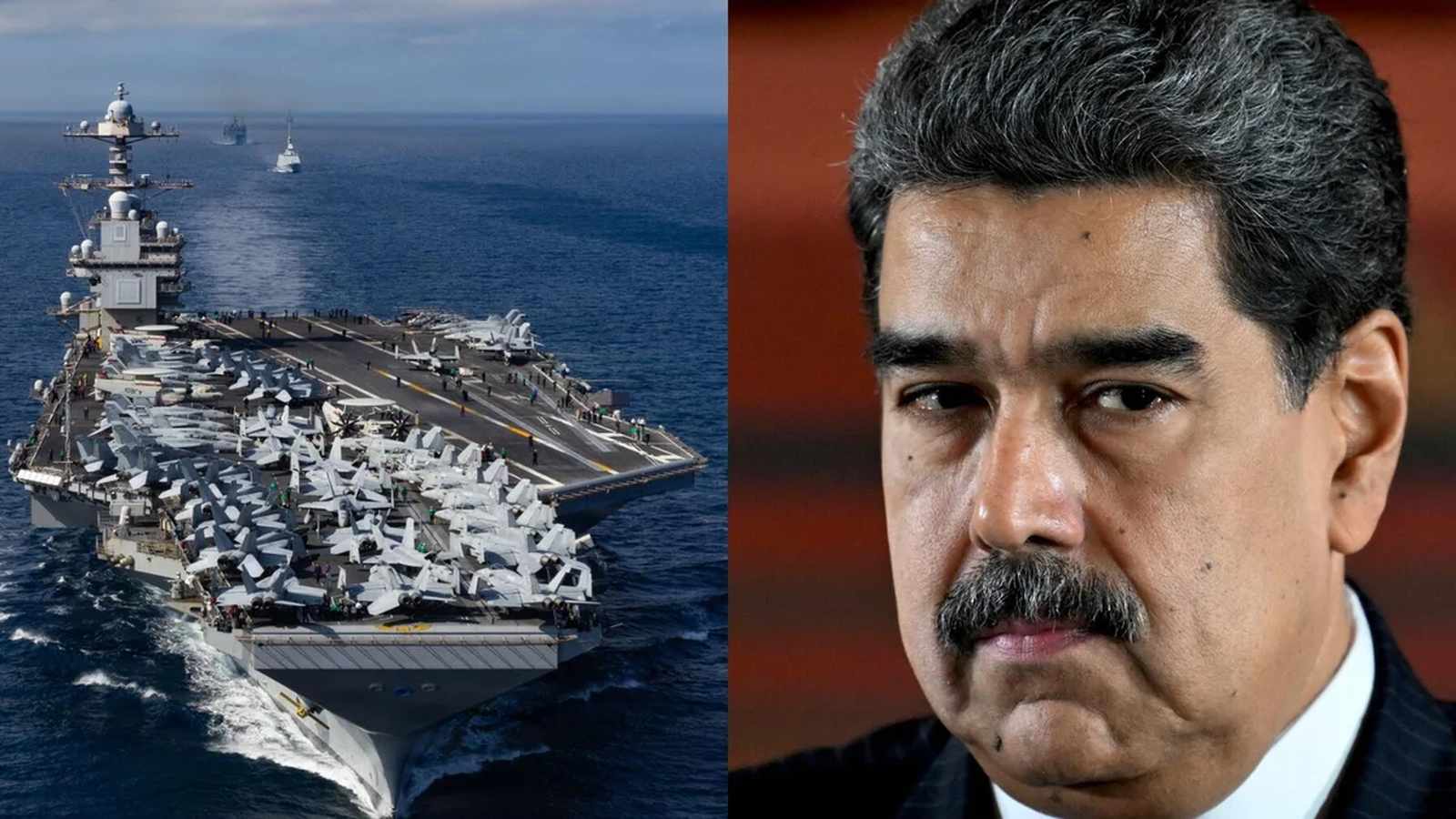
USS Gerald R. Ford: Power, Strategy, and Symbolism in Caribbean Waters
On November 12, 2025, the arrival of the USS Gerald R. Ford—the largest and most technologically advanced aircraft carrier in the world—marked a decisive moment in the simmering standoff between the United States and Venezuela. The Ford, a nuclear-powered behemoth of American military engineering, entered the U.S. Southern Command’s area of responsibility, shifting its presence from the Mediterranean to the turbulent waters surrounding Latin America. This move, while described officially as part of an intensified campaign against drug cartels, has deep political and strategic ripples far beyond anti-narcotics operations.
Venezuela Mobilizes: Massive Military Exercises Unfold
Within hours of the Ford’s arrival, Venezuela’s Ministry of Defense announced the launch of «Plan Independencia 200», a sweeping military exercise involving an estimated 200,000 troops and a full spectrum of land, air, and sea assets. Defense Minister Vladimir Padrino, speaking on state television, characterized the mobilization as a direct response to the U.S. military buildup in the region, and to recent U.S. strikes on suspected drug trafficking boats. According to Reuters, these operations—initiated in September—have targeted around 20 vessels in international waters, resulting in at least 76 casualties. The Trump administration, meanwhile, has maintained that these actions are part of a necessary crackdown on transnational narcotics trafficking.
Padrino’s rhetoric was unambiguous. He accused U.S. forces of “murdering defenseless people, whether or not they are drug traffickers, executing them without due process.” The message to foreign powers was clear: any attack on Venezuelan soil would be met by a “community united to defend this nation, to the death.”
The USS Gerald R. Ford: Technology and Tactical Edge
The Ford’s presence in the Caribbean is not just a show of force—it’s a message written in steel and jet fuel. The carrier’s air wing includes four squadrons of F/A-18 Super Hornets, an electronic warfare squadron, advanced Airborne Warning and Control Systems, two Helicopter Sea Combat Squadrons, and a logistics support squadron. Additionally, F-35 stealth warplanes have been deployed to Puerto Rico, and six other U.S. Navy ships operate in the region.
Colonel Seth Krummrich, speaking to ABC News, framed the Ford’s arrival as a signal that “what was happening is not going to be tolerated going forward.” The implication: the U.S. intends to project not just power, but resolve, as it attempts to disrupt the flow of drugs—and, by extension, the networks of influence and profit—across the Caribbean.
Regional Fallout: Allies, Critics, and the Human Rights Debate
The escalation has not gone unnoticed by Venezuela’s neighbors. Colombia’s President Gustavo Petro, alarmed by the missile strikes on small boats, ordered his country to suspend intelligence sharing with the U.S. “The fight against drugs must be subordinated to the human rights of the Caribbean people,” Petro declared in a recent CBS News interview. He labeled the strikes as illegal and ineffective, echoing the concerns of other regional leaders wary of collateral damage and the erosion of sovereignty.
Within Venezuela, the government and much of the population see the U.S. buildup as a thinly veiled attempt to force President Nicolas Maduro from office. While President Trump has stopped short of publicly endorsing regime change, his repeated accusations of Maduro’s complicity with criminal gangs have fueled speculation about Washington’s ultimate intentions. Ambassador James Story, a former top U.S. diplomat to Venezuela, told CBS News last month that the U.S. could remove Maduro by force if it chose to.
Military Muscle Meets Political Will: What’s Next?
As the Ford’s massive hull casts its shadow over Caribbean waters, the question lingers: is this the prelude to a broader confrontation, or a calculated demonstration meant to deter and disrupt? For Venezuela, the response has been to double down—mobilizing troops, rallying national sentiment, and warning of dire consequences for any foreign intervention. For the U.S., the carrier’s presence is both a tactical asset and a symbol of its willingness to act decisively.
The region’s future remains uncertain. The anti-drug campaign, with its mix of military might and intelligence operations, has already sparked diplomatic fallout and raised concerns about proportionality and human rights. The Ford’s deployment, while aimed at criminal networks, is inseparable from the geopolitical drama unfolding between Washington and Caracas.
In the coming weeks, observers will be watching closely: for signs of de-escalation, for unexpected incidents, and for the shifting alliances that define this contested maritime frontier. The Ford, with its formidable capabilities, may yet prove to be the linchpin in a story that is as much about politics and pride as it is about security and law enforcement.
Assessment: The deployment of the USS Gerald R. Ford in the Caribbean exemplifies the complex intersection of military technology, regional politics, and international law. While intended as a blow against drug cartels, its impact reverberates through diplomatic channels, heightening tensions and prompting robust responses from Venezuela and its neighbors. The unfolding scenario highlights how power projection—no matter how sophisticated—can generate unpredictable consequences in an already fragile geopolitical landscape.