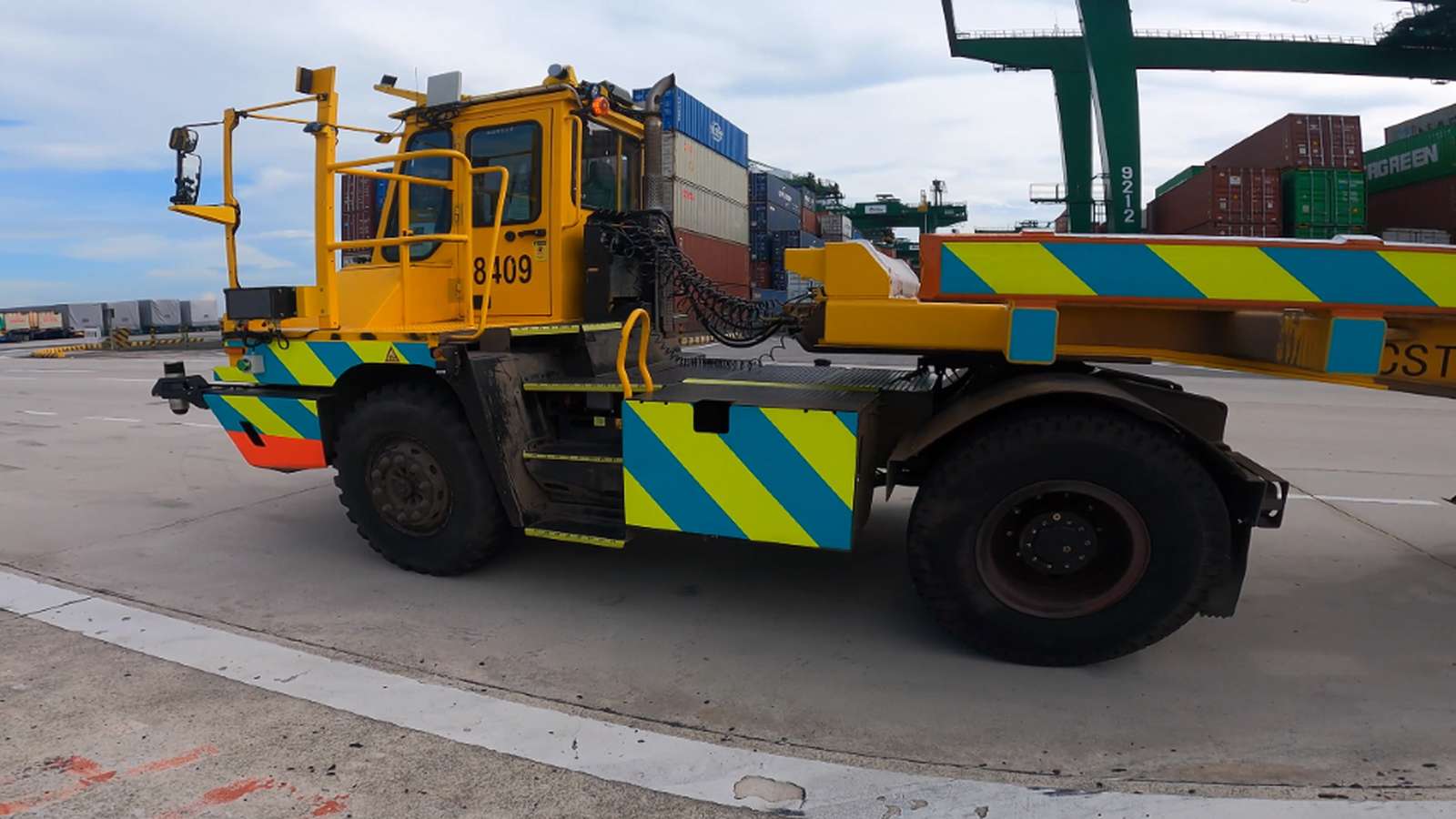
Venti Technologies has announced a long-term commercial agreement to integrate its autonomous yard trucks into the operations of a major Class I railroad’s intermodal terminals. The initiative marks the first full-production deployment of driverless container trucks within large-scale U.S. rail facilities, signaling a shift toward automated logistics in heavy-duty environments.
Under the terms of the agreement, Venti will provide its proprietary precision-navigation technology, which includes specialized software and sensor suites designed to handle the loading, movement, and unloading of shipping containers. According to the company, these vehicles will operate entirely without an onboard driver, utilizing ‘physical AI’ to navigate complex terminal layouts.
The deployment will begin at two initial sites, with a structured roadmap for expansion. Venti expects to have over 100 autonomous trucks operating across eight railroad terminals by 2027. The company’s long-term strategy targets a fleet of more than 600 autonomous vehicles by the end of the decade. While financial details of the agreement remain undisclosed, the project is overseen by a joint steering committee comprised of representatives from Venti and the railroad operator, which will monitor deployment milestones and safety compliance.
Heidi Wyle, Ph.D., founder and CEO of Venti Technologies, stated that the partnership aims to enhance supply chain efficiency and safety. Venti asserts that this deployment distinguishes it as the only firm outside of China to implement physical AI autonomy for goods movement in heavy-logistics settings.
Follow-up Questions
What role does the joint steering committee play in the deployment?
The committee is responsible for overseeing the implementation process, tracking deployment milestones, and managing the expansion of autonomous operations across additional rail terminals
What remains unclear: Specific decision-making protocols or dispute resolution mechanisms within the committee have not been disclosed
Are there specific safety standards being applied to these autonomous trucks?
While specific safety regulatory certifications were not detailed, Venti emphasizes that the technology is designed for safety in heavy-logistics environments, with the steering committee tasked with overseeing compliance
What remains unclear: The exact regulatory framework or federal safety standards governing these specific private-rail terminal operations remain unclear
Perspectives
Venti Technologies' View vs Rail Industry Perspective
Story lens
Venti Technologies' View
The company positions its 'physical AI' as a necessary evolution for heavy logistics, emphasizing that its autonomous systems are proven in complex, non-public environments. By focusing on intermodal terminals, Venti aims to demonstrate scalability and reliability before broader industry adoption
Rail Industry Perspective
For Class I railroads, the adoption of autonomous yard trucks represents a strategic move to optimize operational costs and enhance terminal safety. The partnership suggests a trend toward automating repetitive, labor-intensive tasks within the supply chain to address efficiency bottlenecks
A new Florida law, HB 35, now includes driving without a valid license as an offense toward habitual traffic offender status, risking a five-year license revocation.
Mayo GAA has claimed its first All-Ireland title in 75 years, with manager Andy Moran’s high-pressing tactical shift and player repatriation strategy leading to victory.
Charlize Theron concluded her international press tour for ‘The Odyssey’ in Beijing, showcasing custom high-fashion looks by Louis Vuitton, Lanvin, and Givenchy.