


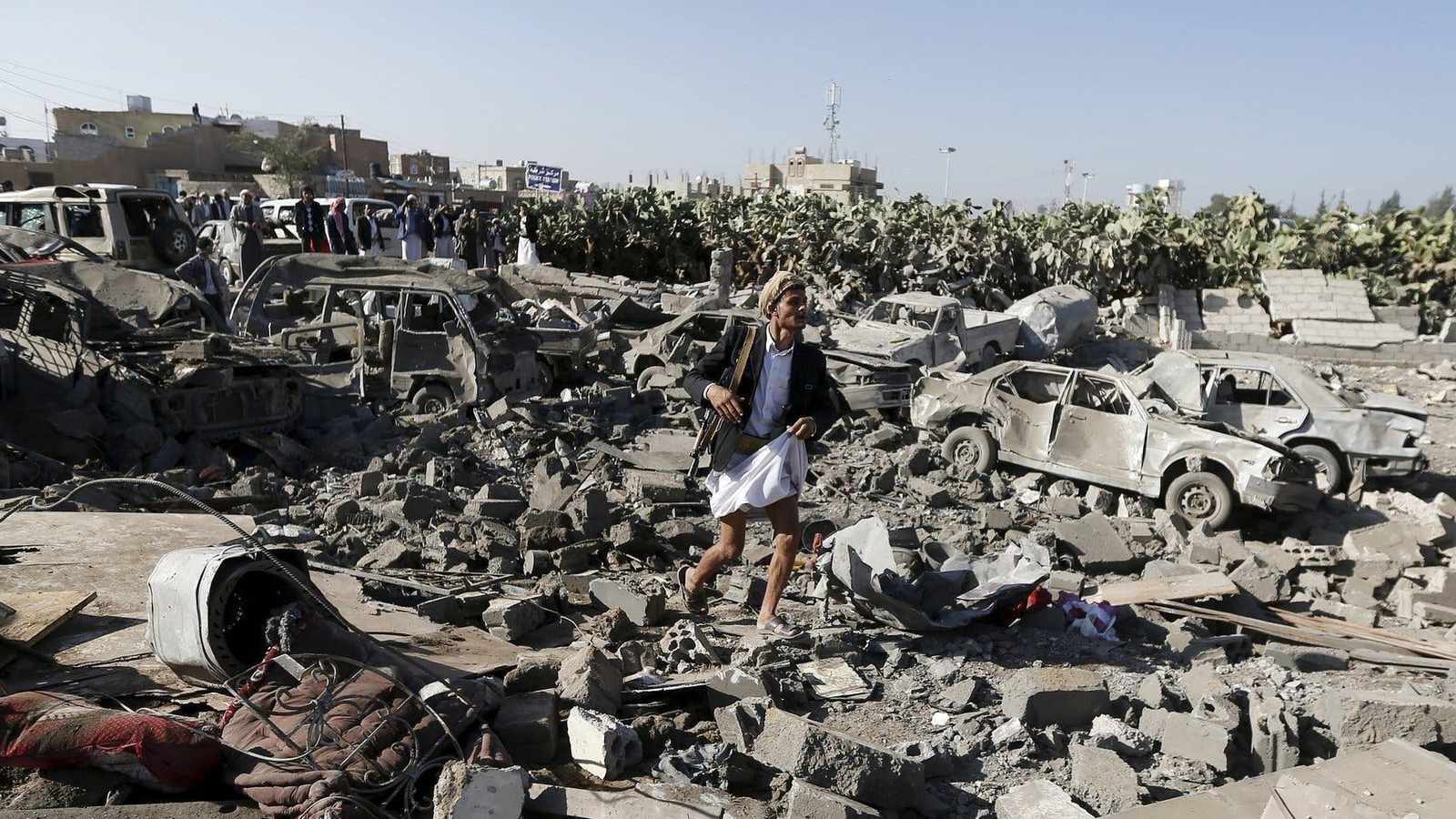
Renewed Hostilities and Civilian Toll
Fighting across Yemen has escalated significantly, with the internationally recognized government accusing Houthi rebels of an artillery attack in the central Marib governorate that killed three children, including an infant. According to the government-run Saba news agency, this incident marks the second such strike in 48 hours, following a separate attack that resulted in two additional child deaths and 15 injuries. The World Health Organization (WHO) reports that the renewed clashes have led to more than 1,000 casualties and the displacement of tens of thousands of people since August 24.
The Houthis have denied the government’s characterization of the situation, instead claiming that Saudi-led air strikes have caused significant casualties in their controlled territories. Houthi military spokesman Yahya Saree reported that 54 air strikes were launched by Saudi forces over a 12-hour period on Wednesday, targeting provinces including al-Jawf, Marib, Taiz, Hodeidah, Saada, and al-Bayda. Saree further claimed that the death toll from a Tuesday strike on a prison in al-Jawf had reached at least 32 people.
Spillover into Saudi Arabia
The conflict has increasingly crossed Yemen’s borders, with the Saudi civil defense authority issuing multiple emergency alerts for the provinces of Khamis Mushait and Abha early Thursday. Major General Turki al-Maliki, a spokesman for the Saudi-led coalition, confirmed that the Houthis continue to target the kingdom’s infrastructure, specifically naming Khamis Mushait, Abha, and Jazan as sites hit by ballistic missiles and drones. While no casualties were reported in the Saudi alerts, the frequency of these warnings has risen sharply this week.
Regional Security Stakes
The escalation occurs against a backdrop of heightened regional tension linked to the broader conflict involving the United States, Israel, and Iran. Pakistani officials have reiterated that the recently signed Mecca Joint Defence Agreement, which includes Saudi Arabia, Turkiye, and Pakistan, could be activated if hostilities spill over into Saudi territory. Defense Minister Khawaja Asif stated that the pact is designed to provide collective deterrence against unprovoked aggression.
Meanwhile, the Arab League has condemned what it describes as Iranian interference in Yemen’s sovereignty. Iran’s Ministry of Foreign Affairs has rejected these allegations, asserting that it supports a Yemeni-led dialogue based on a UN-backed roadmap and maintaining that the Houthis operate independently.
Strategic Context
Large-scale fighting, which had been largely paused since a 2022 UN-brokered truce, resumed in July following a strike on the Sanaa airport. The current surge in violence is tied to a Houthi offensive aimed at advancing toward the Bab al-Mandeb strait—a critical maritime waterway for Saudi oil exports. In response, government-aligned forces have expanded operations in al-Jawf, which they claim serves as a strategic gateway to the Houthi-held capital of Sanaa.