


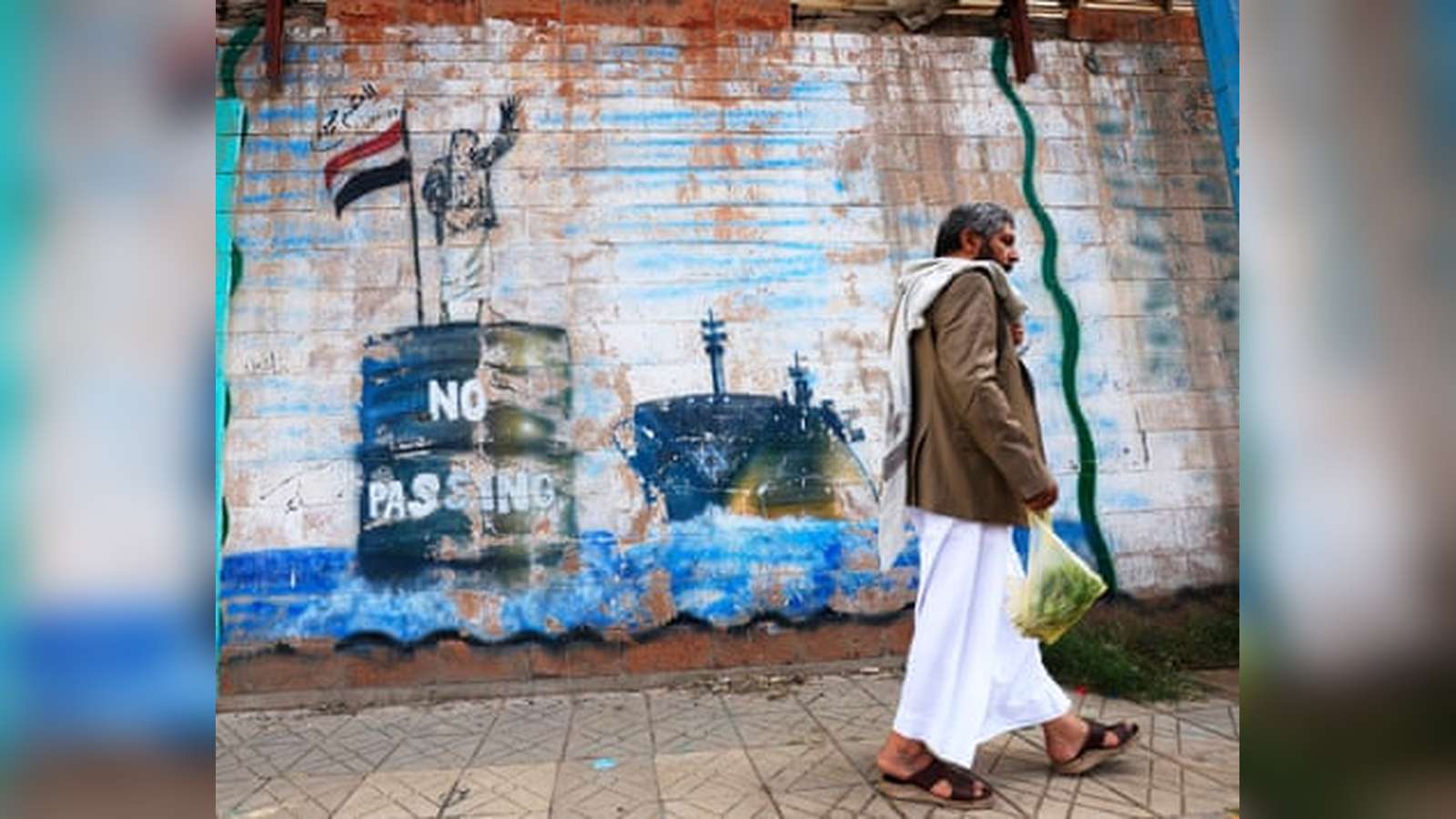
A rapid battlefield shift along Yemen’s western coastline has upended the regional security landscape after Houthi fighters captured the strategic port city of Mocha and adjacent offshore positions, sealing their control over the vital Bab al-Mandeb shipping corridor. The offensive, which accelerated with the capture of Mocha and the strategic island of Mayyun (Perim), represents the most significant territorial realignment in Yemen since a United Nations-brokered truce unraveled earlier this summer.
In response, international coalition forces and Yemeni government troops launched a desperate counter-offensive supported by intense heavy air strikes. However, military analysts and field reports suggest that aerial bombardment alone is proving insufficient to dislodge the entrenched Ansar Allah movement without unified ground operations.
Rapid Coastal Offensive Reshapes Maritime Chokepoint
The sudden collapse of government positions along the Red Sea littoral delivered full control of the Bab al-Mandeb strait to Houthi forces. On September 13, 2026, Yemeni military spokespersons confirmed that pro-government units had executed a tactical withdrawal from coastal defense lines toward Marib province. According to reports cited by Al Jazeera, government forces spokesperson Majed Abdullah al-Nazili stated that loyalist artillery and coalition aircraft targeted Houthi supply columns on the Mocha-Dhubab highway, approximately 11 kilometers outside Mocha, in a bid to check further troop movements.
The loss of Mayyun Island, situated in the narrowest neck of the Bab al-Mandeb strait, grants the Houthi leadership unprecedented physical leverage over commercial vessel traffic entering the southern Red Sea. Sultan al-Arada, a member of Yemen’s Presidential Leadership Council (PLC) and governor of Marib, acknowledged the loss in a broadcast on state-run Saba TV, describing the coastal retreat as “painful and unfortunate.” Al-Arada insisted that loyalist forces were actively regrouping in Marib to launch counter-operations, charging Ansar Allah with destroying political dialogue and forcing a total return to armed conflict.
Saudi Aerial Intervention vs Ground Reality
To blunt the Houthi push, Saudi Arabia has stepped up its direct aerial intervention across multiple Yemeni governorates. Field monitoring indicates that Saudi F-15 and Typhoon jets executed over 129 air raids within a 48-hour period, targeting Houthi staging areas in Taiz, Marib, Hodeidah, al-Jawf, Saada, Amran, and Hajjah. Despite the intensity of these sorties originating from Khamis Mushait and Taif airbases, the strikes have failed to halt Houthi advance elements advancing toward Marib’s outskirts.
Meanwhile, Houthi forces have expanded their deep strike campaign into Saudi sovereign territory. Military spokesperson Yahya Saree claimed responsibility for ballistic missile and drone attacks targeting ammunition depots and command infrastructure at a Saudi military base in Sharurah, Najran province. This followed a wave of multi-drone and missile strikes against civilian and economic facilities in Abha, Khamis Mushait, Jazan, and Najran that wounded dozens of residents, according to Saudi Civil Defence officials.
Strategic Fragmentation Among Anti-Houthi Coalition
Military specialists point to deep political division within the anti-Houthi alignment as the primary catalyst for the coastal collapse. Independent regional analyst Mohammed al-Basha highlighted that the anti-Houthi coalition remains hampered by competing chains of command among roughly eight distinct military factions competing for local patronage and political authority. Without a unified operational command center, decentralized coastal brigades proved vulnerable to Ansar Allah’s concentrated, highly mobile maneuver tactics.
Security analysts note that while Saudi air power can suppress open Houthi troop movements and delay logistics, air strikes cannot hold territory. Washington has maintained a cautious posture, offering intelligence sharing and logistical consultation to Riyadh while refraining from direct military combat operations on the ground, further limiting the intervention’s tactical impact.
Escalating Humanitarian Crisis and Mass Displacement
The renewed violence along the Red Sea coast has triggered a severe humanitarian emergency across western Yemen. Official data released by the International Organization for Migration shows that over 82,000 individuals have been displaced by active combat since early September, with more than 18,500 people fleeing their homes within a single 72-hour window as fighting engulfed Mocha.
The fall of Mocha—which served as a major logistics hub for international humanitarian organizations—has paralyzed aid distribution routes into Taiz and surrounding areas. Field reports indicate that over 2,000 fleeing civilians crossed the Gulf of Aden into Djibouti within 24 hours, overwhelming regional border facilities. Humanitarian directors warn that if fighting expands into Marib, Yemen’s main economic and energy hub, millions of internally displaced persons living in informal camps face imminent operational cutoff from food, clean water, and medical care.