


Legal Precedents and the ‘Ghost Gun’ Debate
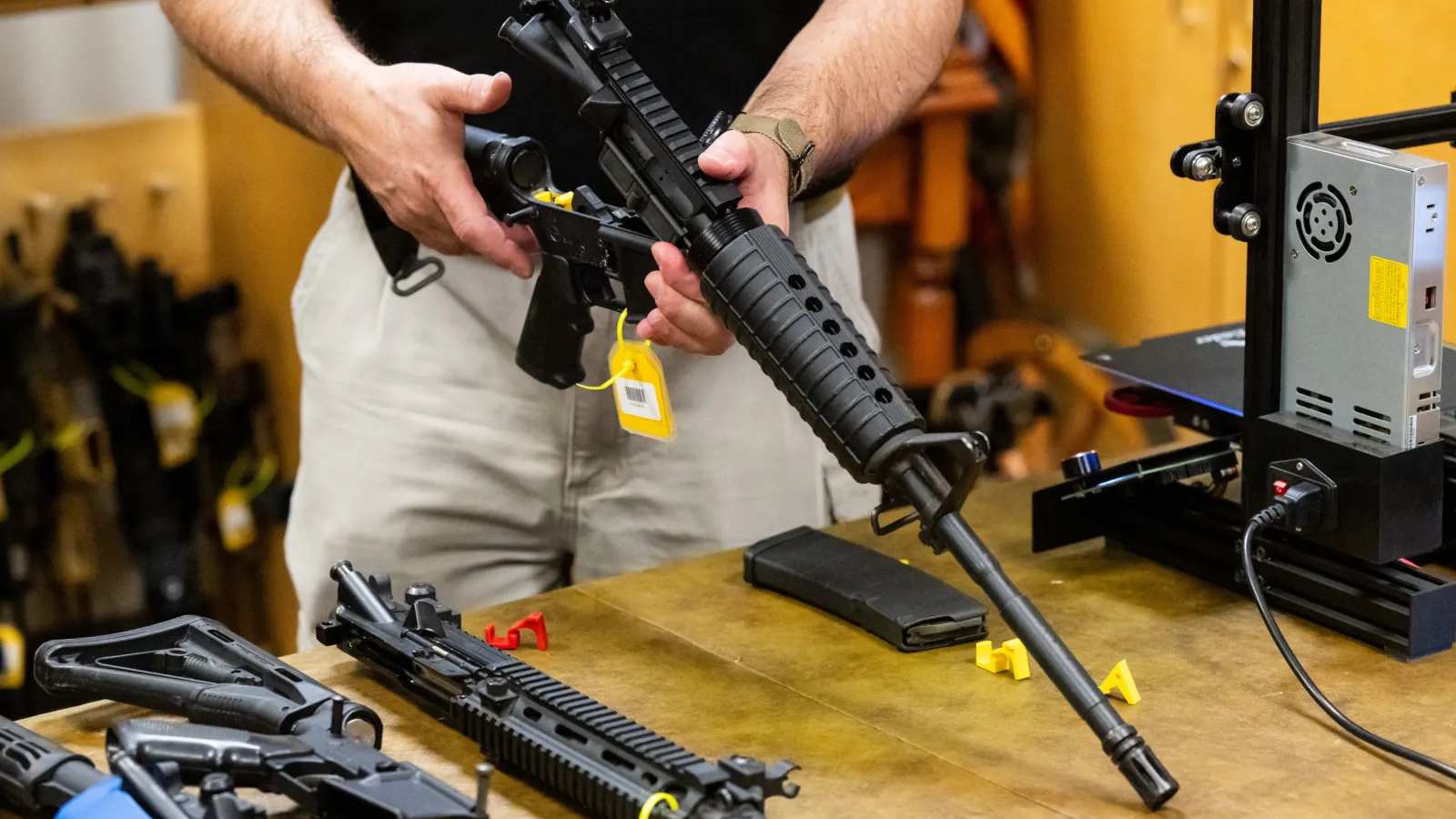
A federal jury in Benton, Illinois, recently convicted Yaroslav Vishnevski on five counts related to a home-based firearm manufacturing operation. The case, which involved the seizure of 3D printers, milling machines, and unregistered short-barreled rifles, serves as a high-profile example of the challenges law enforcement faces in tracking ‘ghost guns’—unserialized firearms produced via additive manufacturing. While Vishnevski’s defense characterized him as a hobbyist, federal prosecutors argued the operation constituted a ‘mini gun factory,’ underscoring the tension between constitutional interpretations of gun ownership and federal registration requirements.
This conviction comes as New York moves to implement first-of-its-kind legislation requiring 3D printer manufacturers to integrate blocking technology designed to prevent the production of firearm components. Industry analysts suggest this mandate could set a national standard, though critics, including the Electronic Frontier Foundation, warn of the risk to privacy and the potential for ‘false positives’ in geometric analysis software.
The Industrial Pivot: Sustainability and Innovation
While the legal debate intensifies, 3D printing continues to drive significant breakthroughs in industrial engineering. At New Mexico State University, researchers led by Chaitanya Mahajan are utilizing a $3 million National Science Foundation grant to refine ‘molten metal droplet jetting.’ This process allows for the conversion of scrap metal into high-precision components, addressing critical issues in supply chain resilience and material waste.
Unlike traditional metal 3D printing, which often relies on expensive, hazardous spherical powders, this approach enables the direct reuse of recycled feedstocks. This technological shift is pivotal for both commercial and defense sectors, where the ability to manufacture critical components on-demand could reduce reliance on fragile global supply chains.
Analysis: The Colliding Trajectories
The dichotomy between the Vishnevski case and NMSU’s research illustrates the dual-use nature of additive manufacturing. Law enforcement agencies, including the ATF, are currently struggling to keep pace with the democratization of production tools. The ATF’s internal audits have previously noted the difficulty in monitoring 3D-printed weapons, largely because there is no standardized reporting mechanism for home-printed firearms.
The policy response—ranging from New York’s hardware-level blocking mandates to federal criminal prosecutions—represents an attempt to impose twentieth-century regulatory frameworks onto a twenty-first-century manufacturing paradigm. The core challenge for policymakers is to stifle illicit production without hindering the circular economy benefits of additive manufacturing, which promise to make industrial production faster, cheaper, and more sustainable.