


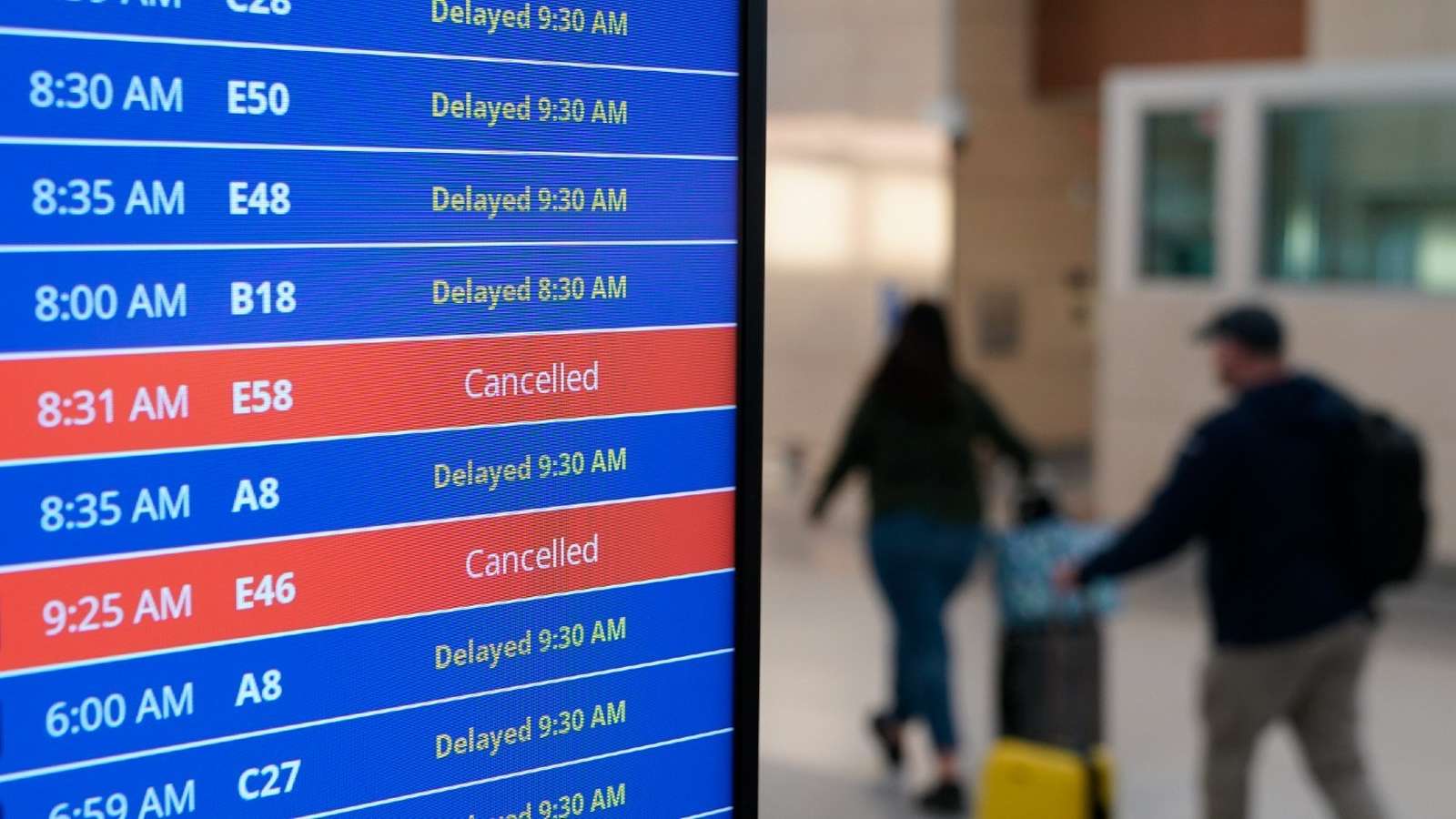
WASHINGTON (Azat TV) – Airlines across the United States worked to recover from a massive logistical disruption on Saturday, Nov. 14, 2026, following the longest nationwide FAA ground stop in 25 years. The four-hour flight shutdown forced more than 2,000 flight cancellations on Saturday alone, stranding passengers at major hubs and throwing professional and college sports travel into disarray. Trump administration officials reported that the emergency measures were triggered when new technology integrated into the nation’s air traffic control network overloaded antiquated legacy equipment, resulting in intermittent communications and radar gaps.
Transportation Secretary Sean Duffy and Department of Homeland Security officials addressed the cascading failures, confirming that while more than 3,000 aircraft landed safely during the Friday event, the underlying infrastructure remains dangerously brittle. Duffy warned the public that additional disruptions could occur as the government attempts to modernize the system, placing fresh pressure on Congress to approve an additional $30 billion in emergency modernization funding.
Aging Equipment and Infrastructure Vulnerabilities
According to reporting by ABC News, Friday’s nationwide stop marked only the second time since the Sept. 11, 2001, terrorist attacks that the entire U.S. airspace was grounded. The only prior nationwide halt occurred in January 2023, when a separate FAA computer system distributing notices to pilots suffered a critical malfunction. Aviation safety expert Steve Arroyo, a former United Airlines pilot, explained that the root danger lay in controllers losing reliable communication links with airborne aircraft.
“If you don’t have that ability, whether it’s because the old wires that they have are just run down or for whatever reason, you’ve got to stop airplanes on the ground and not put them in the air, where you’re going to risk not being able to communicate with them,” Arroyo told ABC News.
Secretary Duffy insisted that the outage was completely unrelated to the agency’s newly deployed artificial intelligence tools designed for predictive airspace management. Instead, he maintained that the failure stemmed entirely from decades-old copper wiring and legacy hardware that buckle under modern digital integration.
Widespread Travel Chaos and Impact on Collegiate Athletics
The ripple effects of the ground stop paralyzed travel itineraries nationwide. Passengers recounted enduring hours stranded inside aircraft on tarmacs or navigating chaotic terminal lobbies to secure alternate transportation by bus or train. FlightAware tracking data verified that more than 2,500 flights were canceled on Saturday, with hundreds of additional departures experiencing rolling delays.
The disruption struck collegiate athletics during a pivotal weekend of games. Major university football programs, including Auburn, Baylor, Washington, Kansas State, Minnesota, and Ole Miss, were forced to radically alter their travel logistics. Auburn University’s football team opted to charter buses for a ground journey to Mississippi State, while game start times were adjusted to accommodate delayed arrivals.
Funding Debate and Path Forward
Federal officials are utilizing the crisis to push for accelerated infrastructure overhaul. Congress previously authorized $12.5 billion, which the Federal Aviation Administration has used to replace thousands of legacy copper lines with fiber optic cables and upgrade hundreds of radio systems. However, administration officials emphasize that this capital investment covers only a fraction of the total upgrade required to secure the national airspace.
Duffy acknowledged that trying to implement technological upgrades while keeping the massive airspace operational created unforeseen overloads. While limited domestic flights resumed after the stop was lifted at approximately 8:15 p.m. ET on Friday, industry analysts project that carrier schedules will require days to fully normalize, though transportation officials anticipate normal operations will return ahead of the upcoming Thanksgiving holiday travel rush.