


An Insurgent Breakthrough in the Midwest
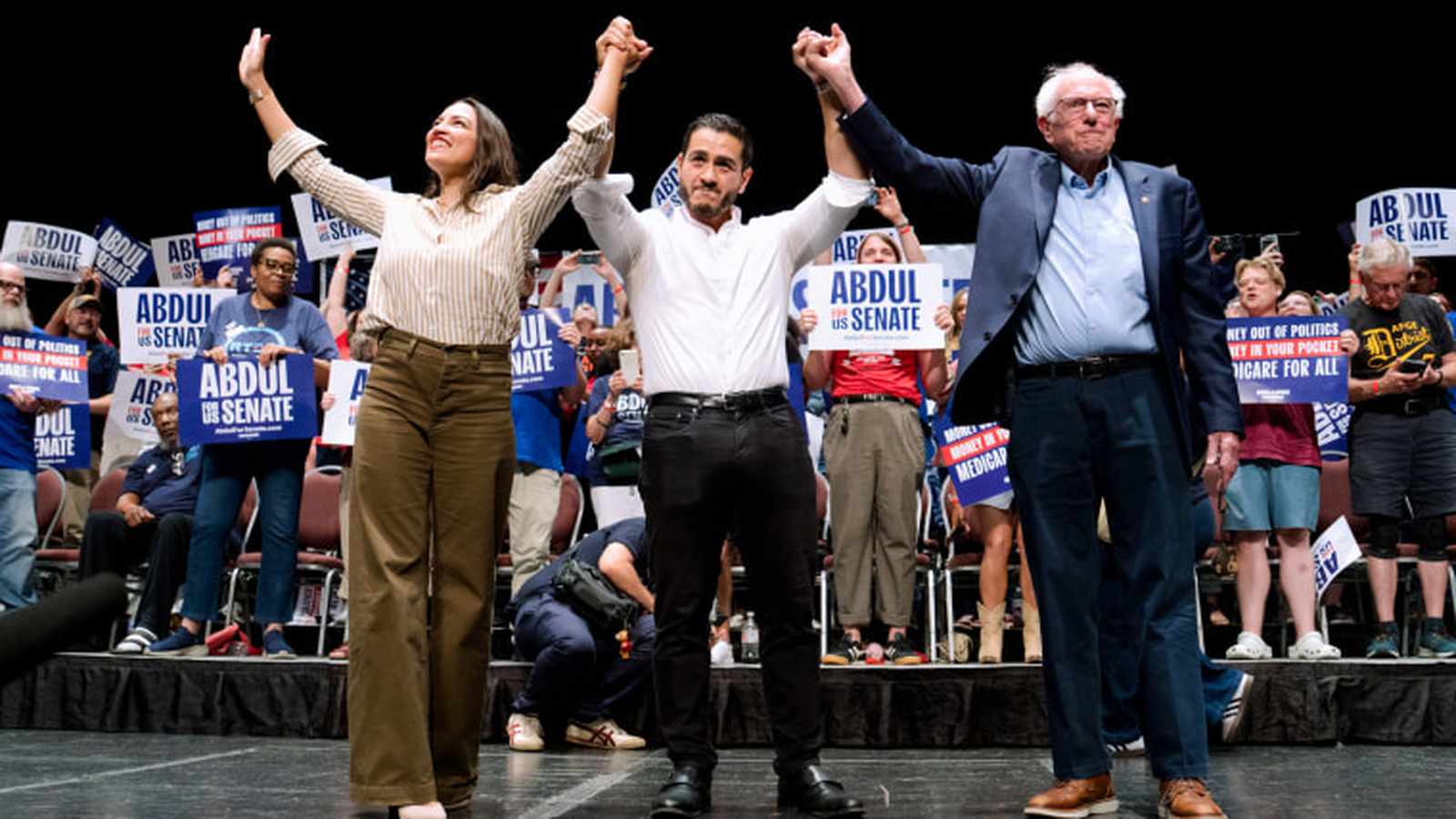
In a primary contest that exposed deep structural and ideological divisions within the Democratic Party, progressive insurgent Abdul El-Sayed has secured a historic victory in Michigan’s Democratic Senate primary. According to projections by NBC News and local reports, El-Sayed, a 41-year-old former public health official, defeated establishment-backed Representative Haley Stevens in a closely contested race. This victory establishes a crucial Midwestern beachhead for the progressive wing of the party, setting up a high-stakes general election battle that could decide control of the U.S. Senate in November.
El-Sayed’s victory is particularly striking given the massive financial disparity of the campaign. The progressive candidate overcame a nearly $65 million onslaught of outside spending, much of which was directed toward bolstering Stevens. The establishment-backed congresswoman had secured the late endorsement of Michigan’s popular Governor, Gretchen Whitmer, and outgoing Senator Gary Peters, whose retirement opened up the seat. Despite this consolidated institutional backing, El-Sayed’s grassroots campaign successfully mobilized voters around economic populism and a sharp critique of U.S. foreign policy, demonstrating the enduring strength of the progressive movement in key industrial swing states.
Two Contrasting Visions for the Democratic Party
The primary battle between El-Sayed and Stevens served as a direct proxy war over the future direction of the Democratic Party. Stevens, a 43-year-old four-term congresswoman, ran on a pragmatic, centrist platform designed to appeal to moderate and independent voters. Endorsed by Governor Whitmer, Senator Peters, and Senate Minority Leader Chuck Schumer, Stevens argued that her experience and mainstream positions made her the most electable candidate to defend the seat in November. Her campaign emphasized the protection of manufacturing jobs and practical, incremental policy reforms.
In contrast, El-Sayed, the son of Egyptian immigrants who could become the first Muslim senator in U.S. history, campaigned on a sweeping progressive agenda. Backed by high-profile national figures including Senator Bernie Sanders and Representative Alexandria Ocasio-Cortez, as well as the influential United Auto Workers (UAW) union, El-Sayed championed policies such as “Medicare for All,” aggressive taxation of billionaires, and the abolition of U.S. Immigration and Customs Enforcement (ICE). His campaign tapped into deep-seated economic anxieties regarding healthcare, housing, and the rising cost of living, framing his platform as a direct challenge to corporate influence in Washington.
The Gaza Conflict and Demographics in Michigan
A central fault line in the primary was U.S. foreign policy in the Middle East, specifically military aid to Israel. Michigan is home to the second-largest Arab-American and Muslim population in the United States, making this issue highly potent. El-Sayed consistently criticized the Biden administration’s and Stevens’ positions on the conflict, going so far as to characterize Israel’s military actions in Gaza as a genocide—a charge that Israel strongly denies.
El-Sayed focused heavily on the financial backing Stevens received from pro-Israel groups, particularly the American Israel Public Affairs Committee (AIPAC). An AIPAC-affiliated group spent over $30 million to support Stevens and run attack ads against El-Sayed. While Stevens maintained a staunchly pro-Israel stance, advocating for unconditional U.S. aid, she also faced complex political terrain, having previously criticized Israeli Prime Minister Benjamin Netanyahu. The primary outcome underscores how deeply the Israel-Gaza conflict is reshaping Democratic electoral coalitions, particularly in states with significant progressive and Arab-American constituencies.
General Election Implications and GOP Strategy
The general election matchup is now set between El-Sayed and Republican nominee Mike Rogers, a former U.S. Representative who secured his party’s nomination without opposition. Rogers, who received an early endorsement from former President Donald Trump, represents a formidable challenge in a state that voted for Trump in the 2024 presidential election but backed Joe Biden in 2020. The open Senate seat is widely considered a must-win for Democrats if they hope to regain control of the upper chamber, where Republicans currently hold a 53-seat majority.
National Republicans have openly signaled that they view El-Sayed’s progressive platform as an asset for their general election campaign. The National Republican Senatorial Committee (NRSC) previously released digital advertisements highlighting El-Sayed’s progressive endorsements, a tactical move widely interpreted as an attempt to boost his primary chances under the assumption that a left-wing candidate would be easier to defeat in a purple state. El-Sayed must now prove that his populist economic message can win over moderate and working-class voters who have increasingly leaned toward the Republican party in recent election cycles.
DOJ Intervention and Federal Election Monitoring
Adding a layer of federal tension to the primary, the U.S. Department of Justice’s Civil Rights Division announced the deployment of federal election monitors to four key Michigan cities: Detroit, Hamtramck, Lansing, and East Lansing. Harmeet K. Dhillon, head of the division, stated that the monitors were sent to ensure compliance with federal voting laws. This move comes amid a broader push by the Trump administration to increase federal oversight of local election procedures.
While the administration framed the monitoring as a standard measure to ensure election integrity, critics argue it represents an unprecedented level of federal intervention in state-run elections. Trump has continuously advocated for strict limits on mail-in voting and sweeping reforms to voter registration. The deployment of federal monitors in these heavily Democratic urban centers is viewed by political analysts as a potential precursor to intensive federal oversight during the general election in November, raising the stakes for local election administrators and campaigns alike.