


The 2026 Quarterfinal Landscape
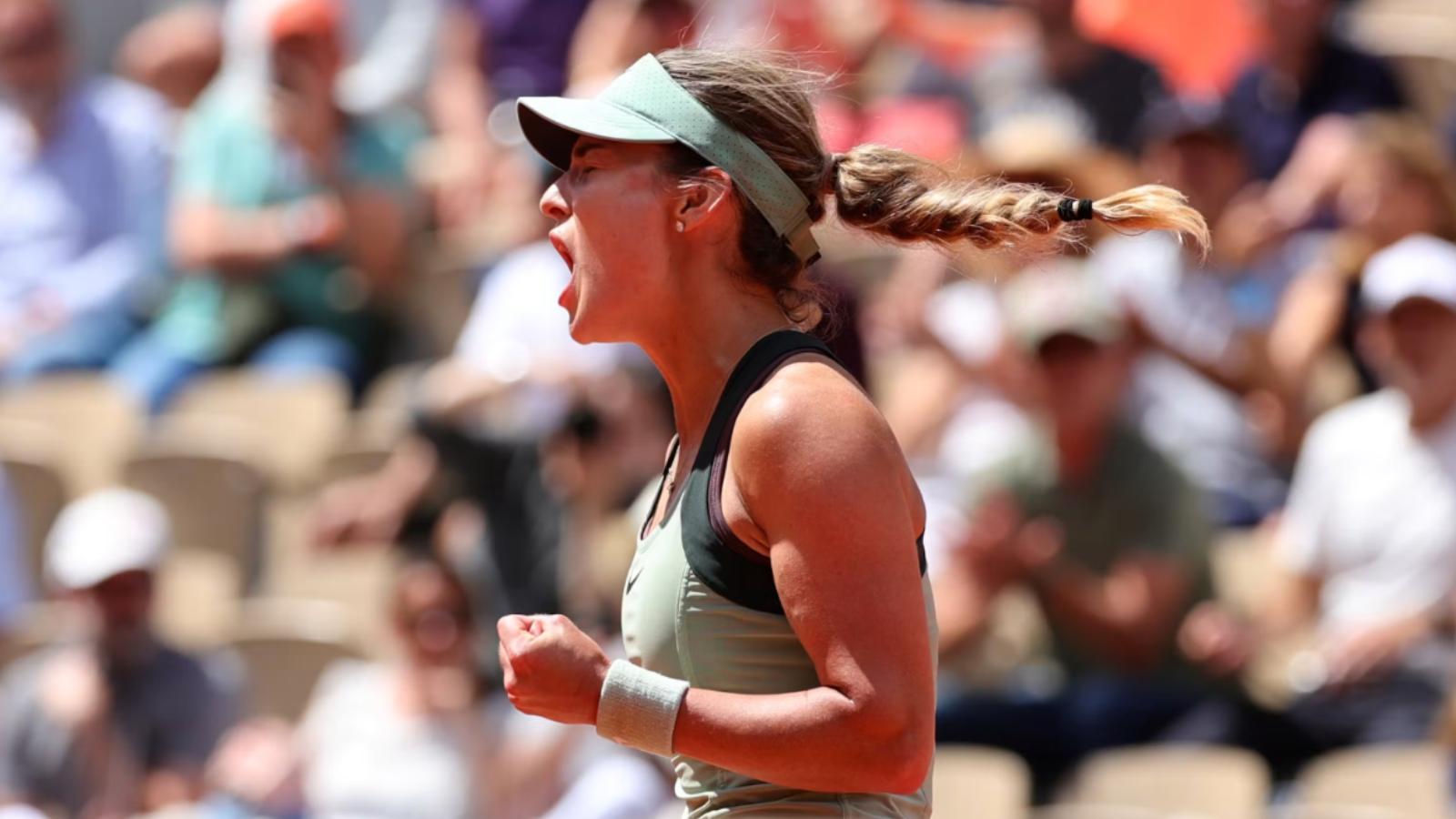
As the 2026 French Open reaches its decisive phase, the quarterfinal matchup between Anna Kalinskaya and Maja Chwalinska on June 3 stands as a primary focal point for international tennis analysts. This encounter is not merely a contest of individual skill but a confrontation between two distinct career trajectories within the Women’s Tennis Association (WTA) ecosystem. Kalinskaya, currently holding a season record of 17-10, enters the clay-court major seeking to transcend her historical limitations at this level. Having reached the round-of-16 in consecutive appearances, the pressure to secure a maiden semifinal berth at Roland Garros is substantial, both for her personal legacy and her standing among elite Russian athletes competing on the global stage.
Statistical Disparity and Clay Performance
The technical metrics surrounding this match highlight a significant contrast in momentum. Maja Chwalinska enters the quarterfinal with a formidable 27-9 overall record for the 2026 season, including a specialized clay-court record of 17-5. Her title victory in Oeiras earlier in April serves as a testament to her proficiency on this surface. Furthermore, Chwalinska is currently riding a seven-match winning streak, a psychological advantage that often dictates the tempo of high-stakes matches at the Metropolitano Stadium and surrounding courts. In contrast, Kalinskaya has maintained a steady but less explosive form, with a 7-3 record in her last ten matches compared to Chwalinska’s 8-2. According to data provided by LWOS and Flashscore, while Kalinskaya remains the marginal favorite with a 0.45-point edge in betting markets, the statistical momentum favors the underdog.
Tactical Breakdown: Baselines and Mental Fortitude
From a tactical perspective, the match is expected to be a battle of attrition. Clay-court tennis necessitates a high degree of physical endurance and the ability to slide effectively while maintaining stroke precision. Kalinskaya’s game, characterized by its flat baseline depth and aggressive positioning, will be tested by Chwalinska’s defensive variety and recent confidence. Analysts predict a match that may favor the ‘under’ in total games, suggesting that the victor will likely dominate through efficient break-point conversion rather than prolonged tie-breaks. The ability to handle the institutional pressure of a Grand Slam quarterfinal is often the deciding factor; for Kalinskaya, this represents an opportunity to prove that her tactical evolution can withstand the rigors of the tour’s most demanding surface.
Institutional Impact on the WTA Circuit
The broader implications of this match extend to the commercial and structural dynamics of the WTA. As the tournament concludes its quarterfinals, the emergence of players like Chwalinska challenges the established hierarchy dominated by figures such as Aryna Sabalenka. For the tournament organizers and broadcasters like ESPN, the Kalinskaya-Chwalinska narrative offers a compelling study in the ‘mid-tier breakout’—a phenomenon where consistent performers finally bridge the gap to the elite four. The fiscal stakes involve significant increases in prize money and sponsorship valuations, which are intrinsically linked to deep runs in major tournaments. As the match commences at 5:00 EST, the global audience will be watching to see if Kalinskaya can finally break the quarterfinal ceiling that has defined her recent Grand Slam history.
The confrontation between Kalinskaya and Chwalinska serves as a microcosm of the current state of women’s professional tennis, where statistical consistency is increasingly challenged by peak-form momentum. Kalinskaya’s status as a marginal favorite reflects her institutional experience, yet Chwalinska’s clay-court specialization represents a disruptive force. Should Kalinskaya fail to secure this victory, it may signal a plateau in her competitive ceiling, whereas a win would solidify her transition into the top tier of international contenders, reshaping the narrative of Russian tennis in the post-2024 era.