


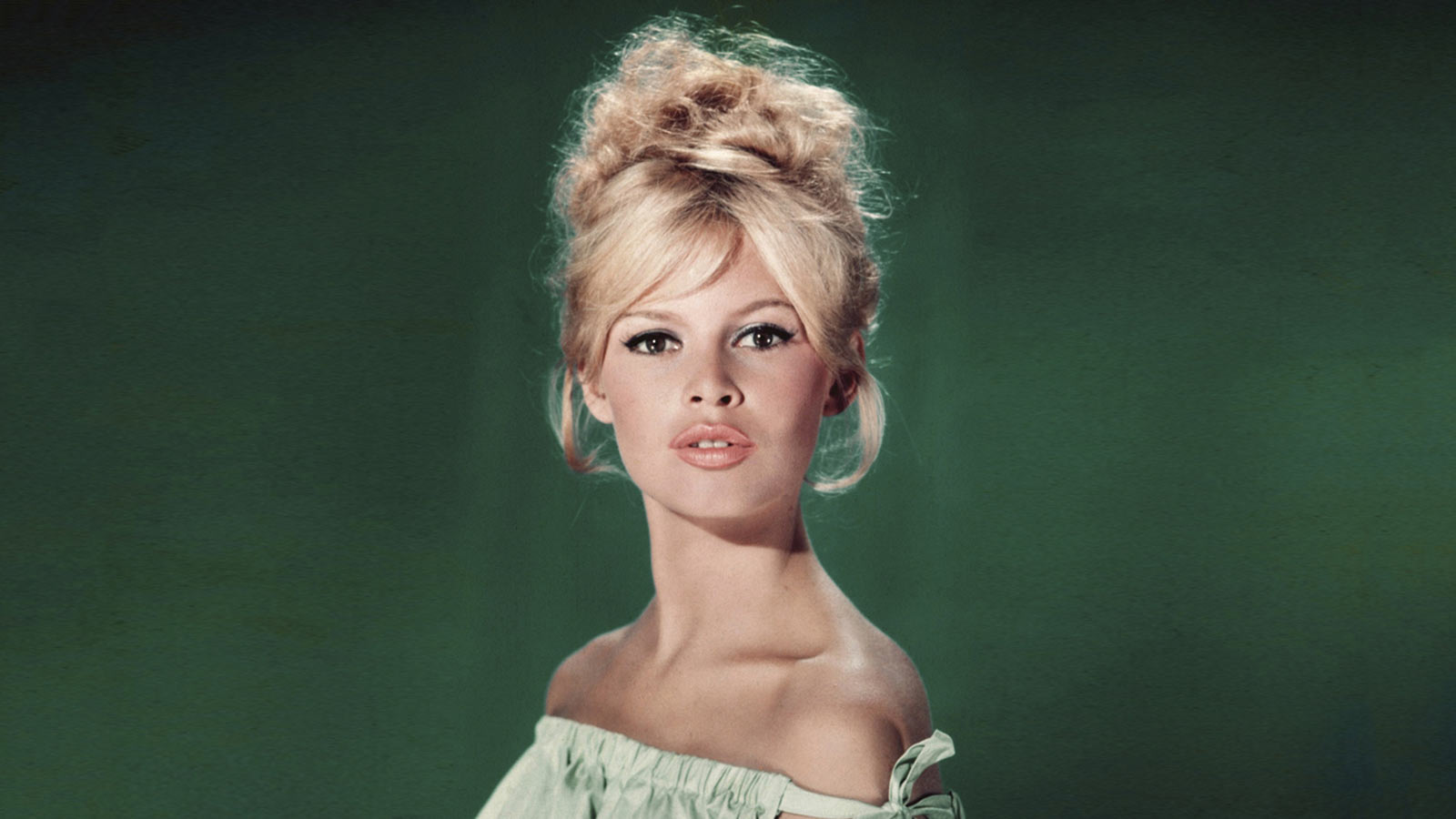
Brigitte Bardot, known simply as “B.B.” to millions, was more than a movie star—she was a force that changed the landscape of cinema and the cultural imagination of postwar Europe. Bardot, who passed away at 91, leaves behind a legacy as complex as it is influential. From the moment she appeared on the cover of Elle at age 15, Bardot’s unconventional beauty and spirit set her apart from the carefully coiffed, restrained femininity that defined the era.
Born in Paris in 1934 to a wealthy Catholic family, Bardot’s early life was shaped by discipline and artistic ambition. Her mother enrolled her in ballet classes at the Paris Conservatoire, where she quickly excelled. But the trappings of privilege felt suffocating. By her teens, Bardot was seeking something more—a way to break free from the rigid expectations of her upbringing.
Her breakthrough came not from the stage but from modeling, and soon her free-flowing hair and athletic figure made her the face of a new “jeune fille” style. She quickly transitioned to film, guided by director Roger Vadim, whom she would marry in 1952. Vadim saw in Bardot not just a muse but a symbol of a new era, one he would help shape through their collaborations.
It was Vadim’s 1956 film And God Created Woman that launched Bardot into international stardom. The film, provocative and daring, was banned in parts of the United States but became a sensation. Bardot’s character was unapologetically sensual, pursuing her desires with a freedom rarely seen on screen. French philosopher Simone de Beauvoir called her an icon of “absolute freedom,” while critics often conflated Bardot the actress with the roles she played—immortalizing her as a “sex kitten” but rarely acknowledging her talents.
Bardot’s popularity soared, and so did the scrutiny. Her relationships, including affairs with Jean-Louis Trintignant and Warren Beatty, became tabloid fodder. She married four times—most notably to Vadim, actor Jacques Charrier, German millionaire Gunter Sachs, and, finally, Bernard d’Ormale, a political adviser with ties to France’s far right.
Despite her fame, Bardot struggled with mental health issues and attempted suicide multiple times, feeling trapped by her public persona and the pressures of stardom. She longed to be taken seriously as an actress, earning critical acclaim in films like Jean-Luc Godard’s Le Mépris and Henri-Georges Clouzot’s La Vérité. But she was often cast in roles that prioritized her looks over her abilities.
By 1973, Bardot had had enough of the spotlight. She retired from acting at age 39, announcing she would dedicate herself to animal welfare. “I gave my beauty and my youth to men,” she famously said. “I’m going to give my wisdom and experience to animals.” She founded the Brigitte Bardot Foundation, raising substantial funds by auctioning her jewelry and memorabilia. Bardot became a vocal opponent of animal cruelty, campaigning against the Canadian seal cull, the slaughter of horses for meat, and the inhumane treatment of animals in China and Romania.
Her activism, however, was soon overshadowed by controversy. Bardot’s outspoken nature extended beyond animal rights into the realm of politics and social issues—often with damaging results. She was repeatedly fined by French courts for inciting racial hatred, particularly for her comments against immigrants and Muslims, whom she described in her writing as “invaders.” She also disparaged gays and criticized interracial marriages, drawing widespread condemnation.
In later years, Bardot lived as a semi-recluse near Saint Tropez, surrounded by her beloved pets and her fourth husband. The woman who once embodied sexual freedom and youthful rebellion had become, in the words of French film scholar Ginette Vincendeau, “the high priestess of freedom who resents almost everyone else’s rights to exercise it.” Bardot’s legacy is thus a paradox: she shattered taboos and liberated women on screen, yet struggled to embrace the freedoms and diversity of contemporary society.
Her foundation announced her death in late December 2025, following reports of serious illness and surgery earlier that year. No official time or place of death was disclosed. She is survived by her husband Bernard d’Ormale and her son Nicolas Charrier, with whom she had a famously strained relationship.
Bardot’s story is one of transformation and contradiction—a symbol of beauty and rebellion, a champion for animals, and a cautionary tale about fame and intolerance. In the end, her influence on fashion, film, and social attitudes remains undeniable, even as her personal legacy continues to provoke debate.
Bardot’s life is a study in contrasts: she was both a liberator and a lightning rod for controversy. Her impact on cinema and fashion redefined an era, yet her later years remind us that icons are, above all, human—capable of greatness and grievous error in equal measure.
Sources: BBC, People, NPR