


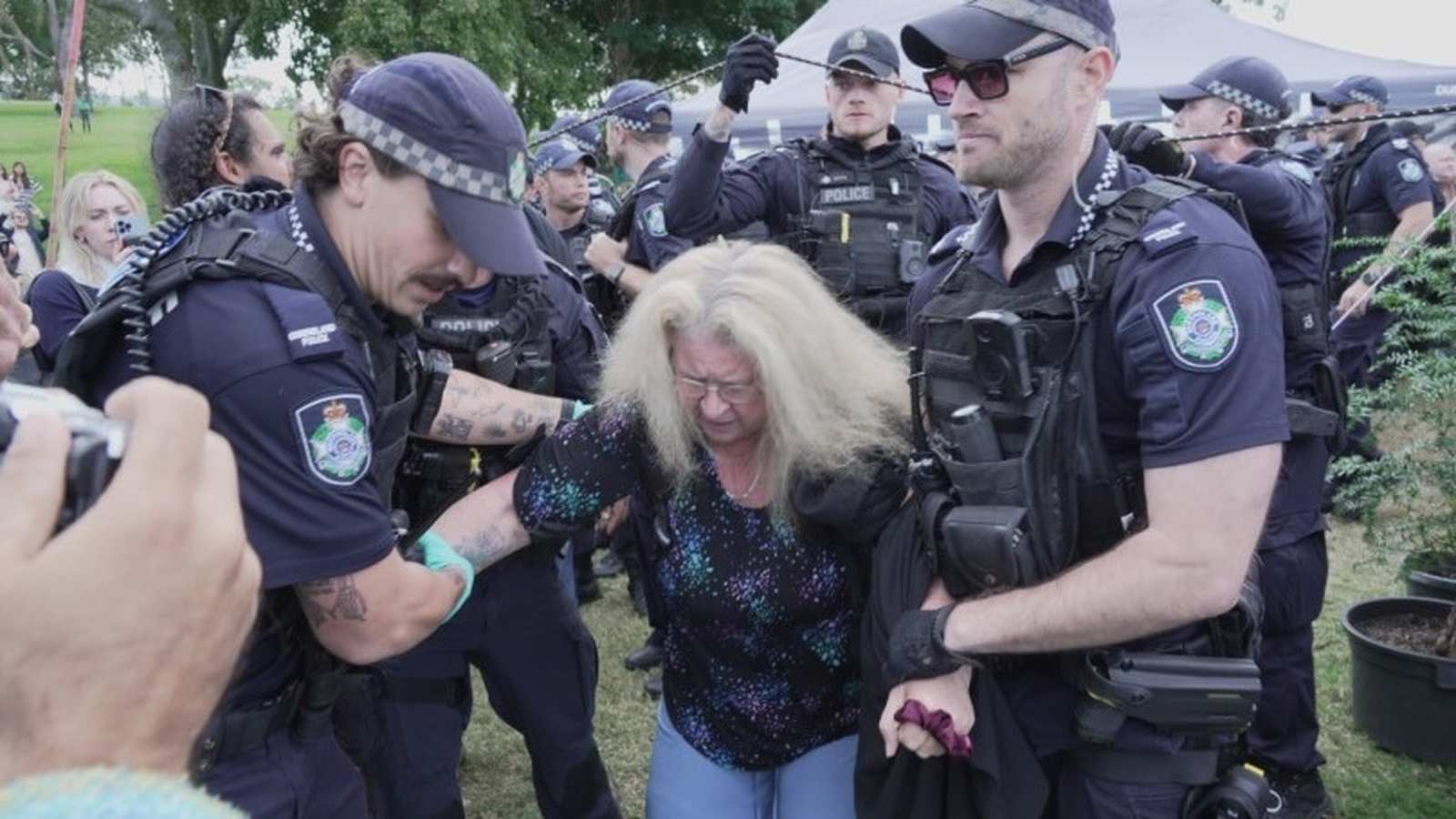
Escalating Tensions at Victoria Park
The Queensland government’s efforts to accelerate construction for the 2032 Brisbane Olympic Games reached a flashpoint on Friday as police, fire services, and Brisbane City Council officers moved to clear a long-standing protest camp at Victoria Park. The operation resulted in five arrests, marking a significant escalation in the standoff between state authorities and Indigenous activists who have occupied the site for over 60 days.
The site, known as Barrambin or the “Windy Place” to the Yagara people, is designated as the location for a $3.6 billion, 63,000-seat stadium. The protest group, which had maintained a ceremonial campfire at the park, has been lobbying for the site to be granted permanent protection under Section 10 of the Aboriginal and Torres Strait Islander Heritage Protection Act 1984. Despite these ongoing federal appeals, the Queensland government has moved to secure the area before the Games Independent Infrastructure and Coordination Authority (GIICA) assumes control next week.
Legislative Fast-Tracking and Public Opposition
The conflict is rooted in the Queensland government’s 2025 decision to enact legislation that exempts the Victoria Park project from standard environmental, planning, and heritage protections. Critics, including Indigenous elders and local community groups, have characterized this “bulldozing” of regulatory oversight as a fundamental failure of democratic process. Sue Bremmer of the advocacy group ‘Save Victoria Park’ stated, “If they have to change those pieces of legislation to make something lawful, you’ve got to question the quality of the decision that’s been made.”
The state government, led by Premier David Crisafulli, has maintained a firm stance, arguing that the project is a critical infrastructure requirement for the 2032 Games. Crisafulli recently dismissed the protesters’ influence, noting that the state would not be held “hostage” by political opposition. However, hydrologists and environmental groups have raised concerns regarding the potential destruction of natural springs and ancient trees, arguing that the development threatens a vital, living ecosystem.
Legal and Human Rights Dimensions
The intervention by law enforcement has drawn scrutiny from the Queensland Human Rights Commission, which emphasized the state’s obligations under the Queensland Human Rights Act 2019. The Commission has urged the government to engage in “genuine consultation” with First Nations people, asserting that cultural rights are essential to maintaining community trust. While authorities argue that the site must be cleared for safety reasons as it transitions into an active construction zone, activists maintain that their presence is a legitimate exercise of their cultural rights.
As earthmoving equipment prepares to enter the site next week, the legal challenge remains unresolved. The federal Environment Minister, Murray Watt, holds the authority to intervene under the Aboriginal and Torres Strait Islander Heritage Protection Act; however, the state government has signaled that it intends to proceed regardless of the pending federal decision. The arrests of the five individuals, who face charges ranging from public nuisance to assault of police, underscore the volatility of the situation as the project moves into its next phase of development.
The forced removal of the protesters reflects the broader friction between the state’s aggressive pursuit of Olympic infrastructure and the growing demand for meaningful recognition of Indigenous sovereignty and heritage. As the 2032 Games approach, the government faces a precarious balancing act: meeting the logistical demands of an international sporting event while navigating the ethical and legal complications of developing land with profound cultural significance. The outcome of the federal heritage appeal will likely serve as a litmus test for how the state manages future conflicts between rapid urban development and the protection of irreplaceable cultural assets.