


A Divisive Vote Amid Unprecedented Opposition
In a tense, closed-door meeting on Tuesday night, the Brooklyn Democratic Party’s district leaders approved sweeping changes to the organization’s bylaws. The decision, passed by a narrow majority, has ignited a fierce civil war within the nation’s largest county Democratic organization. The vote went ahead despite unprecedented, public calls to halt the process from New York’s top Democratic officials, including Governor Kathy Hochul, Mayor Zohran Mamdani, Senator Chuck Schumer, House Minority Leader Hakeem Jeffries, and Attorney General Letitia James.
At the heart of the conflict is Rodneyse Bichotte Hermelyn, a Haitian American state assemblymember who has served as the party’s chairperson for the past six years. Facing a powerful challenge from a reform-aligned faction that made historic gains in the June primary, Bichotte Hermelyn and her allies pushed through the structural changes to expand the party’s executive committee. Critics and reform leaders argue that this move is a calculated attempt to dilute the voting power of newly elected reformers and pack the committee with loyalists ahead of her upcoming re-election bid this fall.
The Mechanics of County Party Power
To understand the high stakes of Tuesday’s vote, it is necessary to examine the unique structure of New York’s local political machines. District leaders are volunteer, elected party officials. Two district leaders—traditionally one male and one female—are elected to represent each of Brooklyn’s Assembly districts. Together, these district leaders form the executive committee of the Kings County Democratic County Committee, and they hold the sole authority to vote on who will serve as the county chairperson every two years.
During the June primary, a reform coalition organized under the banners of “New Kings Democrats” and the “Brooklyn Can’t Wait” campaign secured a historic breakthrough. After nearly two decades of grassroots organizing against the county establishment, the reformers successfully flipped enough seats to command a projected majority of 22 district leaders. Armed with this majority, the reform faction had united behind longtime district leader Julio Peña, planning to elect him as the new county chairperson in the upcoming fall vote, which would have ended Bichotte Hermelyn’s tenure.
However, the newly passed bylaws fundamentally alter this equation. By expanding the executive committee to include dozens of new voting seats, the changes allow the party establishment to appoint additional members. Reformers argue these new seats will be filled by establishment loyalists and proxy voters, effectively neutralizing the democratic gains made by the reform slate in the June primary.
Secrecy and Shrouded Proceedings in Mill Basin
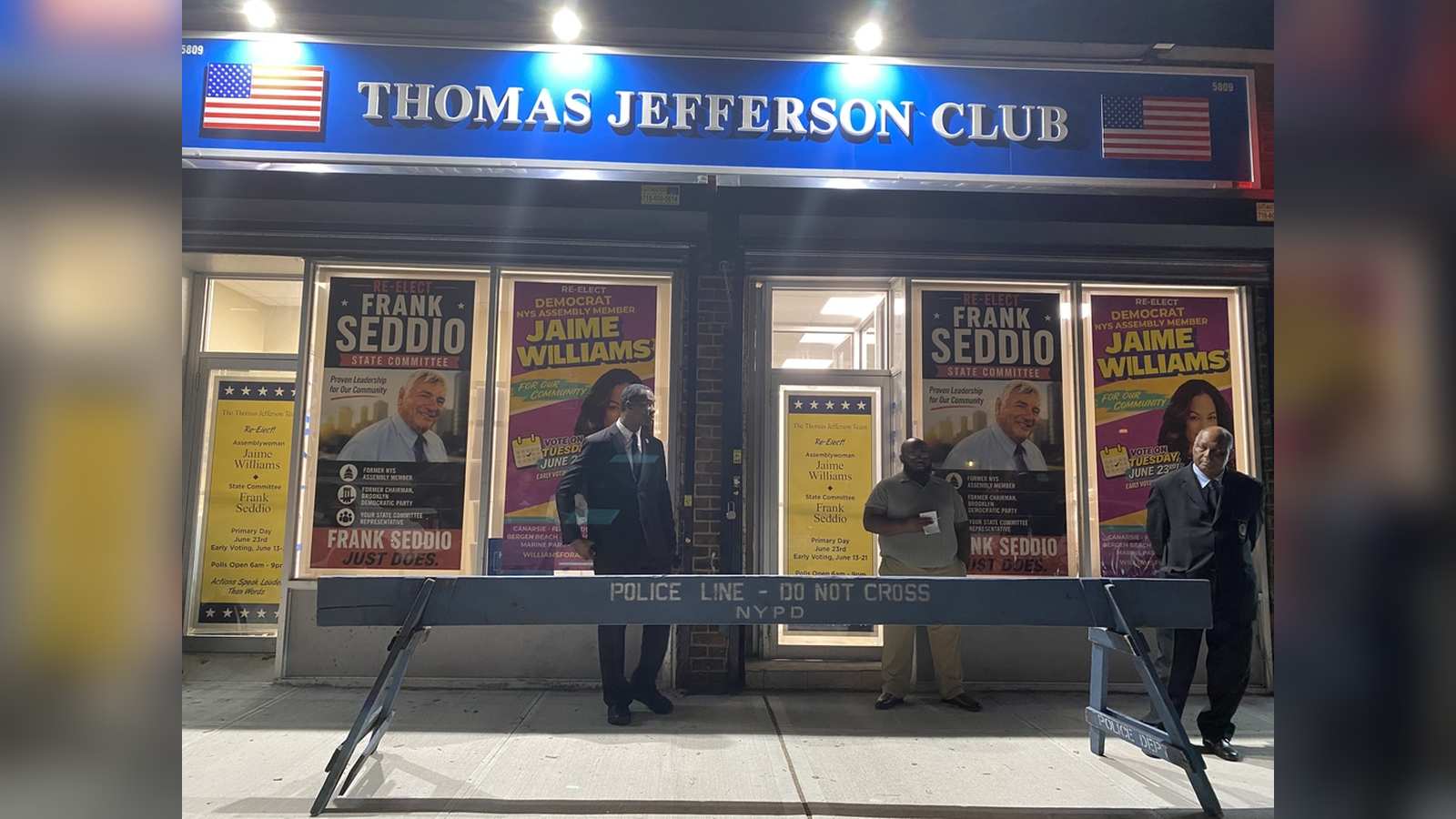
The voting took place at the Thomas Jefferson Democratic Club in Mill Basin, a historic stronghold of the Brooklyn Democratic establishment run by former county boss Frank Seddio. The physical environment of the meeting reflected the deep hostility between the opposing factions. Journalists, including reporters from The City, were strictly barred from entering the building. To prevent any external observation, individuals inside the clubhouse went so far as to tape sheets of paper over the windows to block the view of reporters watching from the street.
While members of the press were excluded, several influential non-committee members were permitted to pass through security. Among them were Edu Hermelyn, the chairperson’s husband and a former district leader, and Corey Ortega, a prominent Manhattan Democratic Party insider. The meeting lasted nearly four hours, after which Bichotte Hermelyn avoided waiting reporters by exiting through a back door and driving away.
In a statement released early Wednesday morning, Bichotte Hermelyn strongly defended the vote, framing the bylaws changes as a victory for diversity and grassroots representation. “Last night, Brooklyn District Leaders voted to expand representation on the Executive Committee — adding leaders from every Assembly District and building a Party that truly reflects Brooklyn,” the statement read. She added that the changes would strengthen the party’s capacity to fight “for working families, affordability and against the Trump agenda,” declaring the process “open, fair and democratic.”
The Legal Battlefield and Future Outlook
The battle has already spilled over into the New York judicial system. Prior to Tuesday’s vote, reform-aligned district leaders filed a lawsuit seeking an injunction to block the meeting, arguing that the proposed changes violate both the party’s existing bylaws and New York State election law. A judge declined to intervene at that stage, citing a lack of evidence of “irreparable harm” before the rules were officially adopted.
Mark Hanna, an election attorney and district leader representing the reformers, stated that the legal challenge is far from over. Now that the changes have been formally approved, Hanna announced plans to refile the lawsuit to challenge the validity of the vote. Reformers point out that several “lame-duck” district leaders—who lost their seats in the June primary but remain in office until their terms officially expire—cast key votes to pass the changes, a move they argue subverts the clear will of the electorate.
As both sides brace for a prolonged legal fight, the political division threatens to weaken the Democratic apparatus in New York’s most populous borough. Bichotte Hermelyn’s tenure has previously drawn criticism from progressives who accuse her of spending valuable party resources on internal primary battles rather than combating the growing electoral inroads made by the Republican Party in southern Brooklyn. With congressional and state elections on the horizon, the unresolved civil war in Brooklyn could have broader implications for Democratic mobilization across the state.