

Quick Read
- BYD surpassed Tesla in global battery electric vehicle sales in 2025, selling 2.26 million BEVs.
- BYD’s international sales more than doubled, but its cars remain effectively banned from the U.S. due to tariffs.
- Tesla’s sales declined 9% amid political backlash, policy changes, and an aging product lineup.
BYD Surpasses Tesla: A New Era in Global Electric Vehicle Sales
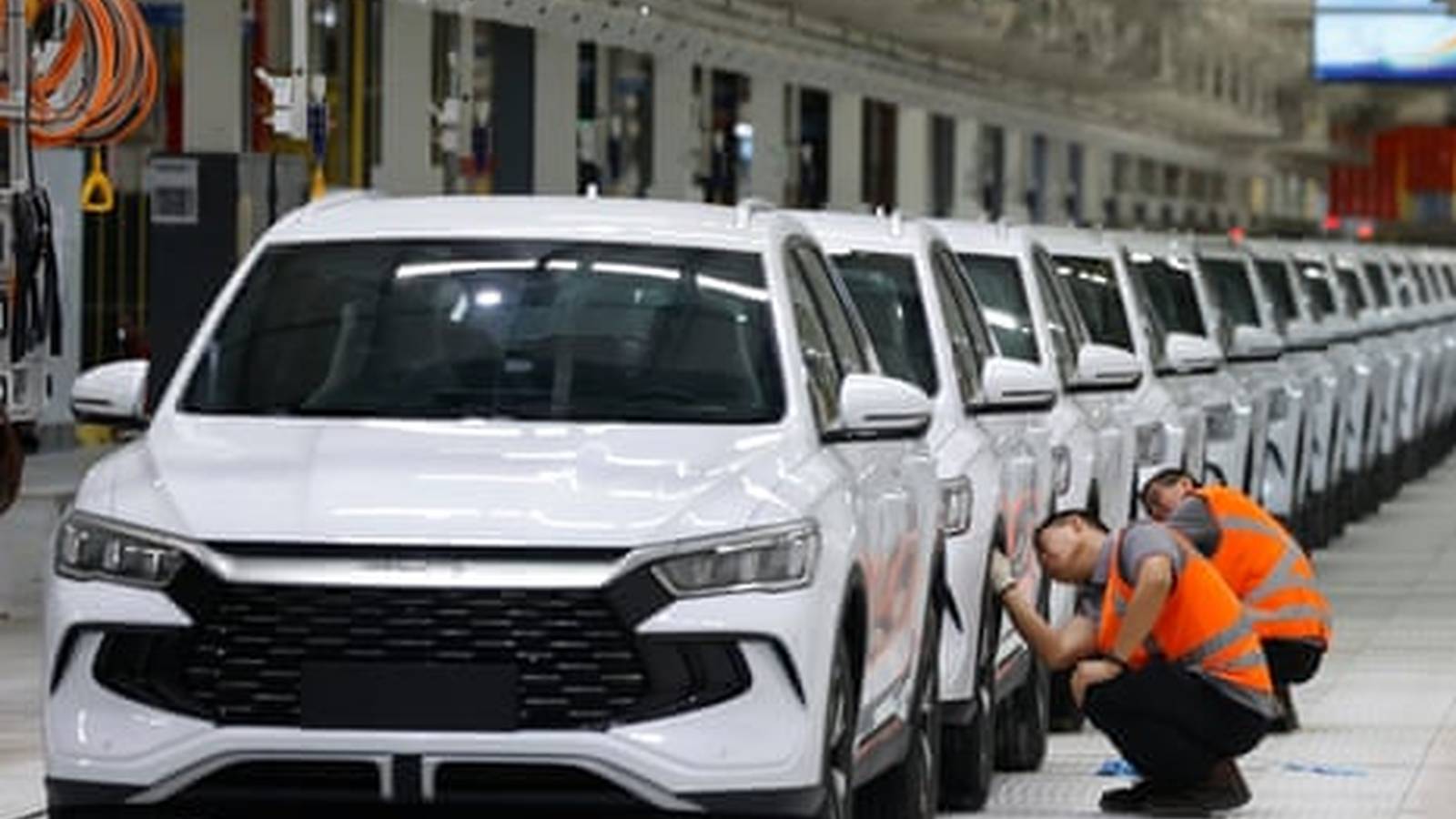
In a milestone moment for the automotive industry, BYD, headquartered in Shenzhen, China, officially dethroned Tesla as the world’s top seller of battery electric vehicles (BEVs) in 2025. According to The Guardian, BYD’s surge in sales—approximately 2.26 million BEVs, up nearly 28% from the previous year—outpaced Tesla’s 1.64 million deliveries, which fell about 9% year-on-year. This gap of more than 600,000 cars cements BYD as a new global leader in pure electric mobility.
BYD’s overall New Energy Vehicle (NEV) sales, which include plug-in hybrids, reached 4.55 million units in 2025, up 7.73%. While plug-in hybrid sales dipped by 8%, BYD’s commercial vehicle segment more than doubled, with 57,000 electric buses and lorries sold. The company met its revised annual target of 4.6 million vehicles, demonstrating resilience and adaptability in a rapidly shifting market.
Tesla’s Challenges: Policy Shifts and Product Stagnation
Tesla’s declining performance in 2025 wasn’t just about competition—it was the result of a complex interplay of political, regulatory, and product-related challenges. The company, led by Elon Musk, faced backlash after Musk’s public embrace of far-right politics at the close of 2024, which alienated segments of the consumer base. Additionally, the new U.S. administration under President Donald Trump rolled back electric vehicle subsidies and emissions regulations, removing key incentives for EV purchases. The discontinuation of the $7,500 tax credit in September 2025 proved especially damaging, causing demand to falter.
Despite Musk’s political engagement—including sizable donations to Trump’s campaign and a brief tenure as head of the Department of Government Efficiency—the relationship soured by mid-2025, adding further uncertainty to Tesla’s outlook. Analysts cited Tesla’s aging lineup and lack of new, affordable models as another barrier to growth. In the final quarter of 2025, Tesla’s deliveries dropped to 418,227, falling short of expectations set by Bloomberg and internal company forecasts.
BYD’s Strategic Rise: Expansion, Affordability, and Technology
BYD’s ascent has been powered by its dominant home market, aggressive expansion overseas, and a keen focus on affordability. Overseas sales surpassed 1 million units in 2025—a staggering 150.74% increase from the previous year—driven by strong demand in Asia, Europe, and Latin America. To sidestep trade barriers, BYD began constructing manufacturing plants in Brazil and Hungary. Still, high U.S. tariffs effectively keep Chinese EVs out of the American market.
One of BYD’s greatest strengths is its pricing. The company’s bestselling Seagull model retails for as little as $7,800–$8,000 in China, with standard-range versions priced around $10,700. BYD’s Atto 1 (also known as Seagull or Dolphin Surf) was launched in Indonesia at roughly $12,000, and in Australia from $23,990. The Dolphin Honor Edition, introduced in early 2024, starts at $13,900 in China and $29,990 in Australia—figures that challenge conventional notions of EV affordability.
Technologically, BYD has made significant strides. In February 2025, it rolled out its “God’s Eye” advanced driving assistance system (ADAS), offering features such as automatic lane changes, overtaking, and remote parking. BYD’s commitment to democratizing self-driving technology is evident: by 2026, even models costing as little as $9,600 are expected to feature “God’s Eye.” CEO Wang Chuanfu, who founded BYD in 1995 as a battery maker before launching BYD Auto in 2003, credits his 120,000-strong engineering team for sustaining the company’s innovative edge, even as rivals catch up.
Tesla’s Enduring Value and Future Prospects
Despite losing its crown in sales, Tesla remains the world’s most valuable carmaker, with a market capitalization between $1.4 and $1.5 trillion at the close of 2025—more than the next 30 automakers combined, according to Yahoo Finance. Investors continue to bet on Musk’s vision for Tesla as a leader in robotics and artificial intelligence, with the company already piloting a robotaxi service in Austin, Texas. In November 2025, shareholders approved a new 10-year pay package for Musk, potentially worth $1 trillion, underscoring faith in his long-term ambitions.
Meanwhile, BYD’s journey from a battery producer in Shenzhen to a global automotive powerhouse is a testament to China’s growing influence in high-tech manufacturing and the shifting dynamics of the EV market. For consumers, the contest between BYD and Tesla signals greater choice, falling prices, and rapid innovation—hallmarks of a maturing electric vehicle industry.
The facts show that BYD’s meteoric rise is rooted in strategic pricing, relentless innovation, and nimble international expansion, while Tesla’s decline is closely tied to political turbulence, policy reversals, and product stagnation. As the EV landscape evolves, the real winners may be the millions of drivers gaining access to cleaner, smarter, and more affordable cars worldwide.