


The Collapse of the Top Seeds
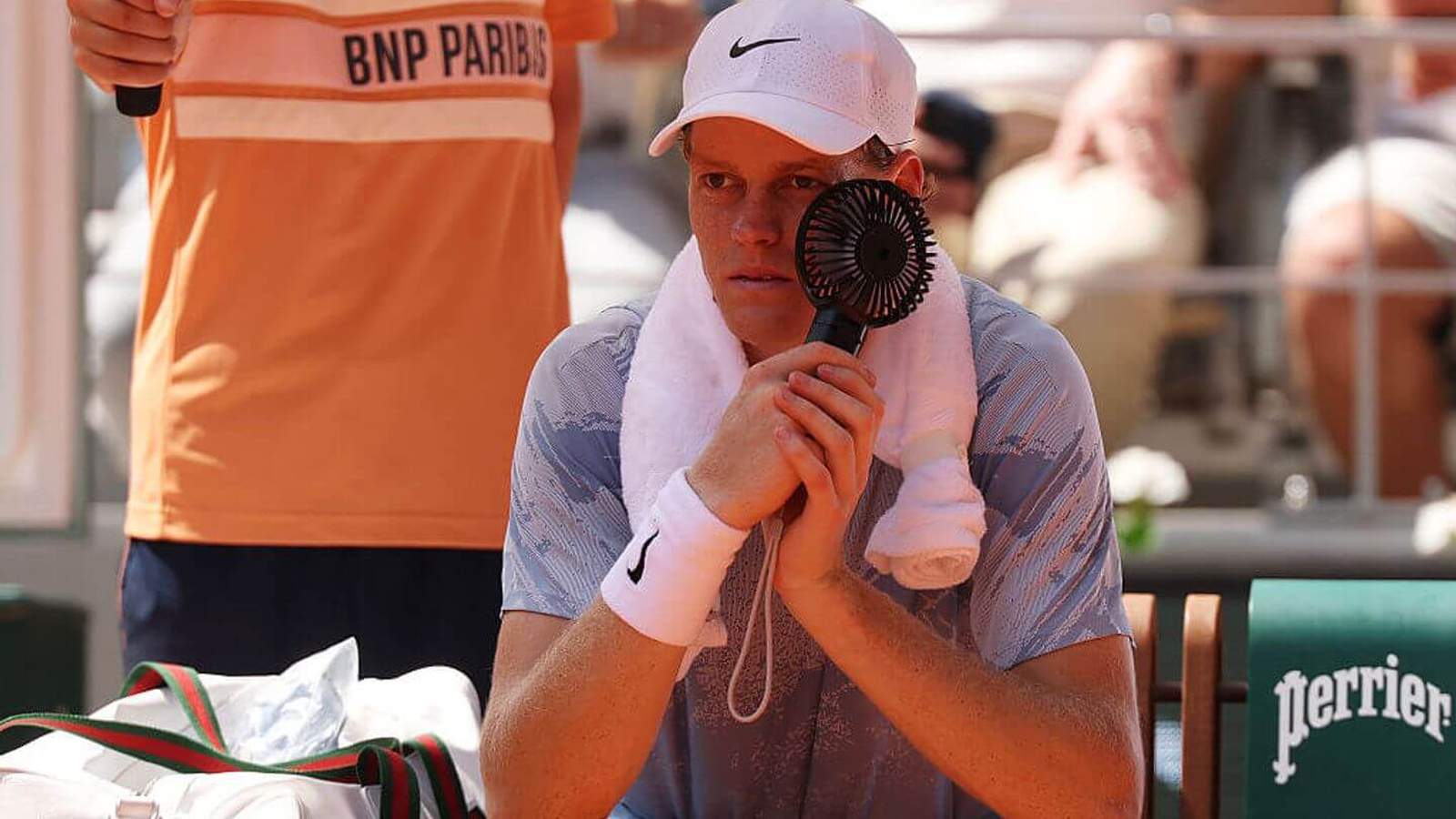
The 2026 French Open has descended into a state of competitive volatility rarely seen at Roland Garros. Following a brutal second round that saw the departure of 14 seeded players, the tournament landscape has been stripped of its primary favorites. The most significant casualty, World No. 1 Jannik Sinner, saw his bid for a career Grand Slam evaporate in the searing Paris heat, falling to Argentina’s Juan Manuel Cerúndolo in a five-set marathon, 3-6, 2-6, 7-5, 6-1, 6-1.
Sinner’s exit was marked by controversy, as the Italian was granted a medical timeout for cramping—a decision that drew sharp criticism from analysts like Jim Courier, who labeled the officiating as “absolute baloney.” While regulations generally prohibit medical interventions for cramping, the umpire’s discretion in this instance has ignited a broader debate regarding the application of rules for elite players. Sinner, who had been on a 30-match winning streak, appeared physically compromised as the match progressed, eventually succumbing to an opponent who exploited his waning stamina.
A Shift in Tournament Dynamics
The men’s draw, already missing Carlos Alcaraz due to a wrist injury, has lost its anchor. With Sinner and fifth-seed Ben Shelton—who fell in straight sets to Belgium’s Raphael Collignon—now sidelined, the path to the Coupe des Mousquetaires is arguably the most open it has been in a decade. Collignon’s clinical performance, during which he denied Shelton a single break-point opportunity, underscores the depth of talent rising to challenge the traditional hierarchy.
On the women’s side, the tournament remains equally unstable. The loss of World No. 2 Elena Rybakina to Ukraine’s Yuliia Starodubtseva in a deciding tiebreak highlighted the difficulty of adapting to the grueling physical demands of the red clay. As the competition moves into the third round, the focus shifts to remaining contenders such as Iga Świątek, Alexander Zverev, and Coco Gauff, who must now navigate a field that has proven increasingly resilient against top-tier rankings.
Institutional Challenges and Future Outlook
Beyond the individual results, the 2026 edition is sparking institutional conversations. The WTA Tour, led by chair Valerie Camillo, is actively negotiating with tournament director Amélie Mauresmo to formalize primetime night matches, a shift aimed at modernizing the viewing experience at the historic venue. These logistical discussions, paired with the physical toll the clay surface takes on athletes, suggest that the French Open is at a turning point in how it balances its rich tradition with the evolving demands of professional tennis.
The rapid attrition of top-seeded players at this year’s tournament serves as a reminder of the inherent volatility of clay-court tennis, where physical endurance and tactical adaptation often supersede raw ranking status. As the competition proceeds, the lack of dominant frontrunners suggests that the 2026 champions will be defined not by previous accolades, but by their ability to manage the intense heat, the physical strain of the surface, and the sudden pressure of an unexpected path to glory.