


Emergency Protocols and Regional Risks
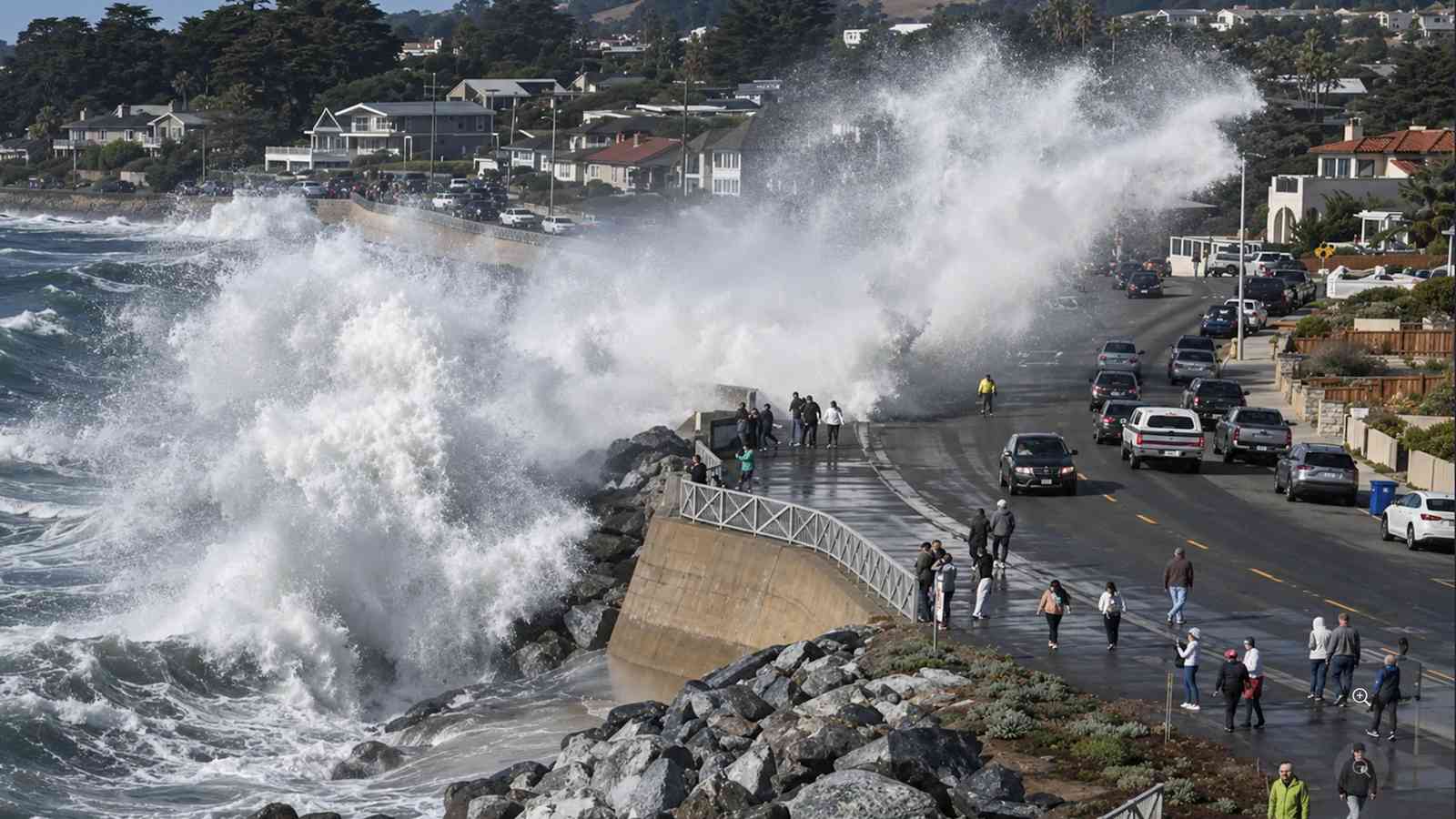
On November 24, 2026, local authorities across California’s Central Coast initiated widespread emergency measures as severe wave activity, exacerbated by king tides and a Kelvin wave, threatened coastal infrastructure. The Santa Cruz County Sheriff’s Office issued an immediate evacuation warning for zone CTL-E048, covering the Rio Del Mar and Aptos area, specifically targeting residents along Las Olas and Beach drives and Potbelly Beach Road, according to NBC Bay Area News. Simultaneously, the city of Capitola issued warnings for zones CTL-E027A and CTL-E029B, encompassing the Capitola Village area.
Further south, Santa Barbara County officials declared evacuation warnings effective as of 6 p.m. on November 24, 2026. This directive covers low-lying coastal zones in Montecito, Summerland, and Carpinteria, as reported by KSBY. The designated areas include sensitive coastal segments such as Miramar Beach, South Jameson Lane, Fernald Point Lane, Padaro Lane, and residential zones surrounding Ash Avenue and the Rincon Beach area. Officials have urged residents and business owners in these regions to remain prepared to evacuate immediately should conditions deteriorate further.
Strategic Safety and Access Constraints
The primary concern for emergency responders is the potential for wave penetration into residential properties and the subsequent inundation of primary access roads. As noted by The Inertia, authorities explicitly advised residents against waiting for conditions to worsen. The operational reality facing law enforcement and fire departments is that if extreme waves reach homes or critical access routes, emergency responders may be severely delayed or physically unable to reach those requiring assistance during a crisis. This institutional focus on preemptive movement serves as a risk-mitigation strategy to ensure the safety of both residents and first responders.
In response to the risk, the City of Santa Cruz implemented restrictive measures on public infrastructure. The Santa Cruz Wharf was closed, with an anticipated reopening scheduled for November 25 at 4 p.m., contingent upon the stabilization of tides and ocean behavior. City beaches were also placed under closure orders, with a projected reopening set for November 26 at 5 a.m. Santa Cruz Fire Chief Ryan Reber emphasized that these actions are intended to minimize human presence in high-risk zones, such as coastal cliffs and flooded roadways, during the period of peak tidal intensity.
Institutional Context and Environmental Factors
This event marks the second significant wave-related closure for the Santa Cruz area in recent weeks. The recurring nature of these events highlights the vulnerability of the region’s built environment to extreme tidal cycles. The influence of the Kelvin wave—a large-scale ocean wave moving along the equator and affecting regional sea levels—has significantly amplified the impact of standard king tides. By disrupting standard coastal traffic and beach access, these phenomena force municipalities to balance the necessity of public recreation access against the non-negotiable requirement of life-safety protocols.
The reliance on tools like the CruzAware system and official government websites represents the current administrative standard for community communication in the region. By directing the public to monitor these channels rather than relying on informal reporting, officials aim to reduce the strain on local infrastructure and prevent the public safety complications experienced during previous swells, where unofficial beach access continued despite warnings. The shift in local policy is toward early, mandatory-style warnings that prioritize the integrity of escape routes and the prevention of emergency service obstruction.