


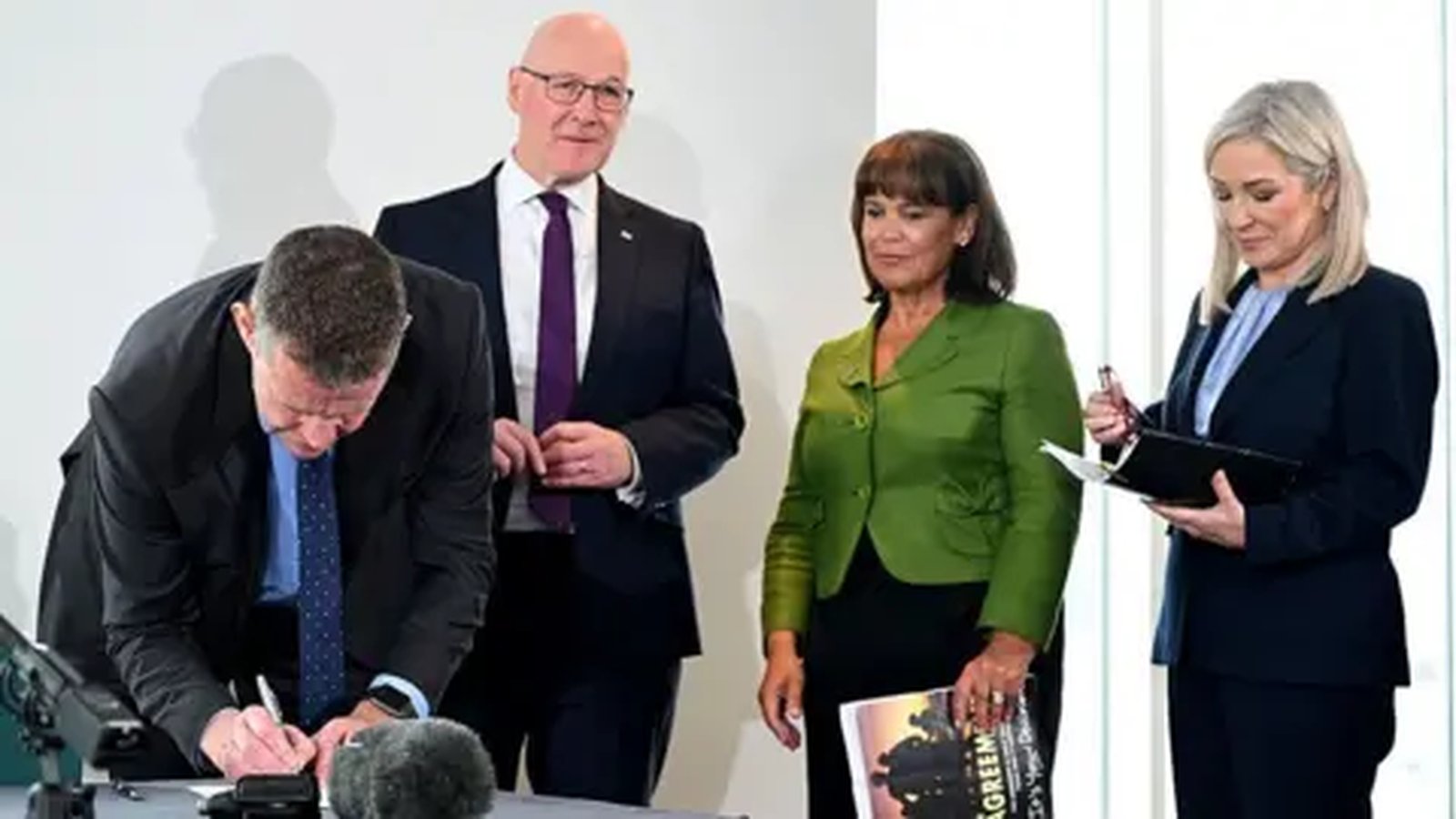
In a move that signals a profound shift in the political landscape of the United Kingdom, the first ministers of Wales, Scotland, and Northern Ireland have united to declare that “Westminster’s time is coming to an end.” Meeting in the Welsh capital of Cardiff, the nationalist leaders signed a landmark memorandum of understanding, calling on the UK government to prepare for inevitable and fundamental constitutional change.
According to a comprehensive report by BBC News, this summit marks the first time since the inception of devolution that the government leaders of all three devolved nations simultaneously favor leaving the United Kingdom. Representing Plaid Cymru, Sinn Féin, and the Scottish National Party (SNP), the leaders asserted that no central government in London possesses the right to “block democracy” or prevent their respective populations from determining their own constitutional futures.
A Coordinated Challenge to the Union
The joint memorandum of understanding serves as a direct challenge to the political authority of London. “For people watching across these islands—for people watching around the world—there could be no clearer sign that Westminster’s time is coming to an end,” the document states. It emphasizes that while each nation will pursue its constitutional path in its own way and timeframe, they share an absolute insistence on the right to self-determination.
The Cardiff meeting brought together Welsh First Minister Rhun ap Iorwerth, Scottish First Minister John Swinney, and Northern Irish First Minister Michelle O’Neill, alongside Sinn Féin President Mary Lou McDonald. Swinney described the summit as a “significant and pivotal moment” that has changed the dynamics of the United Kingdom forever. O’Neill echoed this sentiment, stating that the interests of the people of Northern Ireland, Scotland, and Wales have never been properly served by central authorities in London.
Divergent Paths and Timetables
Despite their shared rhetoric, the three leaders demonstrated distinct strategic approaches to achieving their constitutional goals. While Scotland’s Swinney and Northern Ireland’s O’Neill actively called for referendums on independence and Irish reunification, Wales’ ap Iorwerth refused to commit to a specific timetable for a Welsh vote.
Plaid Cymru has previously ruled out pushing for an independence referendum before the next Senedd election in 2030. Instead, ap Iorwerth’s administration plans to establish a national commission to lay the groundwork for future independence, focusing in the interim on securing the devolution of additional powers, including policing and youth justice. “The Westminster model is no longer working,” ap Iorwerth remarked, framing his approach as a gradual “national conversation.”
Funding Formulas and Unionist Pushback
The summit also highlighted deep-seated economic grievances, particularly regarding how the UK government funds devolved administrations. Welsh ministers have long demanded a reform of the Barnett funding formula, arguing that it systematically disadvantages Wales. Conversely, Scotland is widely viewed as benefiting from the current arrangement, illustrating the complex economic realities that the nationalist coalition must navigate.
The response from unionist politicians and the UK government was swift and critical. A UK government spokesperson reasserted Prime Minister Andy Burnham’s strong commitment to the Union, stating that the administration remains focused on delivering change across all four nations. In Belfast, Deputy First Minister Emma Little-Pengelly of the Democratic Unionist Party (DUP) criticized O’Neill’s participation in the talks, highlighting the fragile power-sharing dynamics in Northern Ireland.
In Wales, opposition leaders dismissed the Cardiff summit as a distraction from pressing public policy issues. Welsh Conservatives leader Darren Millar argued that the First Minister should focus on the crisis facing the Welsh National Health Service (NHS) and declining standards in schools rather than “obsessing about independence.” Similarly, Chris Bryant, the Northern Ireland Secretary, criticized Plaid Cymru for focusing on breaking up the UK rather than delivering concrete governance achievements.
With a formal meeting between the devolved leaders and Prime Minister Andy Burnham scheduled for next month, the constitutional debate is set to intensify, placing the future structure of the United Kingdom under unprecedented institutional strain.