


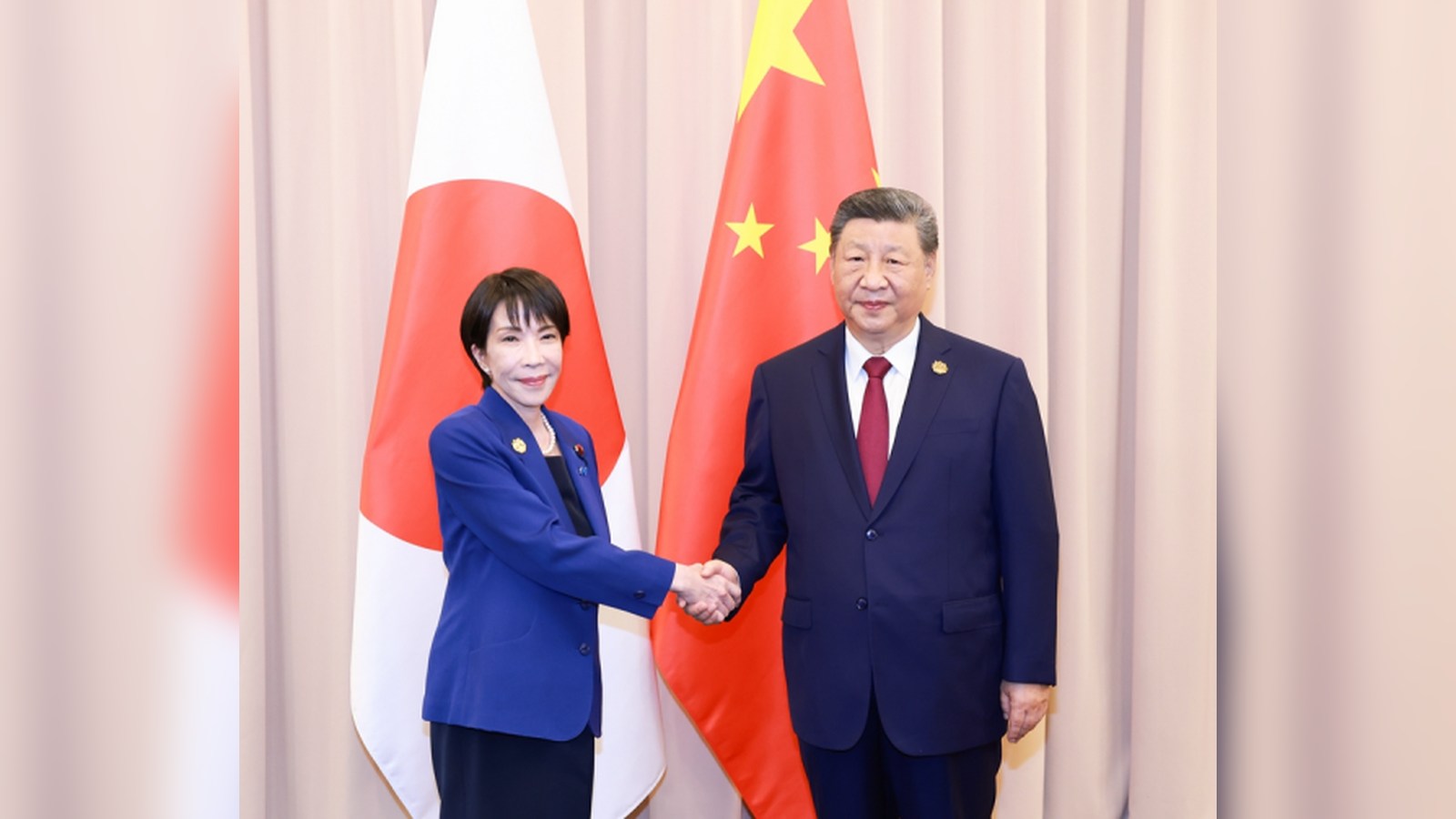
Strategic Pressure on Tokyo
Beijing has launched a concerted, multi-front campaign to portray Japan as a resurgent military threat, utilizing state media, diplomatic briefings, and private lobbying to isolate Prime Minister Sanae Takaichi. According to a New York Times analysis published on November 17, 2026, Chinese President Xi Jinping recently warned President Trump during private meetings that Japan’s military buildup threatens to destabilize Asia. Mr. Xi specifically urged the U.S. leader to remain cautious regarding Prime Minister Takaichi, labeling her a “militarist.” This diplomatic maneuver follows heightened tensions that began in November 2025, when Ms. Takaichi stated that a Chinese invasion of Taiwan could constitute a “survival-threatening situation” for Japan, implying potential military intervention. The campaign represents a shift in Chinese strategy, moving beyond traditional bilateral grievances to target Japan’s standing among its Western allies. By framing Japan as the “Israel of East Asia”—a narrative currently being disseminated to Western scholars—Beijing seeks to persuade international observers that Tokyo is poised to lead the United States into conflict. This effort is supported by an active propaganda apparatus that utilizes historical imagery to paint Japan as a World War II-era aggressor. Chinese state media has frequently employed terms such as “remilitarization” and “neo-militarism,” while specifically targeting Ms. Takaichi in derogatory cartoons and official briefings, often omitting her title in a break with standard diplomatic protocol.
The Geopolitical Wedge
Analysts note that this strategy aims to drive a wedge between Tokyo and Washington. The Lowy Institute reports that China’s reaction is fueled by a desire to establish regional dominance and penalize Japan for its commitment to increasing defense spending in response to China’s own military expansion. Beijing’s frustration is compounded by Ms. Takaichi’s hawkish stance, which she inherited from her mentor, the late Prime Minister Shinzo Abe. The campaign has extended to economic and cultural spheres, with disrupted trade, tourism, and restrictions on exports of rare earth magnets and dual-use technologies. The diplomatic isolation attempt has found a receptive partner in Moscow. According to findings published by the New York Times, Russia has amplified Beijing’s rhetoric, branding Japan an “enemy state” and invoking World War II-era designations to delegitimize Tokyo’s modern security policies. As China prepares for the upcoming Asia-Pacific Economic Cooperation summit in Shenzhen, the atmosphere remains notably frosty. Observers expect Mr. Xi to utilize the summit as a platform to further alienate the Japanese administration from its regional partners, testing the resilience of Japan’s alliances in the face of persistent external pressure.
Historical Resentment and Modern Policy
The intensity of Beijing’s reaction is deeply rooted in historical grievances, specifically the 1895 defeat of the Qing Dynasty, which resulted in the cession of Taiwan to Japan. By weaponizing this history, Beijing seeks to delegitimize Japan’s current security policies. The Lowy Institute analysis highlights that while Ms. Takaichi’s comments in November 2025 were perceived as unusually candid, they reflect a broader Japanese concern regarding the security of its immediate region. Despite Beijing’s aggressive rhetoric, Japan has maintained a firm stance, refusing to issue a formal backdown. This resilience presents a significant challenge to China’s regional objectives. The propaganda machinery in Beijing, which often operates within an echo chamber, continues to focus on isolating Ms. Takaichi, frequently depicting her in demeaning caricatures that omit her formal title. Such actions deviate from established diplomatic norms, signaling a profound level of institutional hostility. Scholars suggest that by labeling Japan the “Israel of East Asia,” Beijing hopes to cultivate the perception among Western policymakers that Tokyo is an unpredictable actor that could inadvertently drag the United States into a large-scale regional conflict. This narrative is intended to undermine the trust that underpins the U.S.-Japan security alliance, which is currently the cornerstone of regional stability.
The Role of External Actors and Future Outlook
The involvement of Moscow in amplifying these narratives adds a layer of complexity to the geopolitical landscape. By invoking World War II-era designations, Russia and China are attempting to create a unified front against Tokyo, framing Japan’s modern defense initiatives as an existential threat to regional order. As the APEC summit approaches, the diplomatic friction is expected to intensify. While some observers suggest that summits like the East Asia Summit or the G20 could provide an opportunity for rapprochement, the current trajectory suggests that no immediate breakthrough is forthcoming. Beijing’s strategy of waiting out Prime Minister Takaichi carries inherent risks, as the pressure campaign might ultimately serve to solidify her political standing domestically. Furthermore, China’s economic coercion—targeting rare earth magnets and other critical trade sectors—has yet to force a change in Tokyo’s strategic calculus. As the standoff continues, the international community watches closely to see if Japan can successfully navigate these external pressures while maintaining its commitment to regional security. The persistent, high-intensity nature of Beijing’s campaign underscores the depth of the rift, suggesting that Japan-China relations will remain volatile for the foreseeable future. The upcoming meetings in Shenzhen will serve as a critical test for whether diplomatic dialogue can survive under the weight of such aggressive public narratives and private lobbying efforts.