


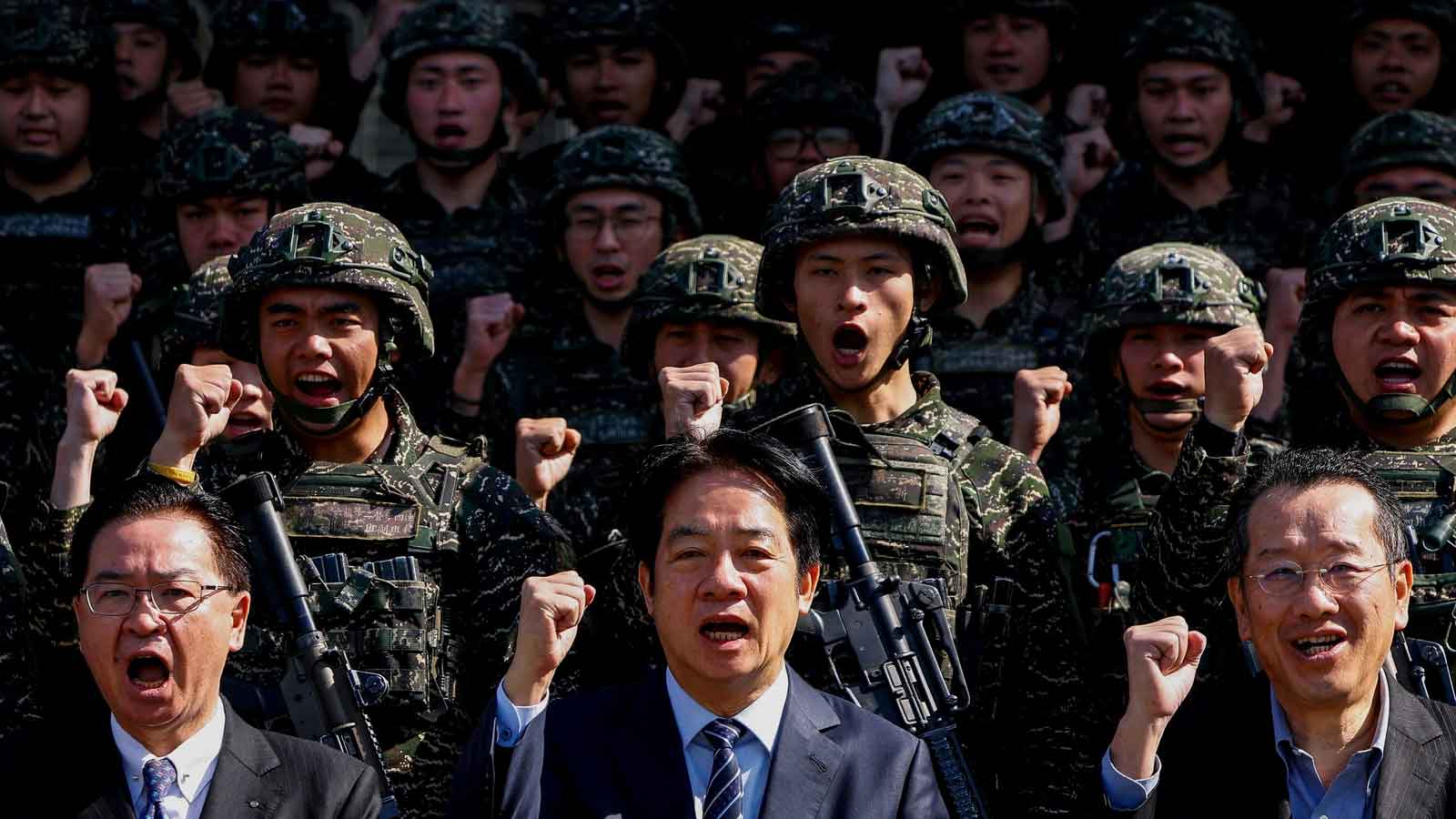
The shifting power dynamics in East Asia are becoming impossible to ignore. China’s ongoing military expansion, paired with persistent tensions over Taiwan, has forced neighboring countries and global powers to rethink their strategies—sometimes in ways that test the boundaries of postwar policy and public sentiment. The region stands at a crossroads, with security decisions echoing far beyond its borders.
China’s stance on Taiwan remains unwavering. The official position is clear: Taiwan is considered an inseparable part of China, and Beijing has little patience for moves it sees as undermining this principle. In a recent interview, Russia’s Foreign Minister Sergei Lavrov echoed this sentiment, warning Japan to reconsider any path toward militarization and accusing the United States and its allies of stoking instability in the Taiwan Strait. The message from Moscow was unmistakable—any form of Taiwanese independence is off the table, and Western influence in the region is viewed with deep suspicion. News.Az and TASS report that these declarations are not mere rhetoric but part of a coordinated diplomatic front between Moscow and Beijing, as the two celebrate 75 years of close ties.
For Japan, these developments have triggered heated internal debates. The country’s security environment is increasingly shaped by China’s growing capabilities and North Korea’s expanding nuclear arsenal. The Trump administration’s “Western Hemisphere-first” policy has further complicated matters, signaling less direct American engagement in the Asia-Pacific. As Japan weighs its options, the discussion about nuclear weapons has resurfaced—a topic once considered taboo, but now openly debated among former Self-Defense Forces officers, security experts, and public intellectuals.
In late 2025, a Japanese government official advising Prime Minister Sanae Takaichi caused a stir by suggesting that Japan should consider acquiring nuclear weapons. While he admitted that such a move is unrealistic, given the logistical and political barriers, his comments ignited controversy and drew immediate reactions from both China and the United States. Beijing responded by urging the international community to remain vigilant, while Washington reaffirmed its commitment to nuclear nonproliferation and the protection of its allies through a robust deterrent system. Mainichi Japan notes that U.S. officials diplomatically expressed their displeasure, underscoring that any Japanese move toward nuclear armament would upend the region’s security architecture.
The Japanese public, still deeply affected by the legacy of Hiroshima and Nagasaki, remains broadly opposed to nuclear weapons. According to a February 2025 Asahi Shimbun survey, 69 percent of respondents support maintaining Japan’s non-nuclear principles. This sentiment is reinforced by practical concerns: acquiring nuclear weapons would entail enormous costs, international isolation, and likely opposition from the United States, which supplies much of Japan’s uranium for civilian use. Decades of government research have consistently concluded that a Japanese nuclear arsenal is neither feasible nor desirable.
Meanwhile, the broader region is bracing for the consequences of China’s rise. Analysts project that by 2035, China’s nuclear capabilities could rival those of the United States and Russia. North Korea continues to expand its arsenal, and South Korean support for nuclear armament is growing. Russia, embroiled in its own confrontations with the West, has made repeated threats involving nuclear weapons in the context of the Ukraine war.
The anxiety in Tokyo is palpable. Japan’s strategic disadvantage stems not only from China’s military build-up, but also from shifting U.S. priorities and the unpredictable actions of its neighbors. Despite these challenges, the prevailing view among Japanese policymakers is to quietly strengthen conventional defense capabilities and rely on extended U.S. nuclear deterrence, rather than pursue an independent arsenal.
This approach is not without critics. Some security experts argue that Japan’s reliance on the U.S. umbrella is risky, especially if American commitments waver. Others insist that a sober assessment of the region’s realities makes nuclear armament a “pipe dream”—a phrase that resonates with those who understand the immense political, technical, and ethical obstacles involved.
At the heart of these debates lies a fundamental question: How can East Asia maintain stability when the rules are changing and the stakes are rising? For now, Japan and its neighbors are navigating a precarious balance, seeking security without igniting a new arms race or compromising their core values.
The facts paint a picture of a region in transition, pulled between historical memory, shifting alliances, and the hard realities of power politics. As China expands its military reach and Taiwan remains a flashpoint, the choices made today will shape not only national destinies, but the future of East Asian peace and security.