


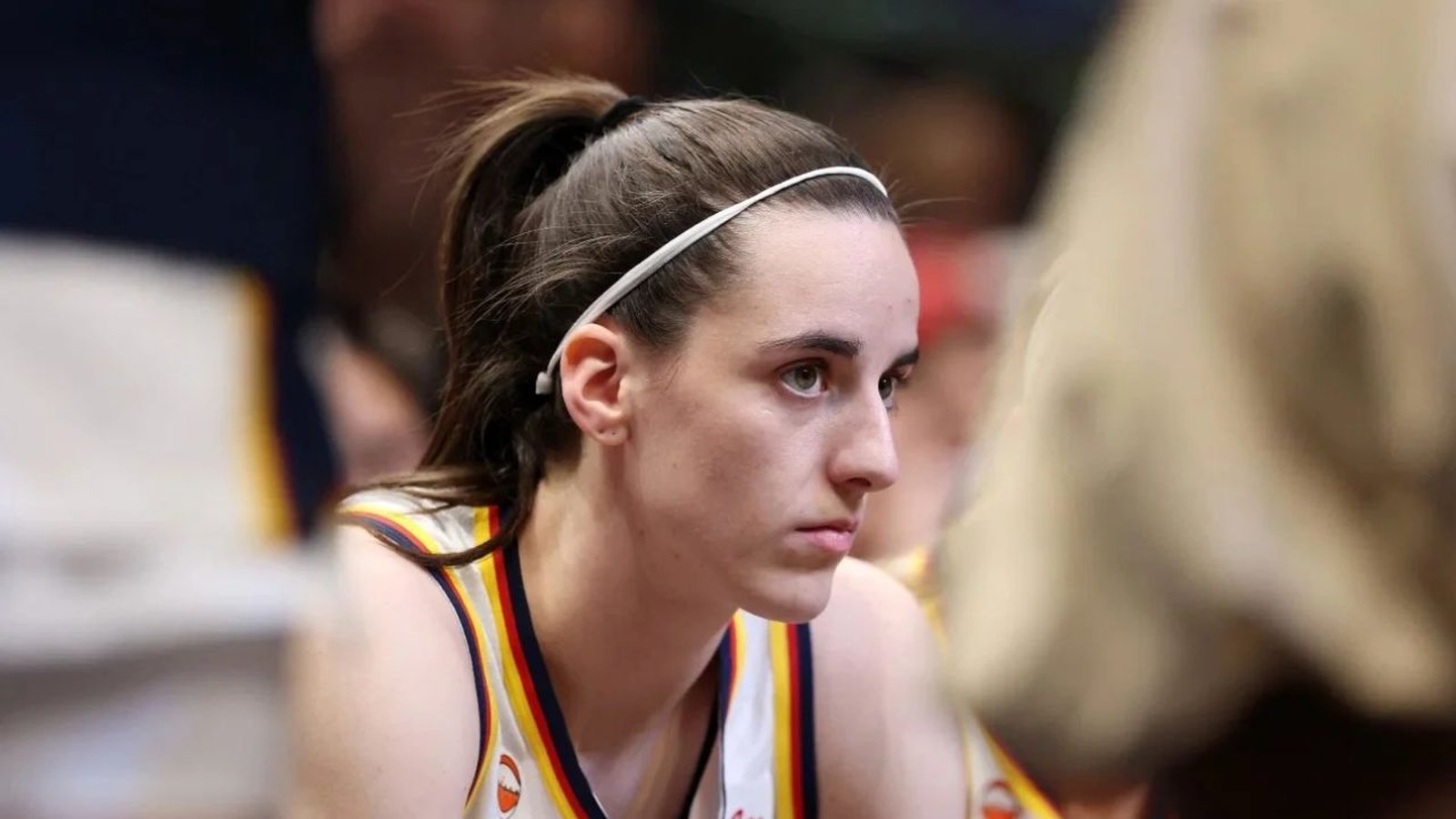
Coach Markus Thomas Stands by His Critical Assessment
In an appearance on Robin Lundberg’s channel, former Philadelphia Eagles running back and coach Markus Thomas doubled down on his controversial evaluation of Indiana Fever star Caitlin Clark, asserting that she becomes a “regular” player when her signature three-point shot fails to drop. According to EssentiallySports, the remarks originally surfaced on Thomas’s YouTube channel, Pro Fan Talks, before drawing renewed debate during the recent livestream discussion.
Thomas clarified that his critique is not a dismissal of Clark’s overall elite status in the WNBA. Instead, he argued that her impact wanes on nights when she relies too heavily on perimeter shooting without complementing it with drives to the basket or consistent mid-range scoring. “When Caitlin is not on, she’s regular… She can be regular, she can be great, and she can be phenomenal,” Thomas stated during the broadcast. He added that on days when her outside shooting struggles and she fails to attack the interior, her production mirrors that of many other players in the league.
Tactical Breakdown and Opponent Defenses
The basketball rationale behind Thomas’s assessment centers on how opposing defenses scheme against the Indiana Fever guard. Caitlin Clark’s exceptional shooting range forces defenders to extend their coverage far beyond the arc, creating space for her to attack closeouts, penetrate the paint, and facilitate for teammates. When that outside shot is absent, opposing defenses can afford to sag off, challenging her to beat them from different areas of the floor and effectively altering the team’s offensive rhythm.
Statistically, however, Clark’s offensive repertoire extends beyond the perimeter. Data tracked by wnba.devinross.com during the preceding season indicated that she converted 62.4% of her shots on drives and 43% on mid-range attempts, demonstrating clear capability to score inside the arc. Furthermore, her playmaking remains a central pillar of her game; she averaged 8.3 assists per contest last season, marking the second-highest average in the WNBA and highlighting how defensive attention directed toward her frequently opens up scoring opportunities for her teammates.
Postseason Struggles and Future Versatility
The debate over Clark’s offensive versatility gained heightened attention following the Indiana Fever’s 2026 postseason series against the Las Vegas Aces, where the team dropped a 2-1 decision in the opening round. In the decisive Game 3, Clark encountered significant shooting difficulties, finishing 6-for-18 from the field, including making only three of 12 attempts from beyond the arc. That perimeter reliance coincided with struggles inside the arc and as a playmaker, culminating in 18 points, four assists, six turnovers, five fouls, and a -14 plus/minus rating—the second-worst mark on the team.
For analysts and coaches examining the matchup, the central question moving forward is not whether Clark possesses superstar capabilities, but how she can mitigate the impact of off-shooting nights. By integrating more consistent mid-range jumpers and driving attacks when her perimeter shot deserts her, she can prevent opposing defenses from neutralizing her overall effectiveness. The ongoing discussion highlights the fine margins that define elite play in the WNBA, where sustained offensive versatility remains the ultimate benchmark for postseason success.